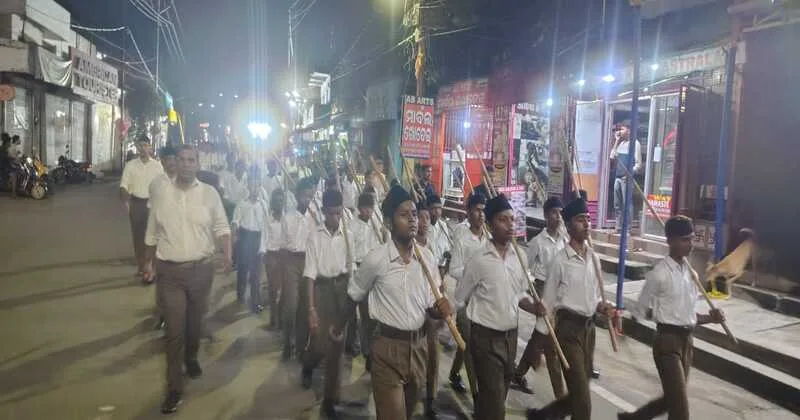
Bhubaneswar: As the Rashtriya Swayamsevak Sangh (RSS) marks its centenary year, celebrations are taking place across Odisha with remarkable enthusiasm. In Balasore district, 53 programs were organized to commemorate the occasion, attracting thousands of uniformed swayamsevaks. The highlight of the district-level celebrations was a path samchalan in Balasore town , which garnered significant public attention and participation.
The Grand Path Sanchalan began at the Radhakrishna Temple in Manasingh Bazar and passed through prominent city areas, including Hemkapada Square, Gadgadiasahi, Arttakabiraj Road, Motiganj, Cinema Square, and Hospital Road, before concluding at Mission Ground. Hundreds of RSS swayamsevaks, dressed in full uniform, marched in disciplined rows, accompanied by the rhythmic beats of traditional ghosh vadyas (band instruments), symbolizing unity, discipline, and national pride.
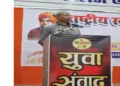
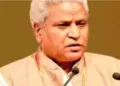
During the event, Gauri Prasad Rath, Kshetriya Sah Mantri of the Vishva Hindu Parishad (VHP), addressed the gathering. He noted that the Rashtriya Swayamsevak Sangh has now completed its 100th year since its founding on Vijaya Dashami in 1925 by Dr. Keshav Baliram Hedgewar, describing how the organization has evolved into a vast and influential socio-cultural force in Bharat.
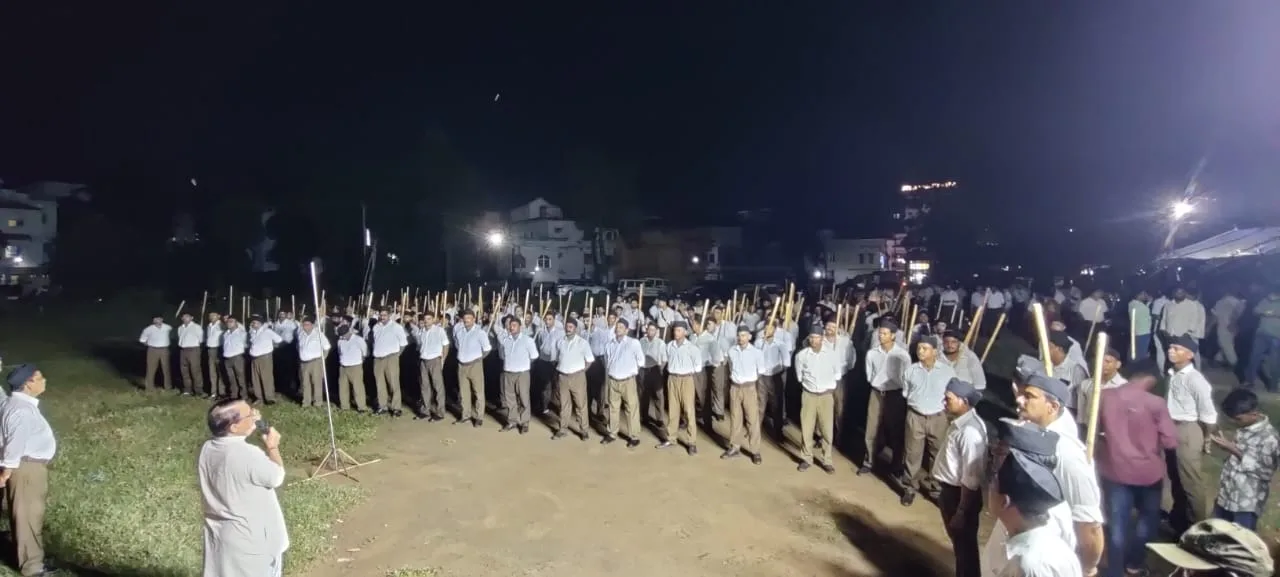
Rath emphasised the importance of awakening and awareness in society. Quoting Swami Vivekananda’s famous message from the Upanishads — “Uthisthata, Jagrata, Prapya Varannibodhata” (Arise, awake, and stop not till the goal is reached) — he remarked, “Our scriptures and festivals continuously remind us to remain vigilant and active. For the past hundred years, the RSS has been working tirelessly for the awakening and upliftment of society.”
He added that the RSS has always aimed at nation-building through individual character development, promoting unity and service based on selfless devotion and love for the motherland. “Through the sacrifice, discipline, and dedication of its swayamsevaks, the RSS has become a strong and vibrant national organization. Today, there is hardly any sphere of public life where the contribution of swayamsevaks has not been felt,” he stated.
Highlighting the organization’s five-point agenda for the centenary year, Rath explained that the RSS has resolved to focus on Panch Parivartan goals: Samajik Samarasata, Paryavaran Surakshya, Kutumb Prabodhan, Swaadharita Jivan, and Nagarik Kartyavabodh.
He elaborated that Samajik Samarasata involves eliminating barriers of caste, creed, and social hierarchy to build a united and inclusive society. Regarding environmental conservation, he urged citizens to adopt eco-friendly lifestyles, promote mass awareness of environmental protection, plant trees, and reject single-use plastics. “Even the developed nations that once ridiculed nature worship are now deeply concerned about environmental crises and are seeking solutions,” he said.
Concerning Kutumb Prabodhan, Rath stressed the importance of strengthening the Bharatiya family system by fostering Hindu values and lifestyles. “We must reflect on how to manage our families responsibly, understand our duties, and realize the importance of familial unity,” he stated.
He also encouraged citizens to adopt a self-reliant way of living by embracing the use of indigenous products, native languages, and traditional attire while reducing dependency on foreign goods and culture. Finally, he emphasized the need for civic awareness and discipline, urging every citizen to act responsibly and contribute positively to the nation and society in daily life.
Earlier, similar programs were conducted in eight other localities of Balasore city, including Rameshwar, Jhadeshwar, Ishaneshwar, and Baneshwar. The event commenced with Bharat Mata Puja (worship of Mother India), performed by Gopal Nayak, the Nagar Sanghchalak (City RSS Head). The proceedings were coordinated by Ramesh Mahakud, Nagar Karyavah (City Secretary), along with Ramakanth Jena, Sah Karyavah (Joint Secretary).
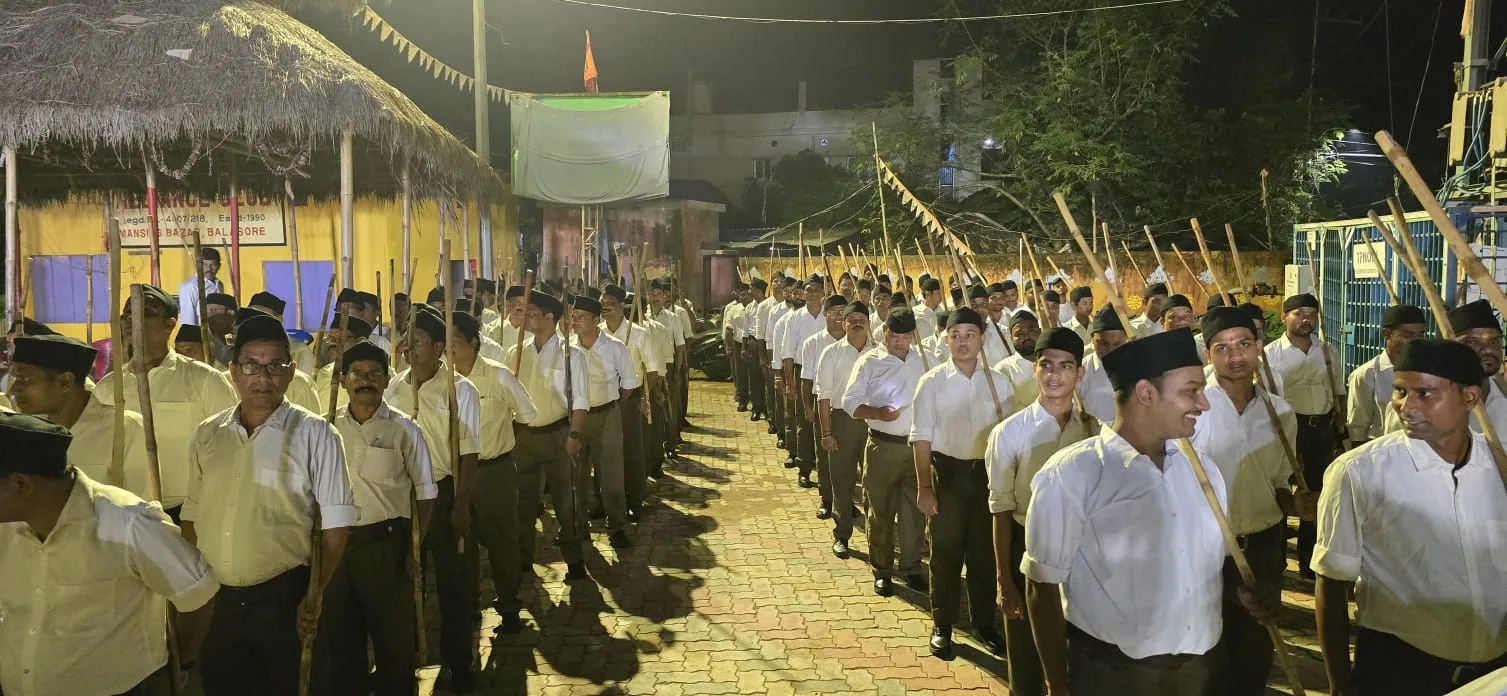
The celebrations in Balasore reflected the spirit of unity, devotion, and patriotism that has defined the RSS for a century as it continues its mission of societal transformation, rooted in the principles of sewa, sanskars, and samarasata.