Karnataka: Environmentalists slam king cobra microchip study
June 4, 2026
  • Read Ecopy
  • Circulation
  • Advertise
  • Careers
  • About Us
  • Contact Us
Android AppiPhone AppArattai
Organiser
  • ‌
  • Bharat
    • Assam
    • Bihar
    • Chhattisgarh
    • Jharkhand
    • Maharashtra
    • View All States
  • World
    • Asia
    • Europe
    • North America
    • South America
    • Africa
    • Australia
  • Editorial
  • International
  • Opinion
  • RSS @ 100
  • More
    • Op Sindoor
    • Analysis
    • Sports
    • Defence
    • Politics
    • Business
    • Economy
    • Culture
    • Special Report
    • Sci & Tech
    • Entertainment
    • G20
    • Azadi Ka Amrit Mahotsav
    • Vocal4Local
    • Web Stories
    • Education
    • Employment
    • Books
    • Interviews
    • Travel
    • Law
    • Health
    • Obituary
  • Subscribe
    • Subscribe Print Edition
    • Subscribe Ecopy
    • Read Ecopy
  • ‌
  • Bharat
    • Assam
    • Bihar
    • Chhattisgarh
    • Jharkhand
    • Maharashtra
    • View All States
  • World
    • Asia
    • Europe
    • North America
    • South America
    • Africa
    • Australia
  • Editorial
  • International
  • Opinion
  • RSS @ 100
  • More
    • Op Sindoor
    • Analysis
    • Sports
    • Defence
    • Politics
    • Business
    • Economy
    • Culture
    • Special Report
    • Sci & Tech
    • Entertainment
    • G20
    • Azadi Ka Amrit Mahotsav
    • Vocal4Local
    • Web Stories
    • Education
    • Employment
    • Books
    • Interviews
    • Travel
    • Law
    • Health
    • Obituary
  • Subscribe
    • Subscribe Print Edition
    • Subscribe Ecopy
    • Read Ecopy
Organiser
  • Home
  • Bharat
  • World
  • Operation Sindoor
  • Editorial
  • Analysis
  • Opinion
  • Culture
  • Defence
  • International Edition
  • RSS @ 100
  • Magazine
  • Read Ecopy
Home Bharat

Karnataka: Environmentalists slam king cobra microchip study as ‘cruel, unscientific and invasive’

Environmentalists have condemned a long-term study in Karnataka’s Agumbe region, where over 180 king cobras were implanted with microchips for tracking, calling it cruel, invasive, and unethical. Activists allege the research harms the snakes, misuses funds, and violates wildlife protection norms, urging the government to halt the project

IndreshIndresh
Oct 7, 2025, 03:00 pm IST
in Bharat, Karnataka
Follow on Google News
FacebookTwitterWhatsAppTelegramEmail

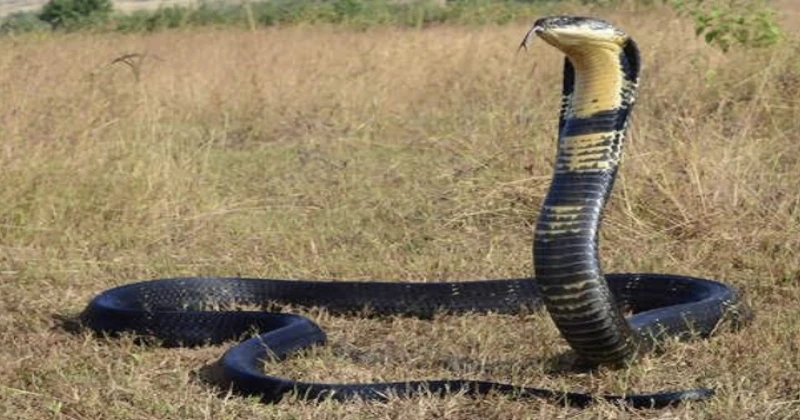
A scientific study involving the implantation of microchips inside king cobras (known locally as Kalinga snakes) in the rainforests of Agumbe, Shivamogga district, has drawn sharp criticism from environmentalists and wildlife activists. The study, which spans over a decade, is being condemned as unethical, invasive, and a violation of wildlife protection norms.

According to a research paper published in the herpetological journal Hamadryad, scientists at the Agumbe Rainforest Research Station (ARRS) implanted a Passive Integrated Transponder (PIT) tag — a tiny microchip about the size of a basmati rice grain — into the bodies of more than 180 king cobras between 2008 and 2021. Each chip carries a unique 15-digit identification number, similar to an Aadhaar card, which enables researchers to track the snakes’ behaviour, movement, and mating patterns when scanned with a specialised device.

The chips were inserted between the skin and muscles using syringes, and in some cases, transmitters were also attached to track their movement through dense forests. Researchers claim the study has provided valuable insights into the species’ habitat range, migration routes, feeding habits, and breeding cycles. The study found that male king cobras often travel more than 10 kilometres in search of mates and display territorial aggression toward rival males during mating seasons.

However, environmentalists are not convinced. They allege that the so-called “scientific monitoring” is nothing but a form of animal cruelty conducted under the pretext of conservation. Activist Nagaraj Koove, one of the most vocal critics of the project, accused the researchers of misleading the government and international donors.

“Snakes are being exploited in the name of scientific study. These researchers are spreading a false narrative of human-snake conflict to justify their experiments and to attract foreign funding,” Koove said.

He added that the “implantation of chips” causes physical harm to the reptiles and interferes with their natural behaviour. “These are sacred creatures in the Malnad and coastal regions. Local people have a deep sense of reverence for snakes and rarely harm them. There is no real conflict between humans and king cobras here. However, under the guise of mapping and conflict mitigation, they are now expanding their operations to every district of the Western Ghats. This is unacceptable,” he said.

Koove further claimed that many of these organisations conduct wildlife research without sufficient oversight or accountability. “In the name of data collection and conservation, they are torturing harmless snakes. Implanting chips inside their bodies is invasive and unnecessary. Such actions violate both ethical and environmental principles,” he asserted, urging the state government and the Forest Department to immediately suspend the study.

Also Read: Kerala: Sabarimala gold layer scandal exposes deep-rooted corruption as calls for temple autonomy gain momentum

Environmentalists have also expressed concern that prolonged tracking with transmitters could expose the snakes to human interference, predators, and stress, affecting their survival in the wild. They fear that similar “research” activities might soon extend to other protected species under the guise of scientific exploration.

The Agumbe Rainforest Research Station, however, has defended its work, stating that the project was conducted with due permission from the Wildlife Institute of India (WII) and the Forest Department. ARRS researchers argue that tagging is a globally accepted, non-lethal method for long-term wildlife monitoring, which helps in formulating effective conservation strategies.


Topics: forest departmentAgumbe regionAgumbe Rainforest Research StationEnvironmentalists
ShareTweetSendShareSend
✮ Subscribe Organiser YouTube Channel. ✮
✮ Join Organiser's WhatsApp channel for Nationalist views beyond the news. ✮
Previous News

Tamil Nadu: BJP seeks SIR in Kolathur Assembly represented by CM Stalin, cites over 19,000 fake and duplicate Voters

Next News

RSS at 100 | Strength of Sangh lies in daily one-hour Shakha: J Nandakumar

Related News

Karnataka: Illegal resort construction by Congress leader threatens Western Ghats ecology in Chikkamagaluru

Karnataka: Forest dept faces graft allegations over Rs 30 lakh no-tender media deal

Karnataka: KSPCB members object to Rs 426 crore fund transfer to Forest Department, cite legal and financial concerns

Chhattisgarh women benefit from government schemes

Chhattisgarh Forest Department writes new story of economic prosperity for women

Representative Image

Tamil Nadu: K Annamalai denounces forest department’s decision to forcefully remove homes of tribals in Pennagaram area

Cannabis plantations destroyed

Tripura: Clash erupts as security personnel target cannabis plantations; 60000 plants destroyed

Load More

Latest News

B. Nagendra, Congress MLA and former minister in Karnataka

Karnataka: CBI files chargesheets against Nagendra, Congress leader, ex-minister, 29 others in Valmiki Corporation scam

Representative Image (This is an AI generated image)

From Class 10 to Ayurvedic Doctor: Central Sanskrit University unveils new pathway to BAMS

Heera Group founder Nowhera Shaik (File Photo)

Telangana: ED arrests Nowhera Shaik’s aide in Heera Group Sharia-compliant Rs 3000 Cr investment scam

Governor of Karnataka Thaawarchand Gehlot administered the Oath of Office and Secrecy to Chief Minister D.K. Shivakumar on June 3, 2026

DK Shivakumar takes oath as Karnataka CM, invokes Ajjayya in ceremony

TMC Leader Abhishek Banerjee attacked in Sonarpur

The Judgement Beyond the Ballot: Bengal’s Sonarpur, political memory, and accountability

Change of Guard in Punjab BJP: Challenges, opportunities and the road ahead

Sacrilege, state interference and the Sikh question in Punjab

After Schools, Vande Mataram Must For West Bengal Madarsas

West Bengal Madrasas Sing Vande Mataram: 1,600 madrasas comply with state govt order despite opposition criticism

Image of Dawood Aide Huzaifa, who is believed to be a close associate of Munna Jhingada

Dawood aide Huzaifa held in Mumbai crackdown; Probe focuses on Pakistan-linked recruitment network

Islamists to Launch Keralam’s First Sharia Gym in Palakkad — No Music, Hijab Must; A ‘Taliban’-Inspired Fitness Club

Load More
  • Privacy
  • Terms
  • Cookie Policy
  • Refund and Cancellation
  • Delivery and Shipping

© Bharat Prakashan (Delhi) Limited.
Tech-enabled by Ananthapuri Technologies

  • Home
  • Search Organiser
  • Bharat
    • Assam
    • Bihar
    • Chhattisgarh
    • Jharkhand
    • Maharashtra
    • View All States
  • World
    • Asia
    • Africa
    • North America
    • South America
    • Europe
    • Australia
  • Editorial
  • Operation Sindoor
  • Opinion
  • Analysis
  • Defence
  • Culture
  • Sports
  • Business
  • RSS @ 100
  • Entertainment
  • More ..
    • Sci & Tech
    • Vocal4Local
    • Special Report
    • Education
    • Employment
    • Books
    • Interviews
    • Travel
    • Health
    • Politics
    • Law
    • Economy
    • Obituary
  • Subscribe Magazine
  • Read Ecopy
  • Advertise
  • Circulation
  • Careers
  • About Us
  • Contact Us
  • Policies & Terms
    • Privacy Policy
    • Cookie Policy
    • Refund and Cancellation
    • Terms of Use

© Bharat Prakashan (Delhi) Limited.
Tech-enabled by Ananthapuri Technologies