After Israel’s surprise strike on Qatar, the Middle East entered a strategic reset phase, seeking political and security support. The Arab-Islamic emergency meeting called by Qatar reflects an effort to unite Arabs against Israel. However, the meeting was not only about Israel’s actions and attempts at unity; it also served as a strategic signal of increasing strategic autonomy among the Gulf nations, especially Saudi Arabia. This interpretation of strategic signalling likely arises from concerns over the US’s credibility, which is now under serious scrutiny. Amidst this turbulence and political manoeuvring in the Gulf, Pakistan has gained significant space for geopolitical action by signing a defence pact with Saudi Arabia, which, for obvious reasons, has sent concerning signals to Asia, particularly India. But the key question remains: should India be alarmed?
The Pact
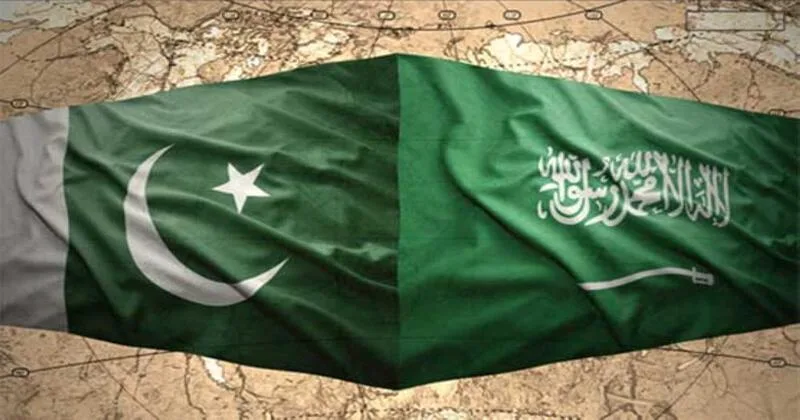
Pakistan and Saudi Arabia signed the Strategic Mutual Defence Agreement (SMDA), formalising their security and strategic relationship, which was previously informal. There are two key aspects of this agreement: one is collective defence, which stipulates that “any aggression against either country shall be considered an aggression against both.” The other is the deepening of cooperation from military to economic levels. Along with this agreement, there is a slight nuclear ambiguity, as Pakistan has hinted at atomic cooperation with Saudi officials, emphasising that the pact encompasses all military means. Interestingly, an excerpt from Bob Woodward’s book titled *War* has given some impressions about Saudi interests in Pakistan’s nuclear programme: “I don’t need uranium to make a bomb. I will just buy one from Pakistan.” – Mohammed Bin Salman in 2024.
The Historical Trust
Besides being ideologically aligned as both Sunni powers, Pakistan shares a brief history of trust and cooperation with Saudi Arabia, especially after 1979, when Islamic hardliner militants seized the Mosque to overthrow the Saudi Monarchy and establish a stronger and more authentic Islamic rule opposed to modernisation. The siege lasted two weeks and shocked the Muslim world, most notably Saudi Arabia’s security establishment, which was unable to take control of the Mosque, leading to French forces being called in to end the siege. At that time, in Pakistan, which was under Zia’s military rule, the government refused to intervene on religious grounds. Still, Saudi Arabia was supported from both internal and external fronts, where fundamentalism was gradually rising, threatening the monarchy and Iran’s Islamic revolution, giving rise to Shia power. The Arab landscape from the late 1970s to the 1980s began to fracture due to conflicts and ideological struggles between Shia and Sunni powers.
Pakistan’s Opportunity In Fractured Arab
Pakistan’s military ruler Zia-Ul-Haq, who was aggressively pushing its hardline Islamization in Pakistan, saw an opportunity to export it to West Asia to counter Iran’s Islamic revolution and build close ties with the Saudis. Interestingly, ideology served as the foundation that opened the door for Pakistan-Saudi relations and allowed the former to expand its strategic reach from Afghanistan to the Gulf. But that was not the only factor; two more crucial elements contributed to establishing trust and closeness: first, security; second, strategic interests.
The first involved Pakistan setting up the Safari force—deploying an entire armored brigade, numbering over 15,000 troops, to Saudi Arabia. Their mission was clear: to defend the Kingdom from external threats and, implicitly, to protect the Royal Family from internal ones. By providing security cover to Saudi Arabia, which later included training programs, they laid important groundwork for strengthening strategic ties between the two nations.
The second centred on deepening strategic cooperation over Afghanistan and enhancing economic partnerships with Pakistan. Saudi Arabia funded the Afghan Mujahedin against the Soviets, boosting Pakistan’s influence in Afghanistan and providing economic aid, which was used to establish madrassas and train Mujahedin in Pakistan. This was a straightforward quid pro quo setup, initially informal, with Saudi Arabia seeking to avoid conflicts and secure guarantees. Today, the relationship continues to develop, with Saudi Arabia pursuing security cooperation and aiming to avoid regional threats. However, there is a notable difference: decades ago, Arab unity was fragmented, whereas now, Arabs are striving to assert and unify, strengthening Pakistan-Saudi cooperation.
A Temporary Depth in the Gulf
Pakistan, as a non-Arab Sunni power, has developed a certain level of influence in the Gulf, particularly through its cooperation with Arab Sunni powers via Saudi Arabia and Turkey. However, there are limitations to this influence that can hinder and complicate Pakistan’s geopolitical manoeuvring in the region. These limitations arise from conflicts between Pakistan’s core interests and Saudi Arabia’s regional ambitions. The first signs of this friction appeared in 2015 when Saudi Arabia launched a military intervention in Yemen against the Houthis, whom Riyadh views as an Iranian proxy, and requested Pakistan to join the coalition. The Saudis had high expectations that, due to long-standing military cooperation, Pakistan wouldn’t refuse, but Pakistan’s Parliament passed a resolution calling for neutrality in the conflict. Pakistan’s position on the request angered Riyadh and strained relations. Similarly, when the Malaysian Prime Minister attempted to create an alternative platform outside the OIC for the Islamic world, Pakistan showed interest and co-convened the event. However, Saudi Arabia saw this as a threat to the existing OIC system and issued warnings to Pakistan, leading then-Prime Minister Imran Khan to refuse to attend the summit. The conflict is not one-sided. Saudi Arabia’s regional ambitions of diversifying cooperation across the region and beyond were evident when, in one instance, the Kingdom gave an almost muted response to India’s decision in 2019 to revoke Kashmir’s special status and also refused to convene a special OIC meeting on the Kashmir issue. This inaction frustrated Pakistan, and relations further deteriorated when Pakistan’s then foreign minister warned Saudi Arabia, “if you cannot convene it [a special meeting on Kashmir], then I’ll be compelled to ask Prime Minister Imran Khan to call a meeting of the Islamic countries that are ready to stand with us on the issue of Kashmir and support the oppressed Kashmiris.”
Within months of this episode, Riyad demanded the return of the US$3 billion loan and refused to sell oil to Islamabad on deferred payment, denting the crucial economic partnership between the two countries.
Pakistan’s influence in the Gulf faces two significant limitations. First, it is ideological, and second, it lacks long-term strategic reliability due to severe economic issues and an unsustainable strong military option. A closer look at the region reveals that realignments and reapproaches are often driven by tactical and transactional gains that are largely symbolic in nature. The non-Arab Sunni powers, Turkey and Saudi Arabia, view reconciliation as a means to achieve tactical thawing for transactional purposes. Following the onset of COVID-19, which severely impacted global economies, Turkey experienced a significant economic crisis. At the same time, Saudi Arabia aimed to de-escalate regional tensions that often arise from the hardline politics of Sunni powers supporting the Muslim Brotherhood through Qatar and Egypt. Saudi Arabia also focused on its 2030 vision, which requires substantial economic cooperation and regional stability, prompting it to turn toward Turkey.
The Golden Clause
Saudi Arabia’s diplomatic efforts in the Arab world and beyond aim to stabilise the region, aligning with its regional ambitions. Nonetheless, these stabilisation efforts are driven by firm ideological and strategic commitments, which often conflict, as seen with Pakistan, which faces multiple limitations in maintaining and expanding its strategic influence in the Gulf. Regarding the golden words of the defence pact, which include the “aggression clause,” there is little evidence that the clause has been effective in practice. The failure of the Baghdad Pact and the ambitious Arab League Joint Defence Treaty are key events that demonstrate how such defence pacts were hindered by fragile ideological and political differences, as well as competing geopolitical interests, ultimately leading to their failure. In fact, multiple diplomatic attempts, such as the Doha summit, have been made in the past to unify the Arab world and establish a unified NATO-like structure with aggression clauses—most notably, the Sharm El Sheikh Summit (2015), but that too failed and became a mere symbolic exercise.
India’s Response
India should stay alert but not panic, as this agreement might give Pakistan tactical benefits in strategic and economic cooperation, which Pakistan could try to use to counter India’s growing influence from a security point of view. The financial ties could be used for secret terror planning and funding, as seen before. Overall, Pakistan has significant limits in maintaining and expanding its depth in the Gulf, especially with Saudi Arabia. If Pakistan believes this will significantly alter its strategic and security approach towards India, it is merely an illusion.