How Congress and Sonam Wangchuk fueled Ladakh violence
June 4, 2026
  • Read Ecopy
  • Circulation
  • Advertise
  • Careers
  • About Us
  • Contact Us
Android AppiPhone AppArattai
Organiser
  • ‌
  • Bharat
    • Assam
    • Bihar
    • Chhattisgarh
    • Jharkhand
    • Maharashtra
    • View All States
  • World
    • Asia
    • Europe
    • North America
    • South America
    • Africa
    • Australia
  • Editorial
  • International
  • Opinion
  • RSS @ 100
  • More
    • Op Sindoor
    • Analysis
    • Sports
    • Defence
    • Politics
    • Business
    • Economy
    • Culture
    • Special Report
    • Sci & Tech
    • Entertainment
    • G20
    • Azadi Ka Amrit Mahotsav
    • Vocal4Local
    • Web Stories
    • Education
    • Employment
    • Books
    • Interviews
    • Travel
    • Law
    • Health
    • Obituary
  • Subscribe
    • Subscribe Print Edition
    • Subscribe Ecopy
    • Read Ecopy
  • ‌
  • Bharat
    • Assam
    • Bihar
    • Chhattisgarh
    • Jharkhand
    • Maharashtra
    • View All States
  • World
    • Asia
    • Europe
    • North America
    • South America
    • Africa
    • Australia
  • Editorial
  • International
  • Opinion
  • RSS @ 100
  • More
    • Op Sindoor
    • Analysis
    • Sports
    • Defence
    • Politics
    • Business
    • Economy
    • Culture
    • Special Report
    • Sci & Tech
    • Entertainment
    • G20
    • Azadi Ka Amrit Mahotsav
    • Vocal4Local
    • Web Stories
    • Education
    • Employment
    • Books
    • Interviews
    • Travel
    • Law
    • Health
    • Obituary
  • Subscribe
    • Subscribe Print Edition
    • Subscribe Ecopy
    • Read Ecopy
Organiser
  • Home
  • Bharat
  • World
  • Operation Sindoor
  • Editorial
  • Analysis
  • Opinion
  • Culture
  • Defence
  • International Edition
  • RSS @ 100
  • Magazine
  • Read Ecopy
Home Bharat

How Sonam Wangchuk and Congress stoked unrest in Ladakh

Once celebrated as a historic victory, Ladakh’s Union Territory status is now mired in violence as activists and Congress leaders face accusations of collusion and incitement

Shashank Kumar DwivediShashank Kumar Dwivedi
Sep 26, 2025, 07:30 am IST
in Bharat, Ladakh
Follow on Google News
How Congress and Sonam Wangchuk fueled Ladakh violence

How Congress and Sonam Wangchuk fueled Ladakh violence

FacebookTwitterWhatsAppTelegramEmail

On August 5, 2019, Ladakh’s streets echoed with jubilation when the Narendra Modi government granted the region long-demanded Union Territory (UT) status. Sonam Wangchuk himself folded his hands in gratitude to the Prime Minister, calling it the realisation of a “30-year-old dream.” Letters of thanks from Ladakhi religious and social groups poured in.

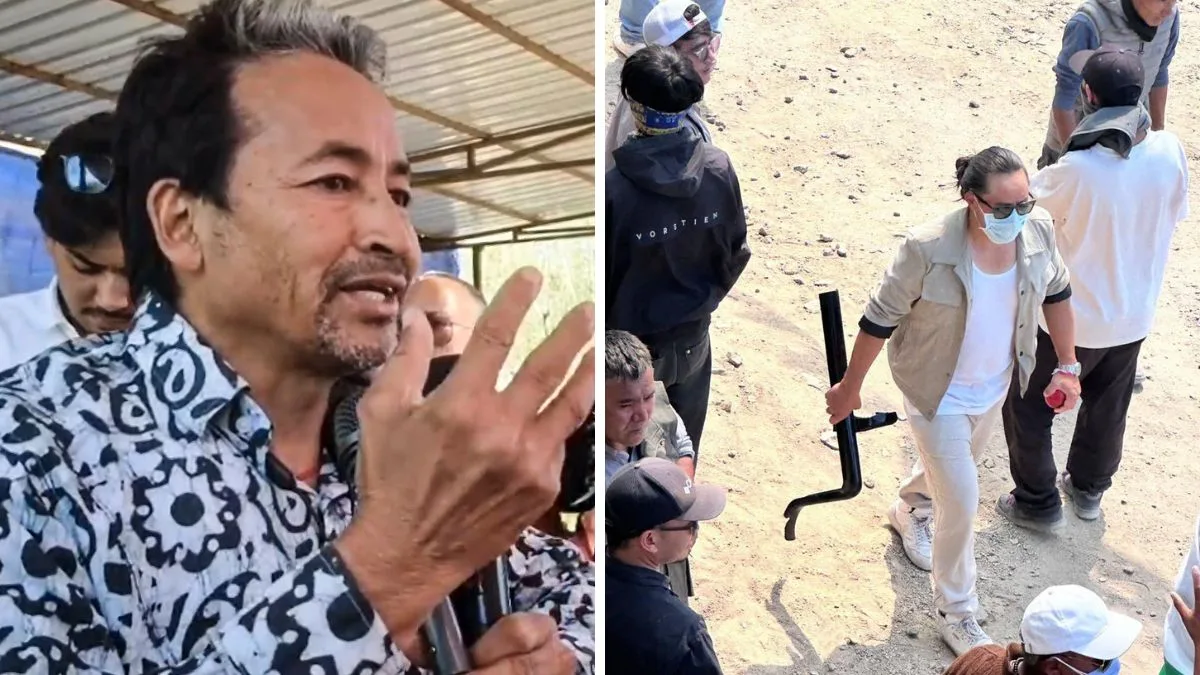
Fast forward to September 24, 2025, those same streets turned into battlegrounds. Four lives were lost, BJP offices set ablaze, and mobs armed with stones and sticks roamed Leh. Footage surfaced of Congress councillor Stanzing Tsepang inciting crowds with weapons, fuelling suspicions that unrest was not spontaneous but carefully orchestrated.

What changed in six years for gratitude to give way to violence?

Tracing Ladakh’s long struggle for identity

The desire for Ladakh’s separate status is not a creation of 2019; it dates back to 1948, when local leaders urged Jawaharlal Nehru for autonomy. In 1964, Kushok Bakula Rinpoche mobilised Ladakhis for UT status. In 1989, protests escalated, with the Ladakh Buddhist Association (LBA) presenting memorandums to Delhi. The eventual creation of the Ladakh Autonomous Hill Development Council (LAHDC) in 1995 only partially addressed their aspirations.

For decades, Congress governments avoided tampering with Article 370, which would have allowed Ladakh’s separation from Jammu and Kashmir. The Modi government finally delivered, fulfilling a 70-year-old demand in 2019.

But the narrative soon shifted.

From UT to statehood: The escalation of demands

After achieving UT status, the Centre launched multiple development projects, including a central university, a hotel management institute, new colleges, roads, bridges, and packages worth crores. Yet, suspicion grew that outsiders would take Ladakhi land and resources.

In 2023, Wangchuk began his outdoor hunger strikes, demanding “constitutional safeguards.” His protests gained traction, drawing support from the Leh Apex Body (LAB) and Kargil Democratic Alliance (KDA). By 2024, sit-ins, padyatras, and strikes became regular features.

The demands expanded to full statehood, Sixth Schedule inclusion, a separate Public Service Commission, and two Lok Sabha seats. The Home Ministry accepted two of these demands and initiated structured dialogues. Meetings with Home Minister Amit Shah reassured Ladakh’s leaders that Delhi was open to further negotiations.

Yet, even as talks were ongoing and new meetings scheduled for September 25-26 and October 6, violence broke out.

The shadow of conspiracy

This raises the central question: If talks were underway, why ignite unrest?

The Home Ministry revealed that multiple formal and informal discussions had taken place with Ladakhi leaders. But on the eve of fresh negotiations, mobs turned violent. Videos of Wangchuk invoking “Arab Spring” and Nepal’s GenZ protests added to concerns that global protest playbooks were being transplanted into Ladakh.

His rhetoric echoed not democratic negotiation but revolution: “The government has denied us democracy and employment. Circumstances could escalate into a crisis.”

Was this merely agitation or a script for chaos?

Congress’s role under scrutiny

The violence would have seemed like spontaneous anger if not for the leaked footage of Congress councillor Tsepang openly inciting mobs with weapons. The BJP quickly released the videos, alleging a Congress-Wangchuk nexus designed to destabilise Ladakh.

This allegation gains weight when seen against the broader political backdrop. Congress, which for decades failed to grant Ladakh its UT status, now finds itself aligning with protests against the very move Ladakhis once celebrated.

Why the Shift? The politics behind the protests

Three factors explain the transformation of Wangchuk from “grateful reformer” to “accused instigator”:

Political Exploitation of Aspirations: Genuine demands for safeguards were hijacked by opportunistic politics. By invoking international protest templates like Nepal’s GenZ or the Arab Spring, Wangchuk framed Ladakh’s struggle as a revolutionary crisis, not a democratic dialogue.

Congress’s Attempt to Reclaim Space: Having lost credibility on Ladakh, Congress now backs agitators to portray BJP as insensitive to local concerns, even if it means igniting violence.

Global Funding Questions: Wangchuk has faced scrutiny over foreign connections and funding, raising concerns about whether outside influences are fuelling Ladakh’s volatility.

The cost of manufactured unrest

The September violence has left Ladakh scarred, four lives lost, BJP offices charred, security vehicles destroyed, and deep mistrust among communities. What was once a national success story of peaceful integration now risks being overshadowed by an impression of chaos.

For India, the stakes are higher than local politics. Ladakh borders both Pakistan and China, making stability in the region not just a domestic issue but a matter of national security.

Dialogue vs Destabilisation

The Modi government has reiterated its commitment to dialogue. A High Powered Committee continues to negotiate demands with Ladakhi leaders. Amit Shah’s assurances remain on record. The Centre has already conceded key administrative demands and signalled openness to discuss constitutional safeguards.

But the sudden turn to violence, even as talks continued, suggests that for some actors, chaos is preferable to compromise.

A cautionary tale of betrayed trust

Sonam Wangchuk’s journey, from thanking Modi for Ladakh’s UT status to inciting violence that left four people dead, symbolises the dangers of political opportunism and external manipulation. Congress’s visible involvement deepens the suspicion that legitimate aspirations were twisted into a conspiracy for unrest.

The tragedy of Ladakh is not that its people demanded more, it is that their aspirations were cynically hijacked, just as peace and progress were within reach.

Topics: Ladakh unrestSonam Wangchuk protestsCongress collusionBJP offices attackedLadakh UT statusSixth Schedule demand
ShareTweetSendShareSend
✮ Subscribe Organiser YouTube Channel. ✮
✮ Join Organiser's WhatsApp channel for Nationalist views beyond the news. ✮
Previous News

Navratri 2025: Know the importance of the sound of the bell during rituals and puja

Next News

Temples are the centers of unity and awakening of inner consciousness: Dattatreya Hosabale

Related News

Map of Ladakh

How many MLAs can be there in Ladakh if Legislative Assembly is created? In 2014, as part of J&K state, it had 4 MLAs

Sonam Wangchuk

Centre cancels FCRA licence of Sonam Wangchuk’s NGOs amid Ladakh violence; CBI probe intensifies 

Load More

Latest News

FIR filed against the Islamists in the Love Jihad case in Bhopal

Love Jihad again in Bhopal: Minor Hindu girl forced to drink beer, trapped and pressured to convert by Islamists

The ₹100 Crore Dhaba: How Amrik Sukhdev Revolutionised Highway Dining in India

The Dhaba Story: The family that changed highway dining

After TCS Controversy, Wipro Faces Fresh 'Corporate Jihad' Allegations as Former Employee Details Harassment, Religious Pressure and Forced Resignation

Exclusive | Corporate Jihad at Wipro? Hindu employee says Shahina told her, ‘Accept Islam, I’ll marry you to a Sheikh’

Mizoram CM Lalduhoma says Myanmar refugee influx has become a burden

Myanmar refugee influx has become a burden on Mizoram: CM Lalduhoma

Prime Minister Narendra Modi

PM Modi to launch Rs 21,770 cr mega projects in Surat & Daman; Infrastructure, healthcare among key projects

Ebola medical countermeasures that were sent by Bharat arrived at Africa’s Ebola Continental Supply Chain mechanism in Entebbe, Uganda bringing the total to just under 50MT

Ebola Crisis in Uganda: India delivers life-saving medical supplies to African nation

Cabinet approves Rs 9,585 crore scheme to replace old trucks and buses in Delhi-NCR

Delhi-NCR gets major pollution relief push as centre clears Rs 9,585 cr vehicle replacement scheme for trucks and buses

A representative image generated using AI

BHAVYA Scheme to transform India’s Manufacturing Landscape: DPIIT secretary calls for investment-ready industrial parks

Keralam: Madrasa Ustad Shemeer Asari sends Obscene video to Girls in WhatsApp Group, asks if they can do the same

Keralam: Madrasa Ustad Shemeer Asari sends Obscene video to Girls in WhatsApp Group, asks if they can do the same

Board outside the office of Karnataka Lokayukta

Karnataka government accused of shielding tainted officials as Lokayukta probes remain stalled

Load More
  • Privacy
  • Terms
  • Cookie Policy
  • Refund and Cancellation
  • Delivery and Shipping

© Bharat Prakashan (Delhi) Limited.
Tech-enabled by Ananthapuri Technologies

  • Home
  • Search Organiser
  • Bharat
    • Assam
    • Bihar
    • Chhattisgarh
    • Jharkhand
    • Maharashtra
    • View All States
  • World
    • Asia
    • Africa
    • North America
    • South America
    • Europe
    • Australia
  • Editorial
  • Operation Sindoor
  • Opinion
  • Analysis
  • Defence
  • Culture
  • Sports
  • Business
  • RSS @ 100
  • Entertainment
  • More ..
    • Sci & Tech
    • Vocal4Local
    • Special Report
    • Education
    • Employment
    • Books
    • Interviews
    • Travel
    • Health
    • Politics
    • Law
    • Economy
    • Obituary
  • Subscribe Magazine
  • Read Ecopy
  • Advertise
  • Circulation
  • Careers
  • About Us
  • Contact Us
  • Policies & Terms
    • Privacy Policy
    • Cookie Policy
    • Refund and Cancellation
    • Terms of Use

© Bharat Prakashan (Delhi) Limited.
Tech-enabled by Ananthapuri Technologies