





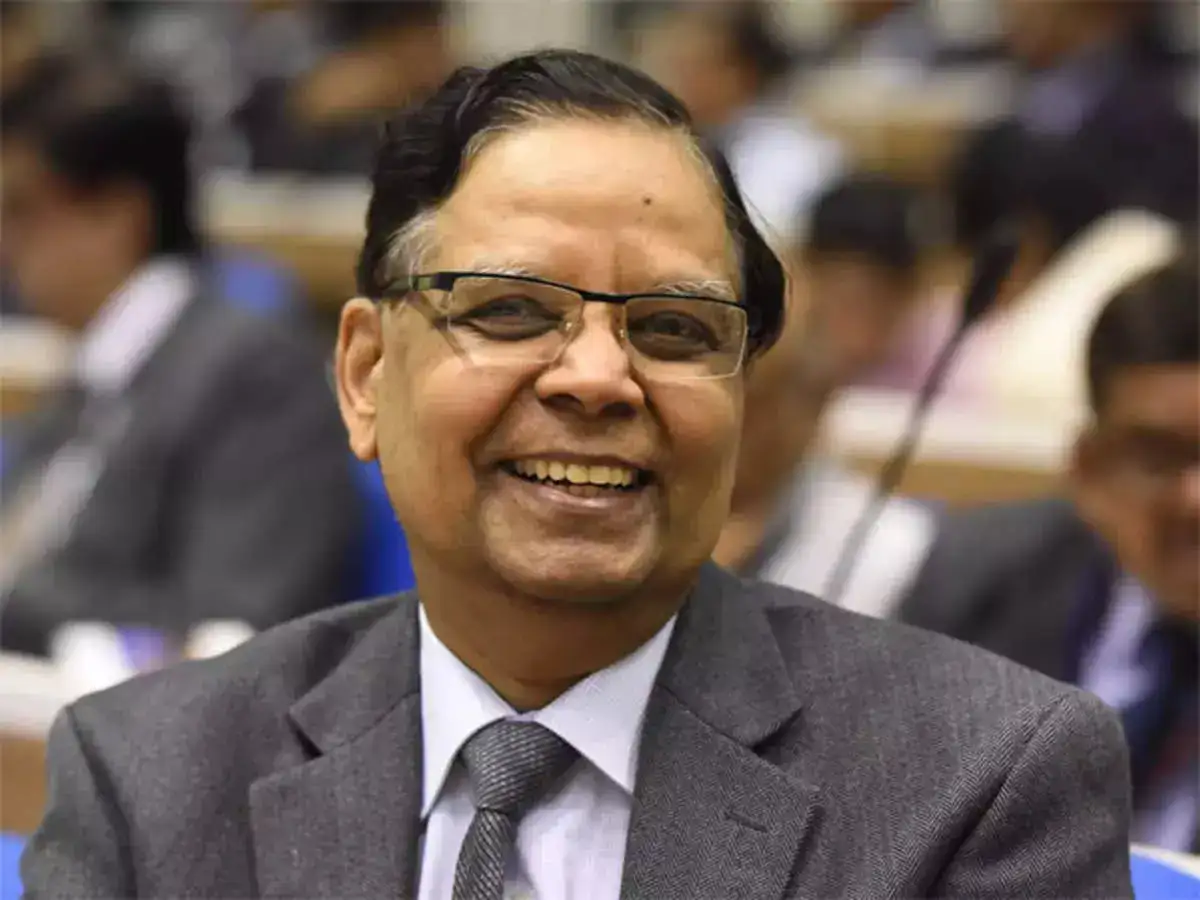
Economist and Sixteenth Finance Commission Chairman Arvind Panagariya appeared before the Joint Parliamentary Committee (JPC) on the 129th Amendment Bill to argue for “One Nation, One Election”. In his written submission followed by oral testimony, he highlighted how staggered polls impose fiscal burdens, stall reforms, and trap governments in a “perpetual campaign cycle.”
“Once-in-five-year elections would give both union and state governments a clearer policy horizon, strengthen governance, and encourage private investment,” Panagariya told lawmakers.
Drawing from his experience as Finance Commission Chair, Panagariya pointed to the Model Code of Conduct (MCC) as a recurring hurdle.
“The Commission lost two crucial months in 2024 due to assembly polls,” he explained. “This is but one example, repeated enforcement of the MCC interrupts policymaking, delays procurement and project execution, and shortens the effective reform window.”
He warned that reforms requiring close Centre-state coordination, like taxation frameworks and subsidy rationalisation, often get delayed when states are busy preparing for elections.
Tracing electoral history, Panagariya reminded the panel that India’s first four general elections (1951-52, 1957, 1962, 1967) were conducted nearly simultaneously.
In fact, in 1957, leaders had even dissolved seven assemblies early to align them with Lok Sabha polls. “The makers of the Constitution clearly saw merit in simultaneous elections,” he argued, adding that had they anticipated the present cycle of frequent polls, they would have opted for such an arrangement from the start.
Panagariya cited research by NK Singh and Prachi Mishra, which found that during the 1950s and 60s—when union and state elections were simultaneous—GDP growth was 1.5 percentage points higher than in later decades of staggered polls. The study attributed this to better fiscal quality and greater focus on capital expenditure.
He also invoked international scholarship, including Yale economist William Nordhaus’s “Political Business Cycle” and later studies by Alberto Alesina, Nouriel Roubini, Gerald Cohen, showing how elections trigger populist spending.
“Incumbents expand subsidies and transfers before polls, often at the expense of long-term investment,” he noted, adding that evidence from India, Colombia, and other developing nations confirmed this trend.
According to Panagariya, staggered polls compel political parties to repeatedly announce subsidies and transfers, multiplying fiscal costs and leaving little room for capital spending.
“Simultaneous elections would check this tendency by concentrating electoral incentives into one window every five years,” he suggested.
Summing up his case, Panagariya said: “The costs of frequent elections—in governance, fiscal management, and economic reform, are clear. A once-in-five-years election cycle will strengthen policy continuity and support growth.”
He framed the debate as a choice between stability and continuous electioneering, making a strong appeal for reforms through the 129th Constitutional Amendment Bill.
The JPC, chaired by PP Chaudhry, is holding consultations with economists and policy veterans before finalising its recommendations. On Wednesday, apart from Panagariya, the committee was also scheduled to hear from former Planning Commission Chairman Montek Singh Ahluwalia.
The government has argued that “One Nation, One Election” would not only reduce costs and administrative burden, but also create a more stable and predictable environment for governance and business.












Comments