






The Arthayam Conclave, jointly organised by Organiser and the National Stock Exchange (NSE), entered its fifth session with “Ekatma Manav Darshan in Action.” While other sessions engaged with finance, diplomacy, and cooperative economies, this session zoomed into the lived realities of Bharat’s villages, the wisdom of its traditions, and the role of education in shaping a self-reliant future.
Commemorating sixty years of Pandit Deendayal Upadhyaya Ji’s philosophy of Ekatma Manav Darshan (Integral Humanism), the panel featuring Atul Jain, Gajanan Dange, Varsha Parchure, and Prof. Shashikala reflected on how this vision is not merely a theory but a lived reality in Bharat’s grassroots practices. They shared how, through their respective organisations and institutions, they have been applying and reviving Integral Humanism in fields ranging from water conservation and rural development to education reform and cooperative community initiatives.
Opening the discussion, Atul Jain Ji underlined that Bharat’s cultural and folk traditions are not symbolic remnants but living solutions.
“Lok Devtas are the true expression of Ekatma Manav Darshan. They reflect how our society has, for centuries, seen Dharma and nature as interlinked,” he said, emphasising that the philosophy manifests in the daily lives of communities.
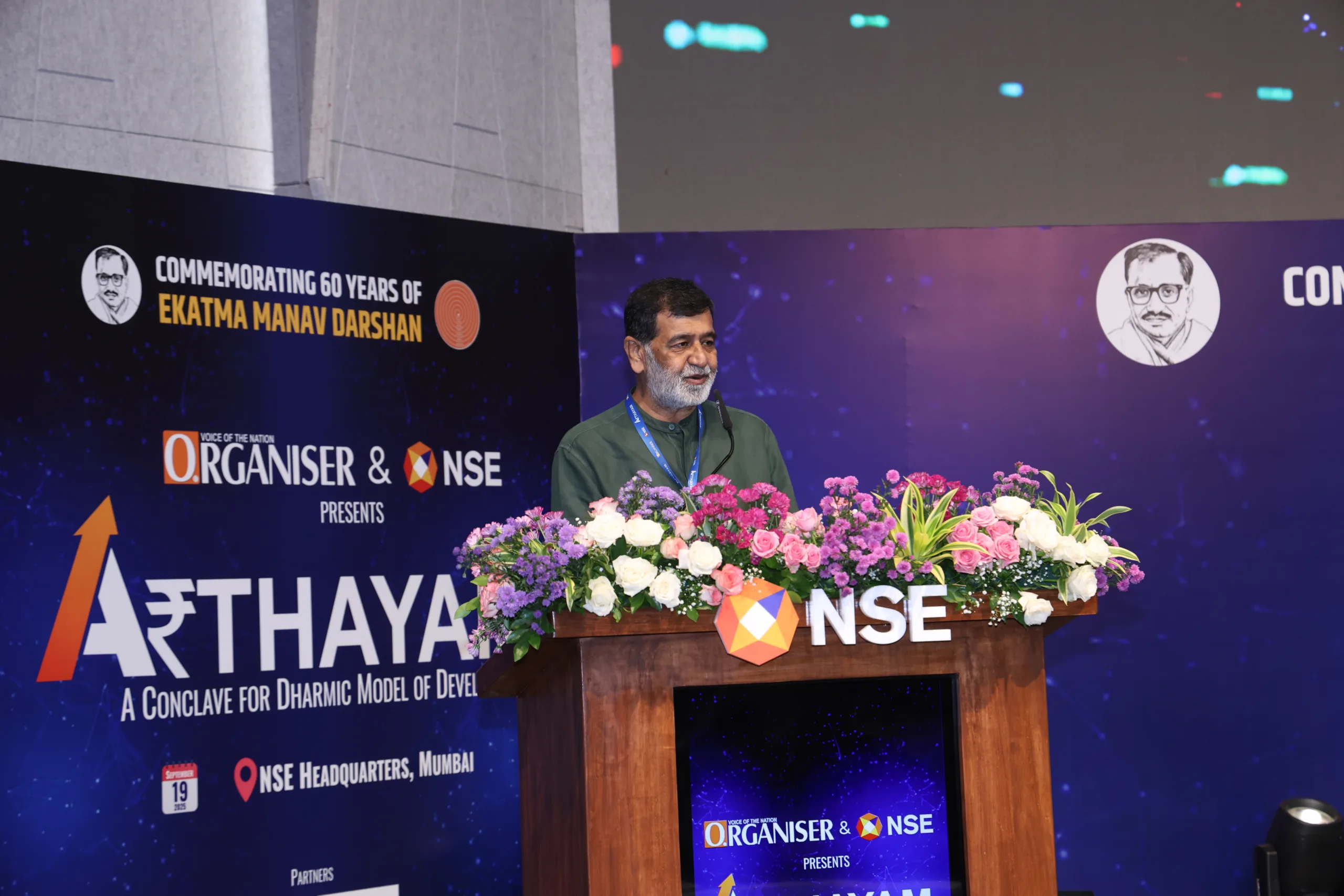
He noted that practices of water conservation, temple tanks, sacred groves, and village ponds were not merely ecological arrangements but civilisational expressions of harmony between humans and nature.
“If we want sustainable futures, we must adopt these traditions consciously in our governance and daily lives,” he urged, calling for sanitation practices rooted in culture to be reintroduced into policy frameworks.
Gajanan Dange’s deliberation painted a stark picture of village transformations over the last seventy years. He argued that unchecked modernisation and loss of cultural grounding had upturned village life.
“Girls no longer want to marry farmers sons. They do not want to put their hands in gobar. This is the reality we must face,” he observed, highlighting the widening disconnect between traditional livelihoods and modern aspirations.
He warned of the social consequences of distressed migration. “Where migration has not happened, stories of resilience emerge. But where it has, we see painful results.”
Sharing an example of a migrated family, he shared, “Their sisters and daughters go to big cities, and when they return, they come back with children whose fathers are unknown. The village then struggles with how to give them dignity and space,” he said.
Pointing to the ICAR Natural Resource Index, Dange Ji described the findings as alarming. “Our resources are degrading. Our systems are collapsing. We must restore Bharat to the vision of a garden, not a wasteland,” he stressed.
He used a telling metaphor: “We are on the highway and cannot look back. But if we must take a U-turn, how do we do it?”
To counter this drift, his team has developed a curriculum titled “Apna Parisar, Apni Pehchan”, aimed at helping villagers rediscover their identity and reconnect with their local environment. He shared multiple examples of how Deendayal Ji’s vision of Dharmic development has provided practical guidance for community-level agricultural and social challenges.
Speaking from her experience with Parivartan Mela Sanstha, Varsha Parchure Ji focused on grassroots transformation and reverse migration.
“Ground-level work is tough. We need to drag people back to vision-based ideas and action. I work at the micro level, changing people’s thinking first,” she said.
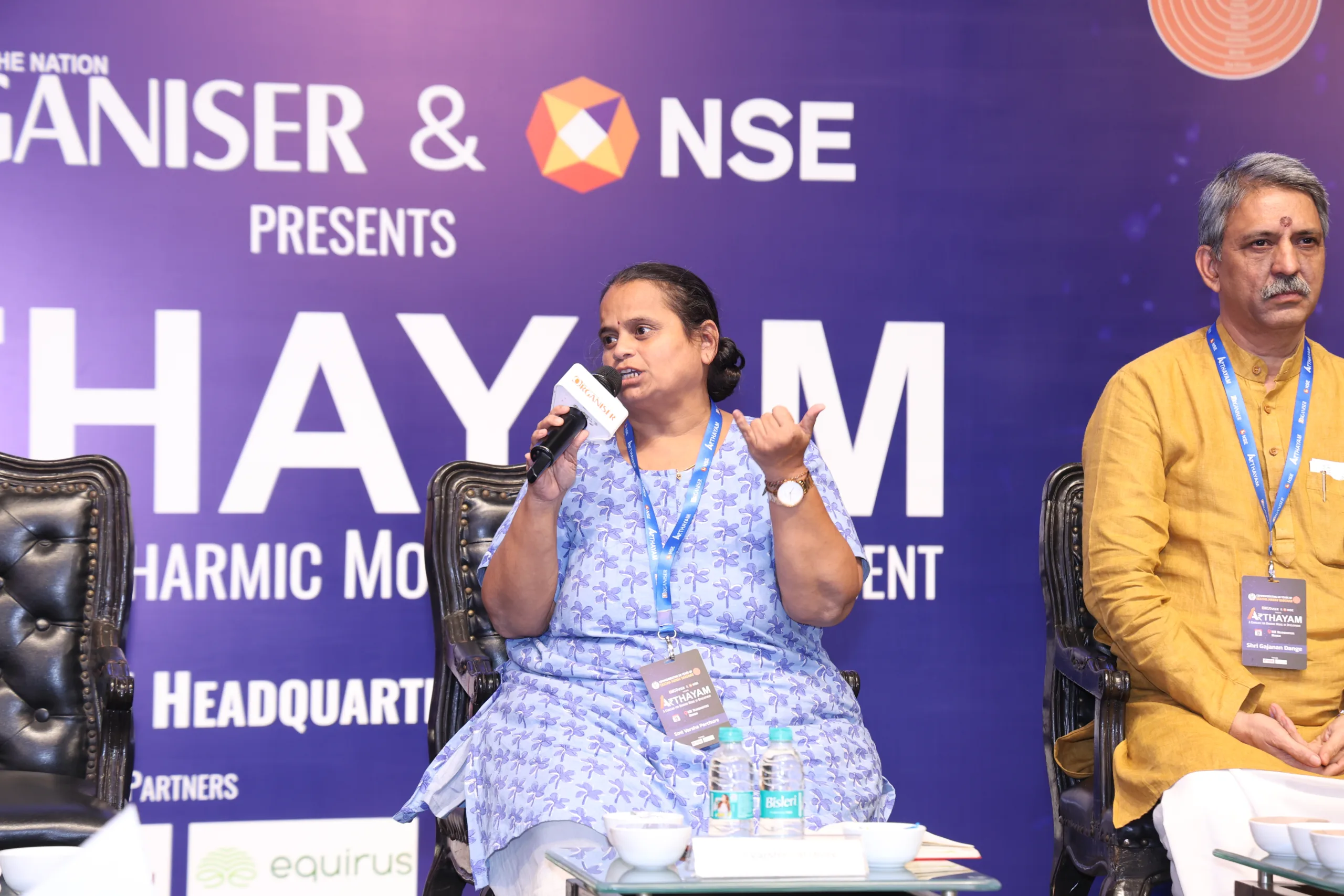
She outlined the organisation’s four-pronged model for holistic community revival:
Shikshan ka prachar aur prasar – spreading education rooted in values.
Vyakti ka vikas, samaj ka vikas – aligning individual development with community growth.
Sangathan – building organisational strength.
Sahkarita and participation – fostering cooperative spirit.
Her call to action was resolute: “We will not wait for someone from outside to come and bring change. We must do it ourselves.”
Prof Shashikala linked Deendayal Ji’s philosophy to contemporary education reforms, especially the National Education Policy (NEP) 2020. She argued that education is the most critical arena for manifesting Integral Humanism.
“When we are rethinking Deendayal Ji’s philosophy, we must see how it is reflected in NEP 2020. It enables holistic development of body, mind, intellect, and soul and fosters self-reliance,” she said.
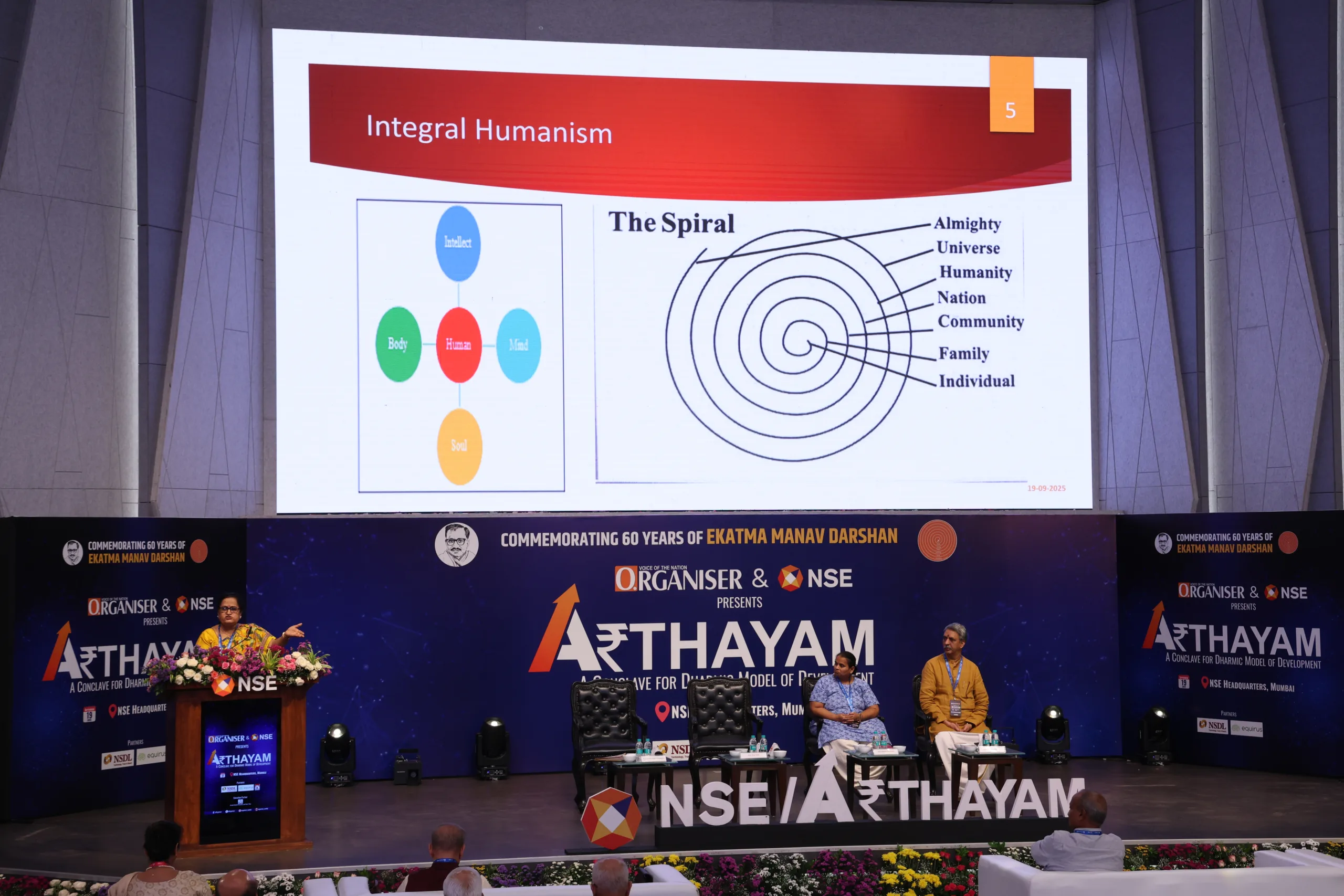
She listed four pillars of the NEP vision that resonate with Integral Humanism:
Education rooted in the Indian ethos.
Curriculum that instils respect for fundamental duties and constitutional values.
Deep bonding with roles and responsibilities in society.
A strong sense of pride in being Indian.
“Our brains will accelerate growth in the knowledge domain, but this must remain grounded in Dharma and cultural pride,” she reminded.
The session concluded with a shared realisation: Ekatma Manav Darshan is not merely a theoretical philosophy but an active guide to Bharat’s challenges today.
From Atul Jain Ji’s revival of water wisdom and cultural conservation, to Gajanan Dange Ji’s urgent warnings on migration and resource depletion, to Varsha Parchure Ji’s grassroots community efforts, and Shashikala Ji’s vision for education rooted in Dharma, the session showcased Integral Humanism in practice.
The overarching message was clear: Bharat’s future prosperity will not come from borrowed templates but from reconnecting with its own traditions, wisdom, and civilisational philosophy.













Comments