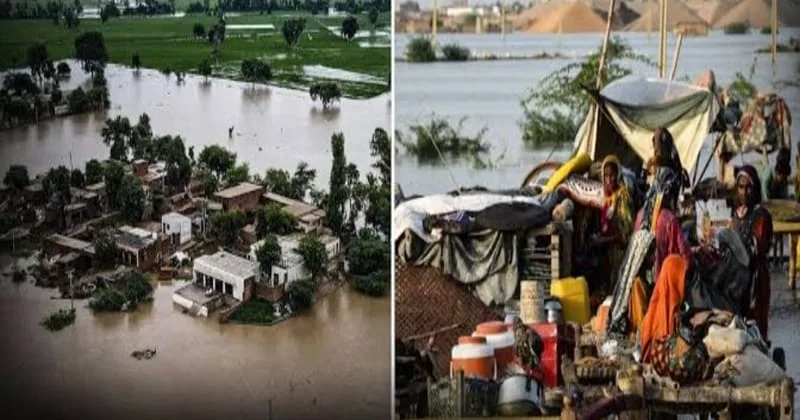
Punjab, the land of five rivers, holds a history that predates many modern Indian states, not merely in terms of antiquity, but in the legacy of its cultural and agricultural wealth. Once the cradle of the Indus Valley Civilisation and later the heartland of India’s Green Revolution, Punjab has long been celebrated as India’s granary. What is less known is that Punjab’s story is also marked by a quiet vulnerability—an enduring battle with the very rivers that nourish its lands. The state’s historical relationship with water has always been paradoxical: a source of life and destruction. Today, as floods wreak havoc across its plains more frequently and more severely, it is important to examine how the convergence of geography, neglect, and mismanagement has transformed a manageable risk into an annual disaster.
Punjab’s physiology is unique. Spread across a vast alluvial plain and crisscrossed by major rivers like the Sutlej, Beas, Ravi, and Ghaggar, the state is endowed with one of the most fertile land masses in the world. But this very abundance also makes it flood-prone. Unlike regions with natural drainage gradients or hilly escapes, Punjab’s flat terrain causes water to stagnate easily. Historically, the riverine systems had natural floodplains and wetlands that absorbed seasonal excesses. However, rapid urbanisation, agricultural expansion, and encroachment have narrowed or destroyed these buffers. Floodwater now has nowhere to go but into homes, fields, and roads. In earlier times, communities understood the rhythm of rivers and adapted their lifestyles accordingly. Seasonal migration patterns, elevated housing, and community grain storage all played a role in building resilience. But with the state’s growing dependence on centralised infrastructure and governance, local wisdom has faded, replaced by state mechanisms that have often fallen short. The modern state apparatus was expected to provide large-scale protection through embankments, canals, dams, and disaster response forces. Unfortunately, the outcomes have been inconsistent at best, and catastrophic at worst.
The recent floods in Punjab have underscored the fragile state of this governance. Sudden downpours and water releases from upstream reservoirs led to widespread submersion of farmland and residential areas. Entire villages in districts like Rupnagar, Patiala, and Fazilka were marooned. Crops were destroyed, livestock drowned, and lives displaced. What followed was a stark exposure of unpreparedness. Relief came late or not at all to many pockets of the state. Rescue operations, though present in some areas, were undermanned and under-resourced.
Temporary shelters were not adequately equipped, and several complaints emerged of discrimination or favouritism in the distribution of aid. Crucially, the damage went far beyond physical infrastructure. The absence of a state-level insurance mechanism in Punjab has left farmers and small business owners doubly vulnerable. Despite being one of the largest contributors to the national food basket, Punjab does not have a comprehensive crop or property insurance policy underwritten or subsidised by the state. National insurance schemes like PMFBY exist, but enrolment is limited and awareness is poor. In many cases, compensation announcements are made post-disaster, but actual funds take months or years to materialise. This gap leaves citizens dependent on goodwill or political convenience, rather than protected by rights or guaranteed safety nets. In the absence of an institutionalised compensation model, loss in Punjab is not just a matter of weather, but a matter of financial insecurity and generational setback.
What makes this all the more troubling is that the state does not suffer from a lack of funds, but rather from how they are utilised. A significant portion of budgetary allocations marked for flood control, disaster preparedness, and agricultural stabilisation either remains unspent or is diverted elsewhere. In recent years, several reports and audit queries have raised concerns about how funds meant for embankment strengthening, drainage channel maintenance, and flood-resilient infrastructure have either been underutilised or untraceably expended. In some districts, repair works marked complete on paper were not even initiated on the ground. When floods hit, these same embankments gave way, and officials cited “unprecedented rains” as the cause, while conveniently ignoring the ignored warnings from environmental engineers and local communities.
The current state administration, led by the Aam Aadmi Party, came to power with promises of transparency, efficient service delivery, and a break from the traditional political inefficiency that has long plagued Punjab. However, the results in crisis management tell a different story. Relief efforts during the recent floods were uneven across districts, with delays in fund disbursement, inadequate medical and food supplies in shelters, and poor coordination between local bodies and the state emergency response units. While public announcements and press briefings projected control and confidence, ground-level realities were starkly different. Many affected citizens have yet to receive compensation, while public health concerns grow due to stagnant water and damaged sewage systems.
More worryingly, several sources have indicated misappropriation in the allocation of emergency response funds. Emergency tenders were floated with limited transparency, and procurement processes bypassed standard accountability checks under the pretext of urgency. This might have been justified if results followed swiftly, but when equipment and supplies failed to arrive on time, it raised the spectre of mismanagement. When questioned, officials often blame bureaucratic backlog or force majeure. Yet these excuses cannot erase the growing perception that governance is failing to deliver where it is most urgently needed.
The criticism here is not partisan—it is institutional. Any government, regardless of its political leaning, must be judged on the efficacy of its administration and fiscal responsibility, particularly in times of crisis. In Punjab’s case, the underlying issue is not only poor disaster response, but the lack of long-term planning. There is minimal investment in flood modelling, community-based resilience training, or sustainable infrastructure. The state has yet to fully integrate modern hydrological tools such as real-time flood forecasting, satellite imagery, and AI-powered risk mapping into its disaster response strategies. Meanwhile, local officials continue to rely on outdated data and manual alerts, delaying critical decisions.
The irony lies in the fact that a region as agriculturally and culturally rich as Punjab remains so fragile in the face of a recurring natural challenge. Floods are not new to Punjab, nor are they always unavoidable. What is avoidable is the scale of human suffering, the delay in relief, and the erosion of public trust. If a state that produces such a large share of the country’s wheat and rice cannot protect its own farmers from recurring flood damage, then the problem is not one of capacity, but of governance will.
One of the lasting impacts of this mismanagement is psychological. Repeated experiences of disaster without adequate support erode people’s belief in institutional justice. Families that have lost homes and livelihoods to floods year after year are increasingly less likely to trust announcements, enrol in state schemes, or engage with the democratic process. This withdrawal is dangerous. Civic participation is a vital pillar of any functioning democracy, and when people disengage, it allows inefficiency and corruption to deepen unchecked.
The way forward must involve a collective reimagining of how Punjab prepares for and responds to floods. This includes the establishment of a robust, state-funded insurance scheme to protect farmers and small businesses; the integration of modern hydrological data into planning and forecasting; the creation of independent, publicly monitored audit mechanisms for disaster fund utilisation; and most critically, a political culture that values competence over optics. None of these changes are impossible. They require a shift in priorities—from symbolic relief to systemic preparedness.
Floods are not merely acts of nature—they are, in Punjab’s case, deeply political and administrative events. While the rains may come and go with monsoon patterns, the damage they cause reflects choices made by those in power. Punjab’s people deserve better. They deserve governance that anticipates disaster, mitigates risk, and above all, honours the legacy of a land that has given so much to the nation.