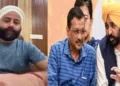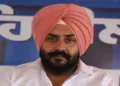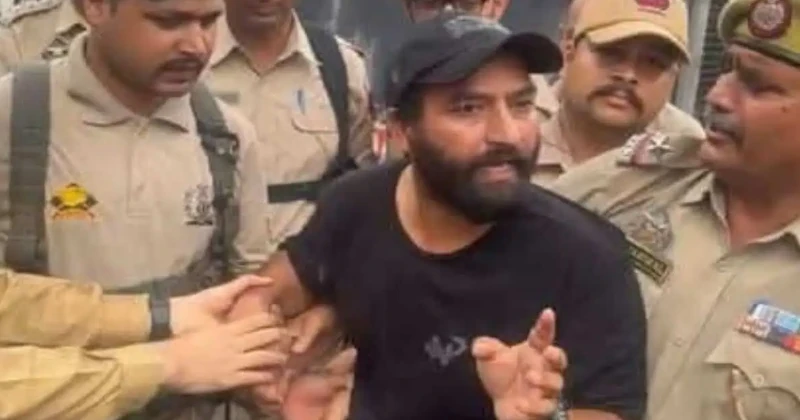
Jammu: Aam Aadmi Party (AAP) MLA from Doda-52 in J&K, Mehraj Din Malik, was arrested and booked under the stringent Public Safety Act (PSA). This unprecedented move was for the first time in J&K’s history that a sitting legislator has been detained under PSA signals the administration’s firm message: no elected office can be used as a shield for abuse, incitement, or disruption of public order.
Malik, who won the 2024 Assembly elections from Doda, has earned notoriety in just a year for his fiery speeches, public insults against officials, and repeated confrontations inside and outside the Assembly. His most recent outburst where he hurled unparliamentary abuse against Deputy Commissioner Harvinder Singh and his family proved to be the tipping point.
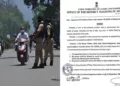
Acting on orders issued by Deputy Commissioner Singh, a team of police detained Malik in full public view from Doda’s Dak Bungalow, where he was preparing to visit flood-hit areas of his constituency. Officials immediately drew up a dossier citing his actions as “prejudicial to the maintenance of public order,” and he was shifted to Bhaderwah jail under PSA provisions.
Aam Aadmi Party MLA from Doda-52 of Jammu & Kashmir Mehraj Din Malik has been arrested and booked under Public Safety Act (PSA). Action taken as activities of the said MLA posed a grave threat to peace, public order and tranquility in the district. pic.twitter.com/6BjzliSqDF
— Aditya Raj Kaul (@AdityaRajKaul) September 8, 2025
A communique circulated by the Assembly Secretariat stated, “After examining relevant materials, reports, and circumstances, authorities concluded that the continuance of such activities posed a grave threat to peace, public order and tranquility in the district.”
The PSA allows detention for up to two years without trial, a preventive measure reserved for serious cases where regular law and order mechanisms are insufficient. Officials insist Malik’s behaviour met that threshold, pointing to a pattern of repeated misconduct, abuse of authority, and public incitement.
While AAP and its allies have rushed to portray Malik as a victim of authoritarianism, ground realities paint a different picture.
- Serial Abuser of Officials- Government employees across Doda district have accused Malik of habitual abuse, intimidation, and threats. After his detention, employees staged demonstrations in solidarity with DC Harvinder Singh, lauding his “exceptional service” during recent floods and condemning Malik’s “baseless allegations” as “deplorable and unacceptable.”
- Incitement of Youth- Intelligence reports flagged Malik’s repeated attempts to stir young people against the administration using inflammatory speeches, framing governance failures as deliberate discrimination.
- Assembly Confrontations- In April, Malik sparked uproar inside the Assembly by making derogatory remarks about Hindus drinking during festivals and by targeting PDP founder Mufti Mohammad Sayeed. He later claimed his statements were taken out of context, but the damage was done leading to clashes with BJP and PDP legislators.
- Shielding Criminal Elements- Malik openly protested the detention of a constituent under PSA, demanding his release. When denied a meeting with DC Singh, he resorted to hurling abuse and inciting supporters. Officials allege this was part of a wider pattern where Malik attempted to use his MLA position to obstruct lawful actions against disruptive elements.
- Obsession with Public Drama- Just before his arrest, Malik released a video claiming he was being prevented from visiting flood-hit areas. In it, he alleged: “Many areas in my constituency are without roads, ration, and shelter after homes were damaged, but I am being detained here.” Officials, however, clarified that no such restriction was imposed Malik was already under scrutiny for using flood relief visits as platforms for political provocation.
Almost immediately, the move was seized upon by opposition parties in J&K, who sought to frame the detention as a case of authoritarianism.
- Omar Abdullah (J&K CM): “There is no justification for detaining Mehraj Malik under PSA. If the unelected government can use its powers against an elected representative like this, how can people continue to have faith in democracy?”
- PDP’s Waheed Parra: “Strongly condemn the use of PSA against MLA Mehraj Malik. Such draconian laws are weaponised to silence political voices.”
- JKPC’s Sajad Lone: “This is a soulless democracy. What is the point of elections if an elected representative cannot voice his sentiments?”
- CPI(M)’s M.Y. Tarigami: “Slapping PSA on an elected member of the Legislative Assembly sets a very wrong precedent.”
- Congress’s G.A. Mir: “Unjust detention of MLA Mehraj Malik under PSA is an undemocratic act that undermines the will of the people.”
While the rhetoric was strong, none of these leaders addressed the core issue Malik’s repeated abusive behaviour and incitement that had eroded trust between elected representatives and the administration.
As expected, AAP supremo Arvind Kejriwal leapt to Malik’s defence, tweeting, “Is demanding a hospital for the people of your area such a grave crime that an elected MLA has to be thrown in jail for it? Mehraj Malik is the lion of the Aam Aadmi Party.”
But this framing glosses over Malik’s misconduct. Demand for infrastructure is not the issue; the issue is Malik’s method abuse, incitement, and open defiance of law. By presenting Malik as a “lion,” AAP once again falls back on its tried-and-tested strategy: recast accountability as victimisation, paint law enforcement as authoritarian, and fuel street-style agitation politics.
BJP, lost to Malik in 2024 by 4,538 votes, welcomed the administration’s action. Party leaders argued that elected representatives must be held to the highest standards, not lowest. A local BJP leader remarked: “If ordinary citizens can face consequences for abusing officials and disturbing peace, why should an MLA be given a free pass? This is about equality before law.”
AAP’s entry into J&K politics was touted as a breakthrough, with Malik’s 2024 victory celebrated as the party’s foothold in the region. But instead of focusing on governance, Malik positioned himself as a perpetual agitator, more interested in confrontation than solutions.
His feud with DC Singh widely respected across the district for his disaster relief work backfired spectacularly.
His repeated assembly clashes showcased immaturity rather than leadership. His defence of individuals detained under PSA raised questions about whether he was aligning with disruptive elements for political mileage.
Today, instead of being seen as a fresh political alternative, AAP in J&K risks being branded as reckless, irresponsible, and disruptive a dangerous liability in a sensitive region. Mehraj Malik’s saga is not an isolated case. Across India, AAP has developed a pattern:
- Delhi: Ministers jailed in liquor scam cases, with Kejriwal himself facing arrest.
- Punjab: AAP leaders accused of sand mafia links and law enforcement interference.
- Goa: AAP candidates exposed for dubious backgrounds during assembly polls.
Each time, AAP’s response has been identical cry vendetta, paint leaders as victims, and mobilise street protests instead of answering tough questions. Malik’s detention fits neatly into this pattern, showing how the party’s reckless approach translates even into sensitive border regions like J&K.