





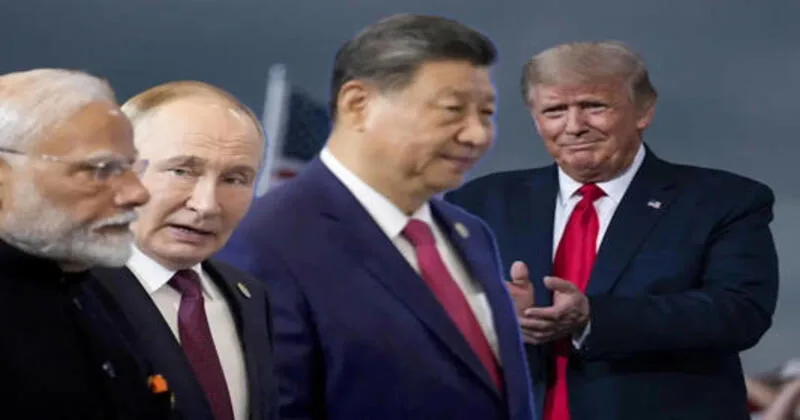
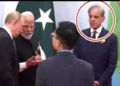
The narrative being circulated in India is that the United States’ tariff policy is narrowing the differences between India and China. It is also being suggested that New Delhi is leaning on Beijing to confront Washington. This, in turn, has created a misleading impression that India’s partnership with the United States is weakening. The reasoning offered for this claim is Prime Minister Narendra Modi’s presence at the Shanghai Cooperation Organization (SCO) summit in China.
The reality, however, is different. The 2025 SCO summit was scheduled in October 2024, well before the current US President Donald Trump assumed office and the beginning of the second round tariff war. Linking Modi’s participation to US tariff policy is therefore disingenuous. India, committed to maintaining balanced relations with all major powers, has consistently avoided aligning itself with any one bloc.
A Gradual Thaw in India-China Relations
The decision to resolve outstanding disputes with China and expand cooperation was not sudden. It has been part of a longer process. In an interview earlier in April 2024, Prime Minister Modi expressed confidence that issues with China could be settled soon. Beijing, for its part, had also made similar overtures at various points. One significant step was China’s decision to appoint a new ambassador to India after an 18-month gap, signaling a willingness to restart dialogue. When it became apparent that Donald Trump, a vocal critic of China, was set to return to power, Beijing quickly indicated its readiness for talks with New Delhi. This culminated in an agreement on October 21, 2024 over patrol arrangements along the Line of Actual Control (LAC) in the Depsang and Demchok sectors. The pact effectively marked China’s withdrawal from claims it had advanced since 2020, a retreat comparable to its climbdown at Doklam in 2017. Two days later, Modi and Chinese President Xi Jinping met on the sidelines of the SCO summit in Kazan, Russia. The meeting consolidated the momentum towards stabilising ties.
Following this breakthrough, high-level contacts between India and China multiplied. External Affairs Minister S. Jaishankar held repeated discussions with Chinese Foreign Minister Wang Yi on restoring normalcy. In November 2024, defence ministers of both countries met formally during the ASEAN Defence Ministers’ Meeting in Laos. On 18 December 2024, the two sides revived the Special Representatives’ dialogue in Beijing, convening the 23rd meeting after a five-year hiatus. Momentum continued into 2025 when Foreign Secretary Vikram Misri travelled to Beijing in January for talks, while National Security Advisor Ajit Doval and Defence Minister Rajnath Singh also met Chinese counterparts in subsequent months.
In mid-July 2025, foreign minister Jaishankar visited China for the pre-SCO summit, his first trip to the country in five years. This was followed in August by the Chinese Foreign Minister’s visit to India, during which he extended a formal invitation for Modi to attend the SCO summit. Modi’s eventual visit to China on 31 August for the summit underscored the renewed engagement. Alongside, both countries’ military leaderships also conducted parallel discussions. These diplomatic initiatives were clearly driven by bilateral considerations and shared interests, rather than external pressure from US tariff policies.
India-US Ties Remain Robust
India’s engagement with China does not imply a weakening of its partnership with the United States. Despite tensions over tariffs and President Trump’s aggressive trade policies, the India-US relationship remains strong, particularly in defence and technology. A recent example is the agreement between Flowserve Corporation of the United States and India’s Core Energy Systems Limited to transfer Primary Coolant Pump (PCP) technology for nuclear reactors. The deal, signed in Washington in the presence of officials from the US Department of Energy and the Indian Embassy, was approved by both governments despite the tariff war.
Equally significant is the sequencing of Modi’s travels, his China visit followed a two-day trip to Japan. Later this year, India will host the Quad summit of India, the US, Japan, and Australia in November, a development certain to unsettle Beijing. Clearly, India’s strategic posture remains firmly aligned with its democratic partners.
India has also not diluted its security stance towards China. It continues to reject Beijing’s territorial claims on the border. Despite Chinese warnings, India supplied BrahMos missiles to the Philippines in both 2024 and 2025. Nor has New Delhi altered its position on Chinese aggression in Southeast Asia, the South China Sea, or Taiwan. If anything, it is China that has softened its approach under pressure from facing both India and the US simultaneously after Trump’s return to power.
Economics at the Core
India’s dealings with China are fundamentally economic. With its domestic market suffering from overcapacity and trade frictions with the US, China urgently needs access to new markets to sustain its exports. The shrinking global space for Chinese goods has made India an attractive destination. For India, the relationship promises capital investment and supply-chain opportunities. Yet, this engagement is carefully calibrated, with India avoiding political concessions. Simultaneously, New Delhi continues to nurture its long-term economic partnership with the United States, which offers significant strategic advantages.
India’s competitive strengths, lower production costs compared to China, a young educated workforce, and the credibility of democratic governance, are already shifting global supply chains in its favour. A striking indicator is Apple’s production strategy that the number of iPhones manufactured in India increased fourteen-fold between 2020 and 2024, even as China’s share of Apple’s global output declined.
Looking ahead, forecasts suggest India is on track to become the world’s third-largest economy by 2028 and the second-largest by 2038. Achieving this will require expanding self-reliance and accelerating growth across sectors. The steps India is taking now, whether in diversifying global partnerships, securing technology transfers, or encouraging investment, are part of this strategy. They are not responses to American pressure, nor signs of dependence on China.
In essence, the recent warming of ties between India and China should not be misread as a tilt away from Washington. India’s diplomacy is rooted in strategic autonomy and the pursuit of its own political and economic interests. By engaging with both Beijing and Washington, while strengthening its role in groupings such as the Quad, New Delhi is reinforcing, not undermining, its global position.
Far from being trapped between rival power blocs, India is carefully positioning itself as an independent pole in world affairs. Its calibrated engagement with China, coupled with enduring ties with the US, reflects a pragmatic and forward-looking strategy, one that seeks to harness economic opportunities while safeguarding national security and interest.











Comments