






In an explosive revelation, Indian intelligence agencies have been quoted in an exclusive report saying that a foreign-backed “anti-India toolkit” is actively shaping US perceptions of India and influencing discussions within Donald Trump’s inner policy circle.
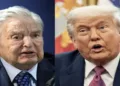
The campaign, allegedly supported by billionaire financier George Soros’s network of foundations, is said to operate through a nexus of foreign funding, diaspora activism, and targeted media narratives. Sources told CNN-News18 that the toolkit has contributed to rising negativity against India in policymaking forums, particularly in Washington.
Officials cited recent remarks by Trump’s trade adviser Peter Navarro, who controversially accused “Indian Brahmins” of profiteering from Russia-related oil trade and questioned India’s reliability as a partner.
According to sources, Navarro’s caste-referencing criticism reflects a broader toolkit strategy to highlight social fault lines, weaken India’s global image, and present New Delhi as an “untrustworthy ally” in strategic forums.
Enforcement agencies, including the Enforcement Directorate (ED), have tracked financial trails connecting Soros-backed entities like the Open Society Foundations (OSF) and the South Asia Equity Development Fund (SEDF) to Indian NGOs and consultancies.
In 2023, Soros-linked global funding reportedly crossed $1.7 billion, with India named a “prime target.”
Between 2023 and 2025, ED investigations uncovered Rs 300 crore allegedly routed through Mauritius-based entities and Indian advisory firms into “social-impact” start-ups and consultancies.
A direct transfer of Rs 25 crore from SEDF to Indian entities such as Rootbridge Services, Rootbridge Academy, and ASAR is now under probe for FCRA and FEMA violations.
A March 2025 raid in Bengaluru revealed an additional $2.9 million inflow through similar routes, raising further suspicions of systematic foreign-funded campaigns.
How the Toolkit operates
Officials describe the toolkit as a multi-step influence model, designed to weaponise narratives against India’s policies and leadership:
1. Funding: Overseas donors, often via tax havens or FDI channels, route funds into Indian NGOs or consultancy firms.
2. Narrative Creation: These entities generate reports, campaigns, or commentary on sensitive issues.
3. Amplification: Content is amplified globally via media platforms including ProPublica, The Intercept, Al Jazeera, The Washington Post, and The New York Times.
4. Diaspora Lobbying: Organisations like the Indian American Muslim Council (IAMC), Justice for All, and Hindus for Human Rights lobby US Congress and hold hearings on India.
5. Policy Penetration: Narratives seep into State Department reports, think tank papers, and UN/EU discussions, gradually shaping international perceptions.
Toolkit Themes: From Kashmir to Bihar Voter Rolls
According to intelligence sources, the toolkit model has been deployed on multiple fronts in recent years, including:
Kashmir post-Article 370 developments
CAA-NRC protests
Farmers’ agitation
Minority rights and press freedom debates
Special Intensive Revision (SIR) of Bihar’s voter rolls
Each campaign reportedly followed the same cycle: amplify grievances, internationalise issues, and portray India as an authoritarian or unstable democracy.
Impact on Trump’s Team
Despite Trump’s earlier record of strong strategic ties with India, officials say his camp is now under increasing pressure from internal advisers and external optics, shaped by toolkit-fed narratives.
“Repeated exposure to these narratives is gradually influencing US policy circles and Trump’s advisers,” a senior intelligence official said, adding that India is being portrayed as a high-risk partner in global media and diplomatic reports.
Objective: Delegitimising India’s Global Standing
Agencies believe the ultimate aim of the campaign is threefold:
1. Delegitimise India’s democratic credentials in the global arena.
2. Constrain India’s foreign policy independence, especially regarding its ties with Russia and China.
3. Erode India’s credibility as a long-term partner in Western strategic frameworks.
The campaign, sources said, is being closely monitored, with enforcement agencies continuing to map financial inflows, narrative networks, and diaspora lobbying strategies.
This latest intelligence warning shows how foreign-funded influence operations are no longer confined to domestic protests but have transnational consequences, capable of impacting India’s image in Washington, Brussels, and beyond.











Comments