





Every big or rich nation has illegal migrants who come there to earn a living. Poverty, lack of employment, poor governance, corruption and lawlessness, etc, compel people to leave their home country. Though the illegal migrants constitute the much-needed cheap labour force of the US, they become untraceable and pose a security risk for any country. US President Donald Trump wanted to remove nearly 11.4 million illegal migrants from the US in a harsh and dictatorial manner. A few months back, he had created a war-like situation in the USA. The illegal migrant issue can be solved if different countries evolve country-specific sustainable development models based on the diversity of economic sectors existing in their countries. It is also the responsibility of the rich nations to understand that they are also the cause of the illegal migrants; they also need illegal migrants who work as skilled and semi-skilled labourers at a very low cost. Without the migrants, the cost of living in the USA will increase manyfold. Besides, the rich countries do not weave their economic model on the basis of diversity of skills and different economic sectors; they are caught in the web of mono sector to create skill deficiencies in their own countries.
Mono-sector bias in the economic growth model only destroys the livelihood of people across the world. There were sustainable and diverse economic activities in different countries. Though those activities had not amassed wealth, those nature-based economic activities had kept unemployment, hunger and malnutrition at bay. While maximising profit by marketing products, projects and services, the rich nations ignore what is sustainable. As a result, people lose their livelihood and are compelled to migrate to other nations. The mass production started during the industrial revolution in the late 18th century, turned aggressive in the 19th and 20th centuries; today it is about to devour everything sustainable. Overexploitation of natural resources leads to deforestation, depletion of groundwater and destruction of biodiversity, etc. The number and the intensity of natural calamities have increased in the past two decades, causing deaths to thousands of people and economic loss to countries.
The world has lost 420 million hectares or 10.34 per cent of the total forest area since 1990 due to unsustainable economic growth. The Food and Agriculture Organisation estimates that 10 million hectares were still lost annually between 2015 and 2020. Deforestation causes landslides, intensifies the impact of floods, increases the atmospheric temperature, lets dangerous viruses escape from the forest, destroys hundreds of minor forest products, food backup, medicinal plants and cultural heritage, etc. The tribes that used to make eco-friendly utility items and added high value to their products have lost their skills in many countries. There has been a massive loss of livelihood across the world due to unsustainable economic activities.
Like forests, the depletion of water resources adversely affects the economy of a country. Groundwater charges the rivers, lakes and wetlands to save people from the impact of drought. It meets the drinking water and irrigation needs of 50% of the world’s population. The data from WRI’s Aqueduct Water Risk Atlas show that 25 countries — housing one-quarter of the global population — face extremely high water stress each year. And at least 50% of the world’s population — around 4 billion people — live under highly water-stressed conditions for at least one month of the year.
According to the 2025 Global Report on Food Crisis, acute hunger has grown in 2024 for the sixth consecutive year. Around 295 million people are now facing high levels of acute food insecurity, with the most people experiencing the most severe forms of acute food insecurity (IPC/CH5) and famine living in countries affected by conflicts. The annual State of Food Security and Nutrition in the World report said that around 733 million people faced hunger in 2023, about one in 11 people globally.
The Global Report on Food Crises (GRFC) indicates that acute food insecurity and child malnutrition rose for the sixth consecutive year in 2024, pushing millions of people to the brink, in some of the world’s most vulnerable regions. Around half of child deaths were linked to nutritional deficiencies. As per UNESCO’s findings, on current trends, 30 per cent of adults and 20 per cent of young people will still be illiterate in poor countries, and about 18 per cent of children in the world are without school.
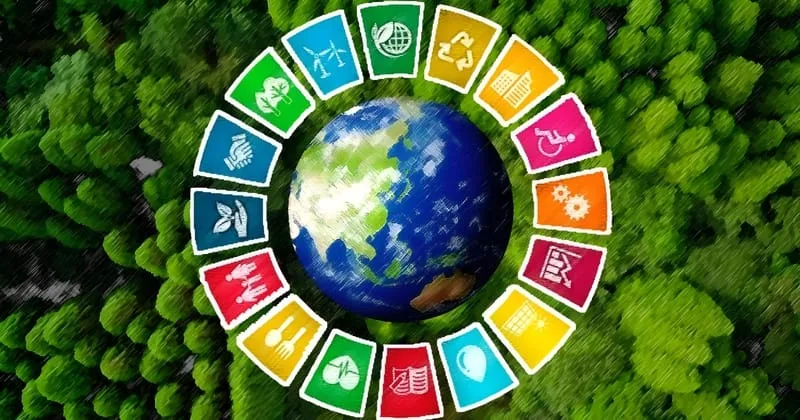
Biodiversity loss due to unsustainable growth and construction of unnecessary mega infrastructure projects is a reality. Today, one million species are at risk of extinction, 75 per cent of land ecosystems and two-thirds of marine environments have been significantly altered by human activity. The UN Secretary-General António Guterres has called on countries to radically rethink their relationship with nature, warning that biodiversity loss is a global crisis no nation can ignore. It is high time for all United Nations Member States to adopt the 2030 Agenda for Sustainable Development, a shared blueprint for peace and prosperity for people and the planet, now and into the future.














Comments