





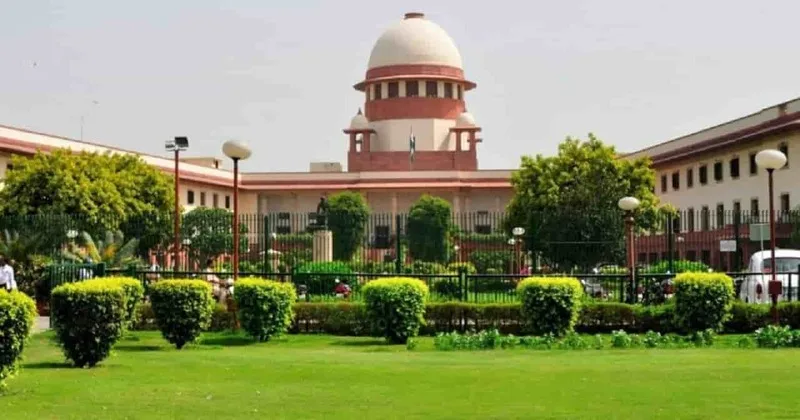
A five-judge bench headed by Chief Justice of India BR Gavai, along with Justices Surya Kant, Vikram Nath, PS Narasimha and A Chandurkar, refused to reconsider its April 12 ruling that directed the President and Governors to decide on state bills within a fixed timeframe.
CJI Gavai clarified: “We will be expressing just a view of law, not on the decision in the Tamil Nadu case. We are in advisory jurisdiction; we are not in appellate.”
Justice Surya Kant further explained that under Article 143, the Supreme Court may express an opinion that a prior judgment may not lay down correct law, but it cannot “overrule” that judgment in an advisory capacity.
In April, the top court held that:
- Governors cannot indefinitely withhold bills passed by the state legislature.
- The President must decide within three months on bills referred to her by Governors.
- Tamil Nadu Governor RN Ravi’s withholding of multiple bills was declared “illegal.”
The court also allowed state governments to directly approach the SC if the President withholds assent, sparking questions about judicial oversight over executive discretion.
Following the verdict, President Droupadi Murmu exercised her powers under Article 143(1) of the Constitution, sending a reference to the Supreme Court. She posed 14 questions on the scope of the powers of Governors (Article 200) and the President (Article 201) while dealing with state legislation.
The reference reflected concerns over “functional disharmony” between the executive and judiciary, and sought clarity on whether judicially-imposed timelines for constitutional authorities could be binding.
Senior advocates KK Venugopal (for Kerala) and Abhishek Manu Singhvi (for Tamil Nadu) opposed the reference. They argued that:
- The issues raised had already been conclusively decided in the April 12 judgment.
- Article 143 cannot serve as an intra-court appeal or a substitute for review.
- The Presidential Reference was an indirect attempt to derail a final verdict.
Singhvi told the bench: “Article 143 cannot be used as a mechanism to revisit settled law. This is not an appeal or review.”
In its written submission, the Central government opposed fixed deadlines on Governors and the President, warning it could cause “constitutional disorder.”
Solicitor General Tushar Mehta supported the view that the court, under Article 143, could revisit an earlier ruling, arguing: “This is the first time the President has sought guidance due to functional disharmony. Judgments of two, three, and five judges have created constitutional confusion that needs authoritative resolution.”
The legal tussle stems from Tamil Nadu’s ruling DMK government accusing Governor RN Ravi of deliberately withholding or delaying assent to bills passed by the Assembly. The Supreme Court had sided with the state, ruling that Governors must act within a reasonable timeframe and cannot override the democratic process.
This confrontation has now triggered a larger constitutional debate on the powers and accountability of the President and Governors.
The court made it clear that its role in the Presidential Reference is advisory, not appellate. However, the case has revived questions over the balance of power between the judiciary and the executive, especially on whether courts can bind constitutional authorities like the President and Governors with strict timelines.
The bench will resume hearings today, with expectations of further clarifications on the scope of Article 143 and its implications for centre-state relations.













Comments