





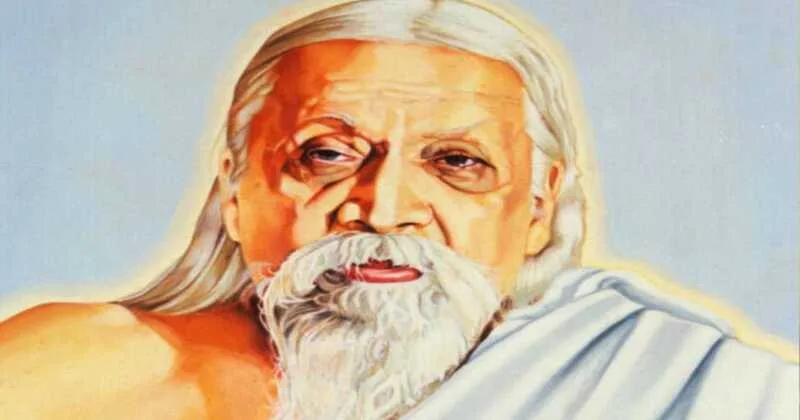
Sri Aurobindo Ghose (1872–1950), not only had the qualities of “a poet, philosopher, yogi, but as a matter of fact, he was also a revolutionary and visionary.” He was one of the earliest political figures to “call for full independence (Purna Swaraj) for India”, and led a revolutionary struggle against the British imperialist rule in India. Although educated in English schools, he used his education for the betterment of humanity and in making the people of India understand that revolution is the ultimate path to freedom from colonial rule. However, his idea of revolution was based on the notion of ‘divinity’ and the unity of the motherland. On the spiritual plane, he was a trailblazing proponent of what is known as Integral Yoga, and a contemporary exponent of this principle that seeks to transform human consciousness by integrating light (without form) with light in forms, the spiritual tempered in human nature. Sri Aurobindo emphasised yogic practices as the best forms of tools for internal awakening and development of the conscious mind.
Sri Aurobindo’s views are, at once, a living manual and an archival record of the past, inspiring thought for India on its current internal and external crossroads. Above all, his idea of Bharat was an expression of civilisation as unity, nourished by culture and animated by a deeper consciousness. He has multiple ideas leading to the understanding of Bharat and how people in the country can come together. During his years in prison, when he was ruthlessly exploited by British imperialism, he relied on yoga, reading the Bhagawat Gita and practising the awakening of the mind and the soul as the only path to divinity.
Political and Civilisational Unity
When Sri Aurobindo talked about Indian unity, he never meant unity via force or homogeneity, but rather an awakening to the spiritual unity that lies beneath diversity. The Indian genius has always been able to “hold together countless diversities in a single organism without rigid uniformity or mechanical centralisation”. He wrote in The Ideal of Human Unity. He believed that Bharat was an “organic unity” fostered over millennia by common spiritual ideals, philosophical inquiry, and cultural memory rather than an artificial construct imposed by history. The work of a national leader and the function of a nation is to awaken the nation’s collective consciousness to its true self, not just to establish administrative cohesion.
Sri Aurobindo Ghosh’s philosophy is a clear reminder that unity cannot be maintained by material ties alone; rather, it must be based on a “deeper foundation of a shared civilisational spirit.” This is especially important in our own times, when ideological and sectarian polarisation threatens the fabric of the nation. At this juncture, according to Sri Aurobindo Ghosh, the work of a national leader is to awaken the inner self of the people. This awakening is not through the decline and ruin of our cultural values; rather, it is through re-emphasising the very basis of humanity, which lies in faith and remaining together, even in times of adversities.
Culture: The soul of the nation
According to Sri Aurobindo Ghosh (1997), a nation’s culture is its “deeper self-expression in literature, art, morals, and thought”. He made the case in his influential essays on Indian culture that India’s real strength was her ability to absorb new influences without losing her essential identity. Through centuries of change, she was able to survive and rejuvenate herself thanks to this dynamism rather than strict traditionalism. In his work, Bhawanu Mandir (1905), he wrote: “A nation is not a piece of earth, nor a figure of speech, nor a fiction of the mind. It is a mighty Shakti, composed of the Shaktis of all the millions of units that make up the nation.” This Shakti, he insisted, is sustained by the spiritual values embedded in the culture.
At a time when discussions about cultural revival and preservation are at the forefront of the national dialogue, Sri Aurobindo’s strategy strikes a balance: value the civilisation’s legacy while letting it develop and change to meet the demands of the modern world so that it continues to be a living thing rather than a museum artefact. When we say culture as a living entity, then we mean that we practice our cultural rules, regulations and practices and try to find a new way out which can provide the path to integration to the entire civilisation. Civilisation is not a day’s thing. When we talk about Hindu civilisation, we mean the civilisation that has been built on the ideals and principles of the Vedas and Upanishads, on Niti Shastras and on our mythologies which form he basis to this collective consciousness.
The evolutionary aim
Sri Aurobindo Ghosh’s focus on the evolution of consciousness is arguably his most innovative and enduring idea. “Political freedom was not his ultimate objective, but it was a necessary first step. When people reach higher states of awareness, such as supramental consciousness, and transcend their ego-bound nature, they will truly be free. According to Sri Aurobindo (1997), His spiritual approach, “Integral Yoga”, was designed to transform the world and make it an expression of the Divine rather than to renounce it. According to him, “nations have a dharma”—a part in humanity’s evolutionary path—just like individuals do. This function for Bharat was to provide an example of how to balance spiritual wisdom with material advancement. This vision is a potent remedy in a time when moral and spiritual development are lagging technological advancement. It exhorts citizens, institutions, and leaders to develop an inner discipline and purpose that can direct behaviour in the outside world. This is the most important message for youth in contemporary Bharat. Inner discipline refers to a united goal that we can envision for our motherland. Irrespective of the various cracks that have already been created by the colonialists and by colonial sympathisers, we need to go ahead, with a deep thrust and faith on our cultural values.
The idea of Bharat in the 21st century
Revisiting Sri Aurobindo’s idea of Bharat in today’s geopolitical and cultural climate reveals its extraordinary relevance. His vision accommodates economic strength, technological innovation, and global engagement, but insists they must be anchored in the nation’s civilisational values and evolutionary purpose. In this framework, Bharat is not merely a participant in global politics but a contributor to the world’s moral and spiritual advancement. This is not a utopian dream, it is a continuation of a civilisational mission that has endured through centuries.
For policymakers, educators, and cultural leaders, Sri Aurobindo’s thought provides a compass: Unity demands cultivating the “civilisational consciousness and unity” that binds diverse communities together. “Culture must be nourished as the source of identity and moral vision.” “Consciousness must be developed as the ultimate foundation of a strong and harmonious nation.”
Sri Aurobindo’s words, written over a century ago and he declared, still carry the resonance of a prophecy: “India is not a piece of earth, she is a power, a godhead.” To serve that godhead is to work for an India that is united in spirit, proud in culture, and progressive in consciousness.
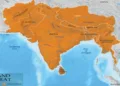
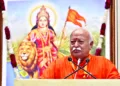
When we talk about Akhand Bharat, we must believe in Sri Aurobindo’s vision that “India will rise as it is the wish of Vasudeva (Lord Krishna),” said by RSS Chief Mohan Bhagwat on April 15, 2022. If this comes to true, the ideas of Sri Aurobindo and Swami Vivekananda will be the foundational base for New Bharat. The destiny of Hindu Rashtra is already destined, as Sri Aurobindo emphasises cultural and spiritual unity beyond rigid ideology, which has been advocated by many scholars and thinkers in modern times. The concept of Akhand Bharat will not be fulfilled until and unless we understand the spiritual unity beyond political division. Sri Aurobindo was against the partition, and he advocated that the partition must end.
In aligning national development with the deeper truths of human evolution, Bharat can fulfil not only her own destiny but also her role in shaping a more harmonious world order. This is the enduring relevance of Sri Aurobindo, a thinker whose vision transcends time, and whose call to the nation is as urgent today as it was in the days of the freedom struggle.











Comments