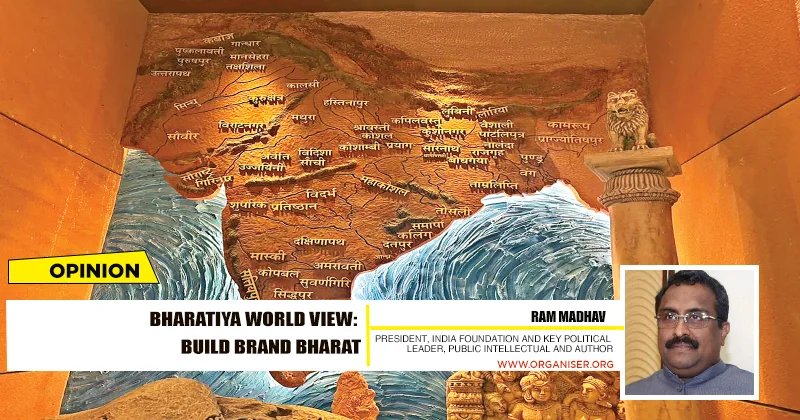
Bharat is celebrating 79th Independence day this month. The Bharat of today is not the same as the one in the past. It has grown in prosperity, strength and global recognition. Its leadership has the ambition and determination to take it to the pinnacle of glory. That Bharat should emerge as a Vishwaguru is the aspiration of 1.4 billion countrymen today. Given the country’s hoary history and the surreal rise it has witnessed in the last one decade under Prime Minister Narendra Modi’s leadership, such an ambition and aspiration is fully justified. But there is an important question that the entire nation needs to ponder over. Should Bharat simply emulate the West and rest in its pursuit of greatness? Or should it rise as a brand by itself?
Need of an Ideal Role Model
Like humans, nations also look for role models. Generally, countries that are economically and militarily strong are considered role models to emulate. Progress and development are often measured by the size of a country’s GDP and the strength of its military forces. Militarily powerful and economically developed countries like the US and China thus came to present those role models to many national societies.
Initially, the Bharatiya leadership also attempted to ape their successful trajectory. In the first three or four decades, the fad of socialism dominated the Bharatiya political and policy establishment. After the 1990s, joining the club of the so-called developed West became the singular obsession of the Bharatiya leadership. There is nothing wrong with the leadership’s desire to create better living standards for all its people, but there never existed any clarity as to what path to choose, or what models to build. Ideally, at the time of Independence, Bharat should have debated over its global mission, and strategised on the direction to take. It should have turned to its vast civilisational experience to find its national soul, and build a future in harmony with that.
Once the Virat of a nation wakes up, its success cannot be stalled. Such awakening was witnessed on several occasions after Independence
People of a nation cannot be motivated by principles that are alien to their inner soul or what Pandit Deendayal Upadhyaya, the proponent of Ekatma Manav Darshan (Integral Humanism), used to describe as Chiti. “Chiti is the soul of the nation. It is on the foundation of this Chiti that a nation arises and becomes strong and virile,” he said. Chiti can inspire people to make supreme sacrifices to achieve the lofty goals of their national mission. This kind of awakening of the inner Purushartha—the force of a nation, on the basis of its Chiti was described by Deendayal as the Virat or the superior being.
Need of Virat Awakening
Gandhi’s efforts at using cultural symbols like ahimsa, satyagraha and Ram Rajya to mobilise national power during the freedom struggle was an example of it. Speaking in the Constituent Assembly of Bharat, T Prakasam, a member of the Madras Presidency, and later the first Chief Minister of Andhra Pradesh, highlighted Gandhi’s contribution to the freedom movement by calling him a ‘seer’. He said, “I myself, Sir, had a talk with the great Lala Lajpat Rai more than forty five years ago in England. He was the earliest of the sufferers for freedom and he said: ‘Look at the organisational discipline and the way in which people here conduct themselves. Can we ever hope to send away these British people from our country and establish freedom?’ That was my feeling when I touched that shore. Under those circumstances it was, that this man Gandhi ji, came as a seer and lifted us up…”
Once the Virat of a nation wakes up, its success cannot be stalled. Such awakening was witnessed on several occasions after Independence – for cow protection in the 1950s, during the Chinese aggression in the early 1960s, against the draconian Emergency imposed by Indira Gandhi in 1970s, during the Ekatmata Yatra against unscrupulous religious conversions in 1980s, and during the Ram Janmabhoomi temple agitation in 1990s.
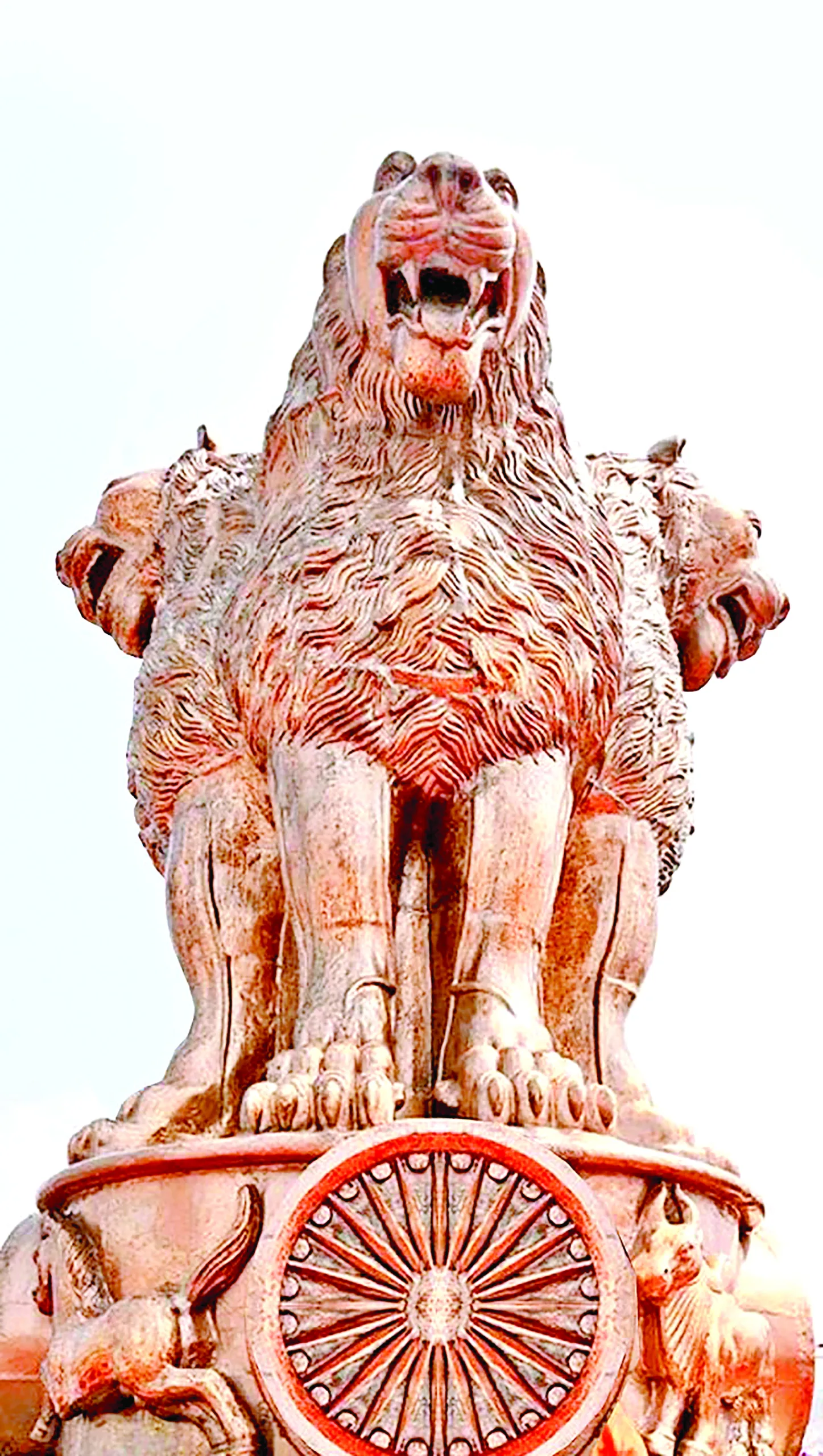
Leaders of the present Government come from that school of thought which always upheld the view that Bharat should rise as a great nation not merely by imitating others, but by presenting an idealist vision based on its age-old wisdom. From taking yoga to the world platform through a UN resolution in 2014 to adopting Vasudhaiva Kutumbakam—a lofty ideal proclaimed by ancient Bharatiya scriptures as the motto of the G-20 during Bharat’s presidency in 2023, PM Modi demonstrated that commitment time and again.
Amrit Kaal of Independence
He also introduced a quintessentially Bharatiya nomenclature and symbolism into Bharatiya polity. Rajpath, the central ceremonial boulevard of British vintage, became Kartavya Path, and Race Course Road—where the prime minister’s residence is located—became Lok Kalyan Marg. Pinnacle of this transformation came when the sengol, the sacred sceptre that symbolises the supreme authority of Dharma in statecraft, was installed in the new Parliament building. Some of these decisions invited criticism and derision from some quarters. But Modi insisted that the country has now entered the Amrit Kaal of Independence and “preserving the heritage and forging new dimensions of development” will be the leitmotif of this new age. A majority of the countrymen do not see cultural and religious symbols of Bharat as anti-secular or revivalist. In fact, secularism draws from ancient Bharatiya spiritual and cultural traditions which upheld pluralism and celebrated diversity.
Nehru or Gandhi
Nehru called religion obsolete and saw a dichotomy between culture and modernity. But there was Gandhi, for whom politics bereft of dharma was a sin. He declared that ‘I could not live for a single second without Dharma. Many of my political friends despair of me because they say that even my politics is derived from dharma. And they are right. My politics and all other activities of mine are derived from my dharma,’ and admonished Nehruvians that they ‘do not know what Dharma means’. After Independence, Gandhi was installed outside the Parliament, but the inside was overwhelmed by the Nehruvian vision. Gandhi continues to be there outside the new Parliament building, but the sengol—representing Gandhi’s Ram Rajya, the Dharma Rajya—is inside the Parliament now.
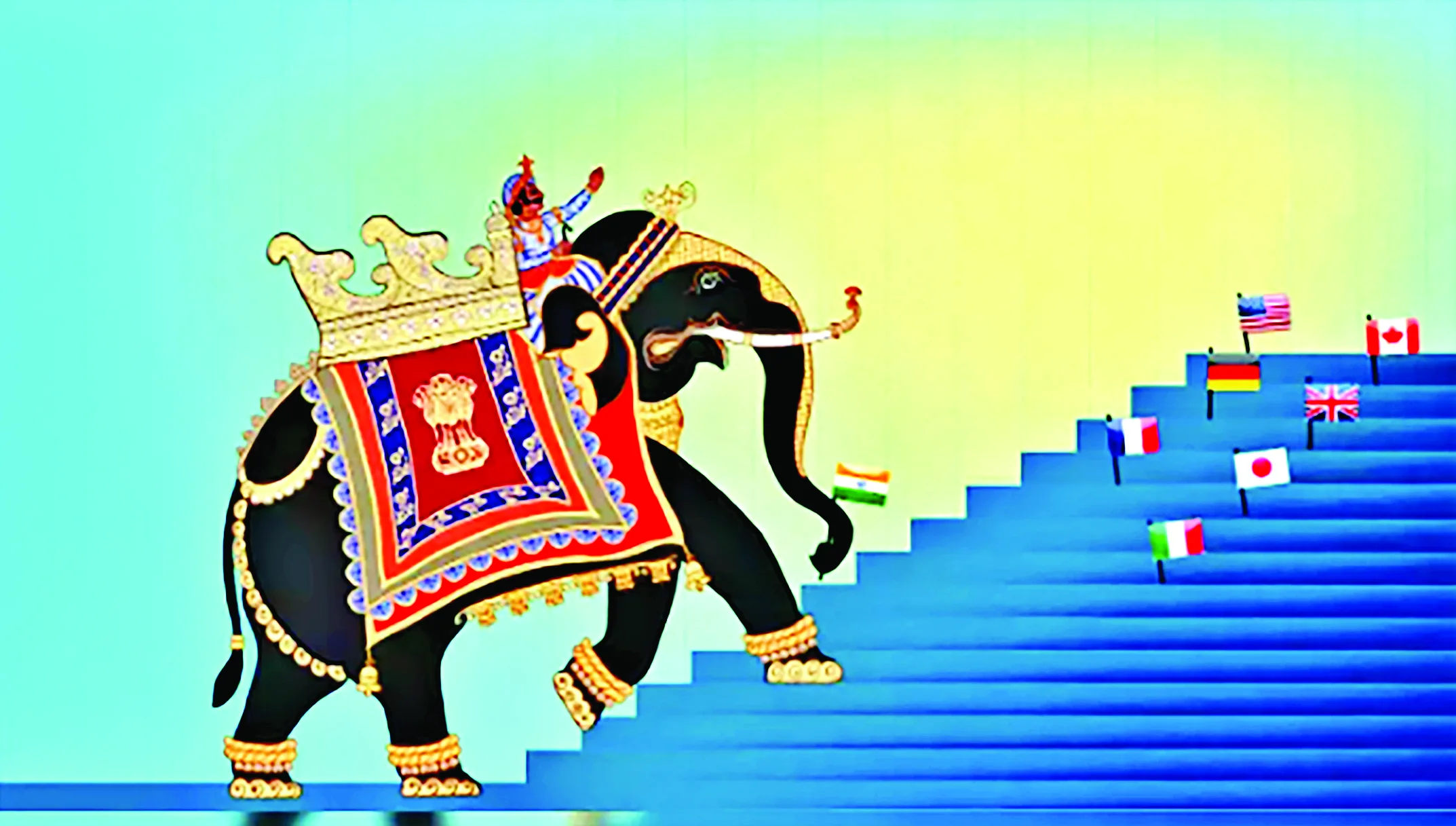
Having established a post-Nehruvian symbolism, we now have to establish those values in governance and national life. We adopted Westminster model of democracy after independence. It served us well and we are a beacon for the entire democratic world. But the Bharatiya concept of democracy was never majoritarian. Gandhi described it as a system where ‘the weakest should have the same opportunity as the strongest’. That is ‘Dharmocracy’, the Bharatiya model of statecraft.
Vishwaguru Bharat
Challenges that the world faces today are all products of the flawed thinking in the Western and communist worldviews. Sadly, the answers to mitigate those challenges are also being offered by the same forces today. The World Economic Forum has emerged as the go-to institution on economic questions while the COP meetings emerged as the panacea for environmental challenges. Bharat, through its concepts like Dharmakartrutva – trusteeship and Prithvi Sukta – the hymn of ecology, has enormous wisdom to offer to the mankind. As we rise in the new world as a confident power, Bharat should not allow it to be dominated by the same Western institutions and thought processes once again. It should come forward to proactively promote its distinct ideas and solutions to the global challenges in the light of its cultural and civilisational uniqueness. That is how Bharat can and should build its mojo—the Brand Bharat.