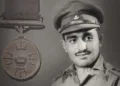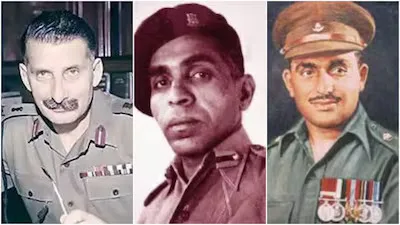
Instilling patriotism and respect for India’s military heritage among young learners, the central government on Thursday announced the inclusion of chapters on three of the nation’s most iconic war heroes, Field Marshal Sam Manekshaw, Brigadier Mohammad Usman, and Major Somnath Sharma, in the NCERT curriculum for the 2024–25 academic session.
According to a Press Information Bureau (PIB) release, the new lessons will feature in Class VIII (English), Class VIII (Urdu), and Class VII (Urdu) textbooks, respectively. The objective, officials said, is to provide school students with “inspirational narratives of courage and duty”, ensuring that the sacrifices of these gallant officers are remembered by generations to come.
Who Were These War Heroes?
Field Marshal Sam Manekshaw—”Sam Bahadur”
Field Marshal Sam Hormusji Framji Jamshedji Manekshaw, fondly remembered as “Sam Bahadur”, was the first officer in the Indian Army to attain the five-star rank of Field Marshal. Born in Amritsar in 1914, Manekshaw’s military career spanned over four decades, during which he served in five major conflicts, World War II, the 1947-48 war with Pakistan, the 1962 Sino-Indian war, and the 1965 and 1971 Indo-Pak wars.
His crowning glory came during the 1971 Bangladesh Liberation War, when his strategic brilliance and calm leadership led to India’s decisive victory over Pakistan and the creation of Bangladesh. Known for his wit and fearlessness, Manekshaw’s interactions with soldiers and political leaders alike remain legendary in military folklore.
In 2023, his life and leadership were brought to the silver screen in the acclaimed biopic Sam Bahadur, starring Vicky Kaushal, reigniting public interest in the man who shaped India’s modern military history.
Brigadier Mohammad Usman—The “Lion of Naushera”
Brigadier Mohammad Usman, hailed as the “Lion of Naushera”, was one of the most respected commanders in the early years of independent India’s Army. Born in 1912 in Uttar Pradesh, Usman was among the senior-most Muslim officers in the Indian Army who refused to move to Pakistan after Partition, choosing instead to serve the tricolour.
During the 1947–48 Indo-Pak war, Usman’s leadership proved crucial in the recapture of Jhangar and the defence of Naushera in Jammu and Kashmir. His grit and tactical acumen earned him both admiration from comrades and fear among adversaries.
On 3 July 1948, Brigadier Usman was killed in action, becoming the highest-ranking Indian Army officer to lay down his life in that war. He was posthumously awarded the Maha Vir Chakra, India’s second-highest gallantry award. His state funeral in New Delhi was attended by Lord Mountbatten, Prime Minister Jawaharlal Nehru, and other national leaders, a rare honour for a military officer.
Major Somnath Sharma — India’s First Param Vir Chakra Awardee
Major Somnath Sharma etched his name into history as the first recipient of the Param Vir Chakra, India’s highest wartime gallantry award. Born in 1923 in Himachal Pradesh, Sharma had earlier served with distinction in the Burma campaign during World War II.
In the early days of the 1947–48 war, when Pakistani raiders threatened to overrun the Kashmir Valley, Major Sharma led his company in the Battle of Badgam near Srinagar Airport on 3 November 1947. Despite being heavily outnumbered and already injured with his arm in a sling, he held his position till his last breath, preventing the enemy from capturing the airport, a move that proved decisive in keeping Kashmir under Indian control.
His final radio message before being martyred, “The enemy is only 50 yards from us. We are heavily outnumbered. We are under devastating fire. I shall not withdraw an inch but will fight to our last man and our last round.”
Why this move matters
By bringing the stories of these officers into school curricula, the government aims to go beyond mere dates and events in history books, offering students living examples of integrity, leadership, and devotion to duty.
Educationists believe that such narratives can bridge the gap between textbook history and the lived experiences of those who shaped the nation’s destiny. “Students must know that the freedom and security they enjoy today came at a great price,” a senior NCERT official said.
With these additions, the classrooms of 2024–25 will not just teach military history, they will tell stories of men who defined courage.