





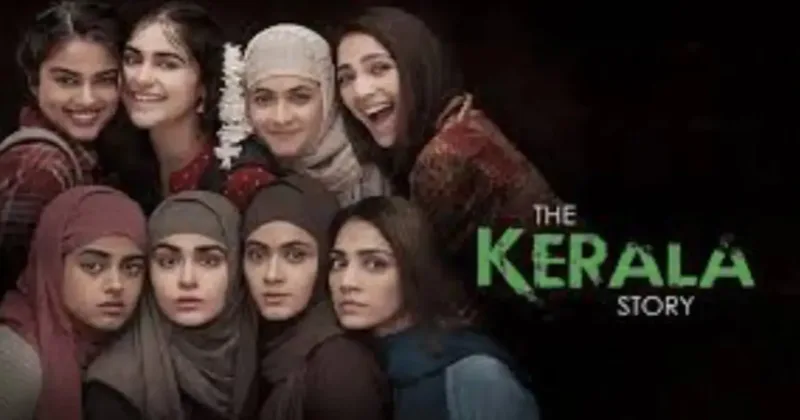
Nimisha (later known as Fathima), from Thiruvananthapuram, did not abandon her original religion out of boredom. It was not a sudden decision to leave for Afghanistan on a divine mission to propagate Islam. Her journey was the result of systematic indoctrination. She was manipulated emotionally, used in the name of love, impregnated, and then blackmailed. From there, she was further exploited—trafficked into Taliban-controlled territories, where she was forced into terror networks and now likely lives a life of servitude, possibly as a sex slave. This is not an isolated story—it is a reality that has unfolded silently, hidden behind the curtain of denial and political correctness.
Similarly, Akhila (later Hadiya) was not in love when she converted. She was not drawn by affection but coerced by relentless ideological grooming. Her classmates began by subtly introducing her to ideas that challenged her Hindu beliefs, telling her that Islam worshipped the “one true God”—superior, singular, and absolute, unlike the 33 crore deities of Hinduism. Over time, this ideological influence grew stronger as their families took over the narrative. Akhila was cut off from her roots, her family, and her faith. Today, reports indicate she lives under close supervision and is allowed to communicate only in the presence of a guardian, raising serious questions about her autonomy and freedom.
These stories underscore the urgent need to recognize and address the complex machinery of radical influence operating in certain pockets of society. Left unchecked, such networks continue to exploit emotional, ideological, and social vulnerabilities—particularly targeting young women—as a means to serve larger extremist agendas.
And these are not the only stories. Nima Mathew and Gitanjali, characters portrayed in The Kerala Story, are not fictional creations. They are very much real. Nima is currently fighting two legal battles in separate courts in Kerala. She is the only rape victim I have personally spoken to. Her story still haunts me. I remember the chill that ran down my spine when she described the horror of opening her eyes to find the perpetrator’s sticky semen and pubic hair in her mouth when regained consciousness after the rape. These are not scenes from a script—they are lived realities.
Gitanjali’s mother gave me a mission: to speak for her daughter and share her story with the world so that other daughters might be saved. She showed me handmade greeting card her daughter had made for her Muslim lover. Gitanjali had started wearing the hijab at the insistence of her boyfriend—who later sexually exploited her for nearly two years before abandoning her. She had tattooed his name in a private area of her body, which was still visible when her dead body was found. Gitanjali died by suicide, devastated and discarded. Her mother showed me her pictures in hijab.
It is deeply disturbing that while such atrocities against Hindu and Christian girls in Kerala continue, speaking out about them is considered communal, divisive, or propaganda. We are being told to stay silent—to not offend, to not question, to not expose—because the truth is inconvenient to the political narrative.
But let us be clear: political correctness is a tool for politicians who fear losing votes, and for journalists who sucks on TRP, but not for truth-seekers. The media, in its calculated silence, has failed these girls. Vote-bank politics has trivialized their sufferings. The balancing act of appeasement, driven by ulterior motives, has masked these stories for too long. This is not a story of the past. It is still unfolding. Proselytizing Hindu and Christian girls rarely becomes headline news in Kerala. But the moment someone raises a voice against it, it suddenly becomes controversial—accused of harming communal harmony or spreading misinformation. This hypocrisy must end. We must be allowed to speak. We must be allowed to question. And most importantly, we must be allowed to protect the vulnerable as till today coercing to convert is happening.
According to certain interpretations of Hadith, Da’wah (the act of inviting others to embrace Islam) and Jihad are seen as key pathways to achieving Paradise. In this ideological framework, any material gains—such as sexual gratification, financial rewards, or power—are considered secondary benefits, mere incentives along the way. The ultimate goal, however, remains spiritual—bringing more people into the fold of their faith is seen as an act that guarantees eternal reward.
It is within this narrative that radicalised individuals exploit vulnerable minds, particularly targeting young girls, grooming them emotionally and ideologically to serve their larger religious or political mission. These girls often do not realize they are being turned into tools—whether as recruiters, sympathizers, or victims trafficked into deeper networks of extremism.
This practice must be urgently addressed. It is not only a social and human rights concern but also a national security threat. What begins as personal manipulation quickly evolves into a well-organized machinery of radicalisation, drawing more individuals into a cycle of exploitation and extremism.
We must raise awareness, especially among families, educators, and community leaders, to recognize early signs of indoctrination. Preventing radical elements from targeting our youth—especially girls—requires a concerted effort across society, backed by strong institutional support, de-radicalization programs, and educational campaigns that empower young people to question, think critically, and remain rooted in their identities.
This is not a battle against any religion—it is a stand against extremism, coercion, and the manipulation of faith for violent or exploitative purposes.
Why doesn’t ‘The Kerala Story’ deserve two national awards? Listen closely to the remarks made by the jury, particularly Ashutosh Gowariker, following the announcement of the awards. His words clearly articulate the rationale behind the honors bestowed on the film.
The Best Cinematography award was presented for its “pure, unembellished imagery that captured the director’s vision in a stark and realistic way.” The Best Director award was granted in recognition of the filmmaker’s courage to “tackle a complex subject with authenticity, backed by deep research into events that must have happened.”
Let us be clear, these awards were not given merely for the film’s visual or artistic appeal. The recognition is rooted in the substance, truth, and societal relevance of the film. The story is not fiction, it is based on real events. It draws directly from firsthand accounts of actual victims, their parents, and verifiable sources, including news reports and statements from authorities.
At its heart, The Kerala Story tells the true stories of young women, daughters of this very country, who were manipulated, coerced, and torn away from their families and identities by radical fundamentalist groups. These are not isolated or imagined incidents. They are painful realities that have left lifelong scars on the victims and those who love them.
Late Shri V.S. Achuthanandan, former Chief Minister of Kerala, once publicly warned about such radical outfits and their long-term agendas. His statement adds further credibility to the very threat the film aims to bring into public consciousness.
We want to stress unequivocally: this film does not serve any religious, political, or divisive agenda. It is not propaganda. Its sole and solemn purpose is to expose a growing danger, raise awareness, and give voice to the voiceless—to the girls who were lost, and to the families still waiting for answers. The film has been made with a deep sense of responsibility and an unwavering commitment to truth. We stand by it fully, because it is not just a story. It is a reality that has already affected too many of our daughters and isn’t our duty to confront it?















Comments