Mission Gaganyaan: Optimism and criticism
June 6, 2026
  • Read Ecopy
  • Circulation
  • Advertise
  • Careers
  • About Us
  • Contact Us
Android AppiPhone AppArattai
Organiser
  • ‌
  • Bharat
    • Assam
    • Bihar
    • Chhattisgarh
    • Jharkhand
    • Maharashtra
    • View All States
  • World
    • Asia
    • Europe
    • North America
    • South America
    • Africa
    • Australia
  • Editorial
  • International
  • Opinion
  • RSS @ 100
  • More
    • Op Sindoor
    • Analysis
    • Sports
    • Defence
    • Politics
    • Business
    • Economy
    • Culture
    • Special Report
    • Sci & Tech
    • Entertainment
    • G20
    • Azadi Ka Amrit Mahotsav
    • Vocal4Local
    • Web Stories
    • Education
    • Employment
    • Books
    • Interviews
    • Travel
    • Law
    • Health
    • Obituary
  • Subscribe
    • Subscribe Print Edition
    • Subscribe Ecopy
    • Read Ecopy
  • ‌
  • Bharat
    • Assam
    • Bihar
    • Chhattisgarh
    • Jharkhand
    • Maharashtra
    • View All States
  • World
    • Asia
    • Europe
    • North America
    • South America
    • Africa
    • Australia
  • Editorial
  • International
  • Opinion
  • RSS @ 100
  • More
    • Op Sindoor
    • Analysis
    • Sports
    • Defence
    • Politics
    • Business
    • Economy
    • Culture
    • Special Report
    • Sci & Tech
    • Entertainment
    • G20
    • Azadi Ka Amrit Mahotsav
    • Vocal4Local
    • Web Stories
    • Education
    • Employment
    • Books
    • Interviews
    • Travel
    • Law
    • Health
    • Obituary
  • Subscribe
    • Subscribe Print Edition
    • Subscribe Ecopy
    • Read Ecopy
Organiser
  • Home
  • Bharat
  • World
  • Operation Sindoor
  • Editorial
  • Analysis
  • Opinion
  • Culture
  • Defence
  • International Edition
  • RSS @ 100
  • Magazine
  • Read Ecopy
Home Bharat

Mission Gaganyaan: A bold leap toward human spaceflight

Mission Gaganyaan reflects India's bold pursuit of human spaceflight, balancing scientific ambition with national priorities. Despite criticisms, it signals the country's readiness to take a decisive leap in space exploration

Martand JhaMartand Jha
Jul 27, 2025, 06:00 pm IST
in Bharat, Opinion, Sci & Tech
Follow on Google News
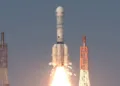
Representative image

Representative image

FacebookTwitterWhatsAppTelegramEmail

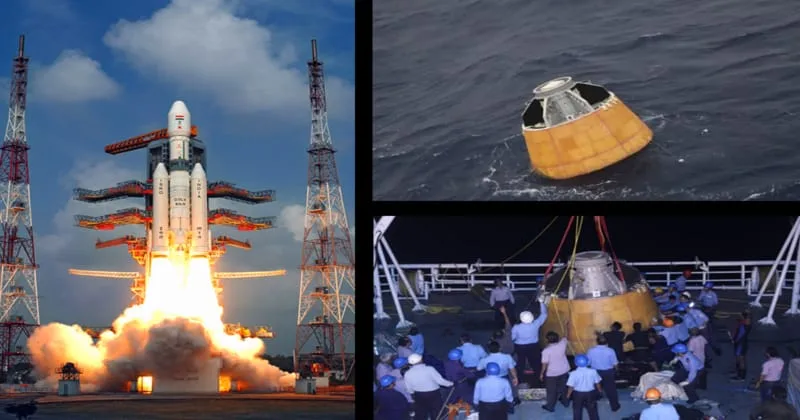
The Indian Space Program is over six decades old. It has seen many great chapters in its history. The one chapter it wants to add soon to its glorious history is a chapter on India’s first human spaceflight mission. The chapter is currently being written with a lot of preparation and hope.

The talks about this mission started a decade ago, it gained strength by the year 2017-18 and it got announced to the world by Prime Minister Narendra Modi on India’s Independence Day on August 15, 2018 when he declared in his prime ministerial address to the nation from the ramparts of the Red Fort that India would send its own human spaceflight mission exactly 4 years later. He told the audience present there and viewers across the globe that when India celebrated its 75th Independence Day in 2022, that day would also mark the launch of Mission Gaganyaan.

Also Read: Kargil Vijay Divas: A symbol of valour, sacrifice and determination

This announcement made quite an impact in the technology circles, policy circles, media and among the public as well. Critics argued against the need for such a mission when a mission like this had already been conceived five decades ago by the superpowers, like the Soviet Union and the United States, during the height of the Cold War. The Soviet Union was the first nation to send a human to outer space way back in 1961, and the United States was the first nation to make a human land on the moon in 1969 when Neil Armstrong became the first human to set foot on the lunar surface. Critics also argued about the need to invest in a human spaceflight program, which would put a lot of burden on the public exchequer, considering the fact that the mission costs would be paid directly by the taxpayers’ money. Their third argument was that instead of investing in a human spaceflight program, why don’t the policymakers think about investing in developmental projects like sanitation, schools, healthcare, education, etc.

The answer to these critics is very plain and simple. On the first point regarding the superpowers having achieved this feat half a century back, the counter question is that if some other nation has achieved something five decades back, should India not accomplish the same feat at all. This would mean not having a human spaceflight program and future missions at all because, as per the critics’ argument, the developed nations have already done it. Yes, they have done it for their own self-interest as much as any other nation, including India, will do it for its own national interests. Yes, outer space is considered to be a global commons, but that doesn’t mean that the success of one or a few nations in outer space can be claimed by every other nation on the planet. Metaphorically, yes, one can claim it, but that doesn’t change the world of realpolitik, where every nation needs to stand on its own and work independently.

The second argument presented by critics regarding the costs of a human spaceflight mission is that it will burden the public exchequer. Agreed, that it will have a huge cost since outer space is an expensive business, but one has to look at this scenario rationally and weigh in whether the gains of sending the human spaceflight mission would out-cost the costs of sending the mission in the first place. To anyone who agrees with the first counter-argument, they would also then agree with this argument too. The reason being that if one agrees with the premise of India having an indigenous human spaceflight mission, one would also agree that it would require a certain cost.

To the third argument, where the critics argued for investing in development sectors like sanitation, healthcare, education, etc- the counterargument is that this same line of argument was there in the late 1950s and early 1960s as well, when India, as a newly independent young nation was trying to sow the seeds of an indigenous space program. That time too, India was suffering from poverty, hunger, undernutrition, illiteracy, etc. Additionally, natural disasters such as floods and droughts used to plague the country on a continual basis. At that time, the policy makers and shapers like Dr. Vikram Sarabhai, who is considered to be the father of the Indian Space Program, didn’t bow down to the then pressures of the then critics. Had he not ploughed under the pressure, India would probably not even have a space program to begin with.

This shows that there are always going to be critics who would try to steer the discourse entirely towards the pressing needs of the day, even at the cost of overlooking the emerging technologies whose benefits in future might outweigh the pressing needs of today. India has always walked on the philosophy of taking the middle path- the ‘Madhyam Marg’. Mission Gaganyaan is also a step in the same direction, reaching for the skies, without overlooking the ground realities.
 

Topics: ISROGaganyaanVikram SarabhaiSpace explorationIndian InnovationHuman SpaceflightIndia Space Mission
ShareTweetSendShareSend
✮ Subscribe Organiser YouTube Channel. ✮
✮ Join Organiser's WhatsApp channel for Nationalist views beyond the news. ✮
Previous News

Equal recognition to the warriors of Red Terror in the Parliament

Next News

The History of Hindu Delhi: What lies beneath the invaders facade

Related News

India’s Chandrayaan-2 Helps Reveal Water Ice in the Moon’s Shadowed South Pole

How ISRO’s Chandrayaan-2 gifted the world moon water; The orbiter that changed lunar science forever

A representative image

National Jute Board expands ISRO-backed digital crop monitoring system to strengthen jute sector planning

Representative Image (This is an AI generated image)

National Technology Day 2026: Mapping India’s rise from nuclear power to digital leader

GalaxEye’s mission Drishti launch marks a defining leap for India’s private space sector with world’s first OptoSAR satellite

Mission Drishti: GalaxEye deploys India’s largest private satellite with breakthrough all-weather imaging capability

Representative Image

Indian broadcasters delink from Chinese satellites; Aims to consolidate strategic security in space technology

Representative Image of ISRO satellite helping in Agriculture

How ISRO is transforming farming with satellites, AI and Data

Load More

Latest News

Prime Minister Narendra Modi

“Makes every Indian proud”: PM Modi hails India’s 7.7 per cent GDP growth in FY 2025-26

Once known for maoist violence, Minpa now leads healthcare revolution with telemedicine services in Sukma

From Maoist Stronghold to Healthcare Hub: How Chhattisgarh’s Minpa is transforming through telemedicine & development

Dr Surendra Jain, Joint General secretary, VHP

VHP Demands Audit of Waqf Properties Amid Encroachment Claims: “Land should go to rightful owner,” says Surendra Jain

A Special NIA Court has framed charges against banned PFI and 20 office bearers, including E. Abubakar and O.M.A. Salam, under UAPA and IPC

PFI Terror Case: Special NIA court charges Abubakar, Salam & others for alleged conspiracy to wage war against India

Prime Minister Narendra Modi with women during an event (Old image used for representative purposes)

The Nari Shakti Decade: How 12 years of policy reforms under Modi govt transformed lives of women in Bharat

Ritabrata Banerjee, expelled by Mamata Banerjee from TMC, has been appointed as the Leader of the Opposition in Bengal assembly.

TMC House Divided: Mamata’s party battles Itself as LoP row exposes deepening cracks after BJP’s big blow

Lucknow’s UP 112 Headquarters hosts West Bengal team for policing innovation study

UP 112 Model: West Bengal police visits Lucknow to replicate Yogi’s emergency response model

Representative Image

Pakistan: POJK to go for polls on July 27 under shadow of JAAC agitation

Saokat Molla with Mamata Banerjee

West Bengal: NIA foils escape bid, tracks former TMC MLA Saokat Molla through third-party mobile network

Saurav Das, Chief Spokesperson of CJP

Exposing CJP’s Saurav Das: Inside his controversial commentary on Article 370, Umar Khalid & nationalism

Load More
  • Privacy
  • Terms
  • Cookie Policy
  • Refund and Cancellation
  • Delivery and Shipping

© Bharat Prakashan (Delhi) Limited.
Tech-enabled by Ananthapuri Technologies

  • Home
  • Search Organiser
  • Bharat
    • Assam
    • Bihar
    • Chhattisgarh
    • Jharkhand
    • Maharashtra
    • View All States
  • World
    • Asia
    • Africa
    • North America
    • South America
    • Europe
    • Australia
  • Editorial
  • Operation Sindoor
  • Opinion
  • Analysis
  • Defence
  • Culture
  • Sports
  • Business
  • RSS @ 100
  • Entertainment
  • More ..
    • Sci & Tech
    • Vocal4Local
    • Special Report
    • Education
    • Employment
    • Books
    • Interviews
    • Travel
    • Health
    • Politics
    • Law
    • Economy
    • Obituary
  • Subscribe Magazine
  • Read Ecopy
  • Advertise
  • Circulation
  • Careers
  • About Us
  • Contact Us
  • Policies & Terms
    • Privacy Policy
    • Cookie Policy
    • Refund and Cancellation
    • Terms of Use

© Bharat Prakashan (Delhi) Limited.
Tech-enabled by Ananthapuri Technologies