From 2018 to 2025, Northeast Bharat has witnessed an unprecedented transformation in its railway landscape, fundamentally reshaping the region’s connectivity. Strategic railway developments during this period have not only linked state capitals for the first time, bringing previously isolated areas into the national mainstream, but have also extended electrified routes deep into remote and challenging hilly terrains. This monumental infrastructure push is fostering socio-economic growth, boosting tourism, and significantly integrating Northeast Bharat with the rest of the country.
This report highlights 10 pivotal railway developments from 2018 to 2025 that have not only linked state capitals for the very first time but also seen electrified routes push deep into the region’s remote and challenging hilly terrains. These projects signify a new era of integration and accessibility for the entire Northeast.
Here are details on key railway developments that have transformed connectivity in Northeast Bharat:
Aizawl joins Bharat’s rail network after 26 years
After 26 long years, Aizawl is now connected to Bharat’s railway network. The newly completed 51.38 km Bairabi-Sairang broad gauge railway line officially opened, featuring 48 tunnels, 55 major bridges (including a towering 104-meter-high bridge), and 87 minor bridges. This project is a game-changer for national integration, improving travel and freight access, and supporting Bharat’s ‘Act East Policy’. It’s set to boost mobility, promote tourism, help local farmers and businesses, and create job opportunities through infrastructure development.
Northeast Rajdhani route goes electric, boosting speed and green connectivity
IRCON has completed the electrification of the Rajdhani main route in Northeast Bharat, covering the Lumding-Tinsukia and Dibrugarh-Duliajan sections. The first fully electric Rajdhani Express departed from Dibrugarh to Delhi, marking a major milestone in green rail expansion. This electrification cuts travel time, reduces fuel costs and emissions, and boosts trade, tourism, and regional connectivity, moving Northeast Bharat towards greener, more efficient rail transport.
World’s tallest railway pier bridge in Manipur boosts Northeast connectivity
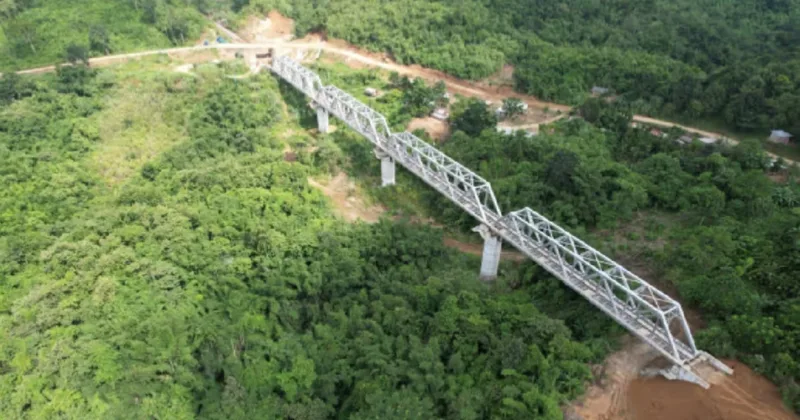
The Jiribam-Tupul-Imphal railway project in Manipur now features the world’s tallest railway pier, the Noney bridge, with piers reaching an astonishing 141 meters. This engineering marvel spans tough terrain, incorporating 45 tunnels and 145 bridges. The Noney bridge dramatically cuts the Imphal-Jiribam travel time from 12 hours to just 2 hours, significantly boosting local connectivity, trade, and tourism. It also strengthens national integration and supports future links to Southeast Asia.
Nagaland gets freight boost as Shokhuvi-Molvom rail link becomes operational
Nagaland’s rail network saw a significant upgrade with the first freight train trial run on the 15.42 km Shokhuvi-Molvom section. This new route, part of the larger Dhansiri-Zubza project, is set to boost goods movement and establish Molvom as the state’s third major railway station. The Shokhuvi-Molvom railway strengthens Nagaland’s connectivity by adding a crucial freight route, reducing transport costs, and supporting local trade. It also improves market access, paves the way for future passenger services, and integrates the state more closely with the national economy.
Meghalaya welcomes first freight train, boosting trade and essential supplies
A historic moment for Meghalaya occurred when a 21-wagon freight train carrying food grains arrived in North Garo Hills for the very first time. This delivery, facilitated by four new tracks and a dedicated goods yard, marked the state’s inaugural goods train service. The arrival of freight trains in Meghalaya promises faster and cheaper delivery of essential goods, reducing transport costs, boosting local trade, and improving supplies for remote areas. This development aims to make everyday life easier and more affordable for the state’s residents.
Assam gets its first Vande Bharat Express connecting Guwahati to New Jalpaiguri
Assam received a major connectivity upgrade with the flagging off of its first Vande Bharat Express, linking Guwahati to New Jalpaiguri. This modern train covers a distance of 407 km in approximately 5.5 hours and operates six days a week, offering advanced onboard features. The Guwahati-New Jalpaiguri Vande Bharat Express dramatically cuts travel time, significantly boosts tourism to iconic sites like Kaziranga National Park and Kamakhya Temple, and improves connectivity between Assam and West Bengal. It provides enhanced safety and comfort, complemented by major rail infrastructure upgrades across the Northeast.
Nagaland gets second railway station after 100 years, marks major milestone
After a century, Nagaland received its second railway station in Shokhuvi, significantly expanding its rail network beyond Dimapur. The Donyi Polo Express was extended to this new station, marking a crucial step in the Dhansiri-Zubza rail project, which aims to connect Dimapur to Kohima. This expansion is Nagaland’s first major railway development in over 100 years, set to improve travel, boost local trade, support tourism, and strengthen strategic infrastructure in this border state.
First goods train enters Manipur since independence, reaches Rani Gaidinliu Station
Manipur saw a historic moment with the arrival of its first goods train since India’s independence, reaching the newly renamed Rani Gaidinliu station in Tamenglong district. This train arrived as part of the ongoing Jiribam-Imphal railway project. This new rail link promises faster and more affordable movement of goods, improved market access for local businesses, and reduced reliance on road transport. It’s expected to lower traffic congestion and generate significant employment opportunities in the region.
First Jan Shatabdi train in Northeast connects Manipur and Tripura
Indian Railways introduced the first Jan Shatabdi Express between Agartala and Jiribam, marking a new era of inter-state connectivity in the Northeast. This tri-weekly train covers approximately 300 km in about six hours, running on a broad-gauge track developed under a major rail project costing over Rs1,000 crore. This Jan Shatabdi Express is the first direct rail link between Manipur and Tripura, dramatically cutting travel time from over 12 hours by road to just 6 hours. It’s set to improve connectivity, boost regional trade, make travel more affordable, and strengthen access to jobs, education, and essential services across Northeast states.
Bogibeel Bridge transforms connectivity and strategic access in Northeast Bharat
Prime Minister Narendra Modi inaugurated the 4.94 km long Bogibeel Bridge in Assam. This engineering marvel is a double-decker structure featuring a railway track below and a three-lane road above, built at a cost of around ₹5,900 crore. The first train flagged off during the inauguration was the Tinsukia-Naharlagun Intercity Express. The Bogibeel Bridge significantly reduces travel time and improves road-rail integration across the Northeast. Crucially, it enhances military logistics near the China border, is built to withstand earthquakes, and is expected to boost trade, tourism, and economic activity by improving access to remote regions.
The period between 2018 and 2025 has marked a transformative era for railway connectivity in Northeast Bharat, demonstrating a strategic and sustained effort to integrate the region more deeply into the national fabric. From Aizawl’s long-awaited connection to the national rail network after 26 years to Nagaland receiving its second railway station after a century, these projects have significantly enhanced accessibility to previously remote areas.