





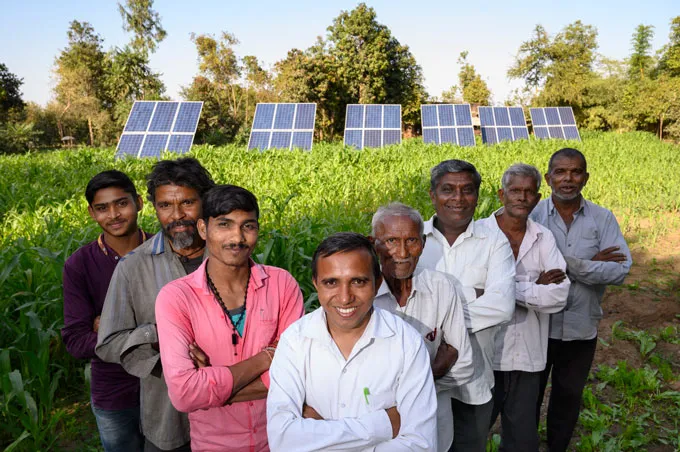
In a moment that fills the heart of every Indian with pride, Bharat has crossed a historic milestone in its journey towards a cleaner, greener future. For the first time ever, non-fossil fuel sources now power half of the nation’s installed electricity capacity, a dream realised five years ahead of the 2030 target pledged under India’s Nationally Determined Contributions (NDCs) to the Paris Agreement.
As of June 30, 2025, India’s non-fossil fuel capacity, drawn from renewable energy, large hydro, and nuclear power, has soared to an inspiring 242.78 gigawatts (GW), out of a total installed capacity of 484.82 GW. That’s 50.08 percent, a powerful testament to India’s willpower, vision, and unshakeable commitment to sustainable development.
This is more than a number. It is a symbol of hope, of responsibility, and of a nation that refuses to choose between progress and the planet. It is the heartbeat of a new Bharat, one that is proving to the world that economic growth can walk hand-in-hand with ecological balance. In achieving this feat, India is not just meeting goals; it is lighting the way forward for the world.
A Monumental Achievement in Climate Action
India’s attainment of 50 percent non-fossil fuel capacity is a testament to its ambitious vision and resolute policy framework. Union Minister of New and Renewable Energy, Pralhad Joshi, hailed this milestone as a proud moment for the nation, stating, “In a world seeking climate solutions, India is showing the way. Achieving 50 percent non-fossil fuel capacity five years ahead of the 2030 target is a proud moment for every Indian. Prime Minister Shri Narendra Modi’s leadership continues to drive Bharat’s green transformation, paving the path towards a self-reliant and sustainable future.”
This achievement reflects the synergy between visionary leadership, robust policy implementation, and the collective will of a nation striving for a cleaner, greener future.
In a world seeking climate solutions, India is showing the way.
Achieving 50% non-fossil fuel capacity five years ahead of the 2030 target is a proud moment for every Indian.
Hon’ble PM Shri @narendramodi ji’s leadership continues to drive Bharat’s green transformation — paving… pic.twitter.com/ydzWErWQNC
— Pralhad Joshi (@JoshiPralhad) July 14, 2025
The journey to this milestone has been driven by a combination of innovative policies, technological advancements, and a commitment to inclusive growth. India’s clean energy transition is not merely about reducing carbon emissions but also about fostering equitable development, enhancing energy access, and creating economic opportunities across urban and rural landscapes.
By surpassing its NDC target well ahead of schedule, India has reinforced its position as a frontrunner in the global fight against climate change, inspiring other nations to accelerate their own transitions to renewable energy.
Policy-Driven Progress: The Backbone of India’s Renewable Revolution
India’s success in achieving 50 percent non-fossil fuel capacity is rooted in a series of well-crafted policies and programs that have catalysed the growth of clean energy. Flagship initiatives such as the Pradhan Mantri Kisan Urja Suraksha evam Utthaan Mahabhiyan (PM-KUSUM), PM Surya Ghar: Muft Bijli Yojana, solar park development, and the National Wind-Solar Hybrid Policy have been instrumental in scaling up renewable energy deployment while ensuring inclusivity and economic benefits for diverse segments of society.
PM-KUSUM: Empowering Farmers Through Solar Energy
The PM-KUSUM scheme has been a game-changer for rural India, empowering millions of farmers by providing access to solar-powered pumps. This initiative has not only ensured energy security for agricultural activities but also promoted sustainable farming practices. By enabling farmers to generate solar energy for irrigation and sell surplus power to the grid, PM-KUSUM has opened new revenue streams, fostering financial independence and resilience in rural communities. The scheme has also supported agrovoltaics, integrating solar panels with agricultural land and feeder-level solarisation, which enhances energy efficiency at the grassroots level.
As of 2025, PM-KUSUM has transformed the agricultural energy landscape, making farmers active participants in India’s clean energy revolution.
PM Surya Ghar: A Rooftop Solar Revolution
Launched in 2024, the PM Surya Ghar: Muft Bijli Yojana has democratised access to solar energy by targeting one crore households for rooftop solar installations. This ambitious program has made clean energy affordable and accessible, enabling households to generate their own electricity and reduce dependence on fossil fuel-based power. By fostering decentralised energy generation, PM Surya Ghar has empowered citizens to become “prosumers” both producers and consumers of energy.
The scheme has also driven job creation in the solar installation and maintenance sectors, contributing to economic growth while advancing India’s decarbonisation goals.
India has achieved what many thought impossible — 50% of its installed power capacity now comes from clean, non-fossil sources. A giant leap towards a greener, self-reliant and sustainable future. #50PercentRenewables 🌱⚡ pic.twitter.com/R4eY2eEFPm
— Ministry of New and Renewable Energy (MNRE) (@mnreindia) July 14, 2025
Solar Parks and Wind Energy: Scaling Up Renewable Capacity
The development of solar parks across India has been a cornerstone of the country’s renewable energy strategy. These large-scale installations have facilitated utility-scale solar projects, achieving record-low tariffs and making clean energy more cost-competitive. States like Gujarat and Tamil Nadu have emerged as leaders in wind energy, harnessing their coastal winds to meet evening peak power demands. The National Wind-Solar Hybrid Policy has further optimised renewable energy generation by combining the strengths of solar and wind power, ensuring a stable and reliable energy supply.
Together, these initiatives have significantly expanded India’s renewable energy base, contributing to the 184.62 GW of renewable energy capacity (excluding large hydro) as of June 30, 2025.
Bioenergy: A Catalyst for Rural Development
The bioenergy sector, once a marginal contributor, has emerged as a vital component of India’s clean energy mix. By leveraging agricultural waste, municipal solid waste, and other biomass resources, bioenergy projects have provided clean energy while supporting the circular economy. These initiatives have created significant employment opportunities in rural areas, particularly for women and marginalised communities, thereby promoting social equity. Bioenergy plants have also helped reduce air pollution by diverting waste from landfills and open burning, contributing to better public health outcomes.
As of 2025, bioenergy is playing an increasingly important role in India’s energy transition, aligning with the nation’s goals of sustainable development and inclusive growth.
Co-Benefits of India’s Clean Energy Transition
India’s renewable energy revolution extends beyond decarbonisation, delivering a wide range of co-benefits that enhance the quality of life for millions.
These include:
Enhanced Energy Access: By promoting decentralised renewable energy systems, such as rooftop solar and microgrids, India has extended electricity access to remote and underserved regions, bridging the urban-rural energy divide.
Employment Generation: The renewable energy sector has created millions of jobs, from manufacturing and installation to maintenance and research, particularly in rural areas where economic opportunities are often limited.
Reduced Air Pollution: The shift from fossil fuels to clean energy has significantly reduced air pollution, leading to improved public health outcomes and lower healthcare costs.
Stronger Rural Incomes: Programs like PM-KUSUM have enabled farmers to earn additional income by selling surplus solar power, strengthening rural economies.
Climate Resilience: Renewable energy projects, coupled with energy-efficient technologies, have enhanced India’s resilience to climate change by reducing dependence on volatile fossil fuel markets.
These co-benefits highlight the inclusive nature of India’s energy transition, which prioritises social justice and economic equity alongside environmental sustainability.
India marks a major sustainability milestone☀️⚡
Non-fossil energy sources now power half the nation’s grid, signalling that India’s clean energy transition is not only real but also accelerating.#50PercentRenewables pic.twitter.com/69LycYCAwO
— Ministry of Information and Broadcasting (@MIB_India) July 15, 2025
India’s Global Leadership in Climate Action
India’s achievement of 50 percent non-fossil fuel capacity is particularly significant in the global context. Despite having one of the lowest per capita emissions among major economies, India is among the few G20 nations on track to meet or exceed its NDC commitments. This milestone reinforces India’s role as a global leader in climate action, advocating for climate equity, sustainable lifestyles, and low-carbon development pathways at international forums such as the G20 and the Conference of Parties (COP) to the United Nations Framework Convention on Climate Change.
India’s success demonstrates that rapid economic growth and environmental stewardship are not mutually exclusive. By achieving its clean energy targets ahead of schedule, India has set a powerful example for other developing nations, proving that sustainable development can be achieved without compromising economic progress. This leadership is further amplified by India’s commitment to sharing its expertise and best practices with the global community, fostering international cooperation in the fight against climate change.
The Road Ahead: Scaling Up Ambition
While reaching 50 percent non-fossil fuel capacity is a monumental achievement, it is only the beginning of India’s journey toward a sustainable energy future. The next phase of the transition must focus on scaling up ambition, enhancing resilience, and ensuring equitable access to clean energy.
Key priorities include:
Doubling Per Capita Clean Energy Consumption
To meet growing energy demands, particularly in rural and underserved areas, India must double its per capita clean electricity consumption. This can be achieved by expanding distributed renewable energy systems, such as rooftop solar and microgrids, and promoting energy-efficient appliances. These efforts will ensure that clean energy benefits reach all segments of society, fostering inclusive growth.
Building a Smart, Resilient Grid
As renewable energy penetration increases, India’s electricity grid must evolve to manage higher levels of variable renewable energy, demand fluctuations, and two-way power flows. Investments in smart grid technologies, including advanced metering infrastructure and demand response systems, will be critical to ensuring grid reliability.
Additionally, the deployment of Battery Energy Storage Systems (BESS) and pumped hydro storage will play a pivotal role in balancing supply and demand, enabling round-the-clock power availability.
Promoting Circularity in Renewable Infrastructure
To ensure the sustainability of India’s renewable energy ecosystem, the lifecycle management of solar panels, wind turbine blades, and batteries must prioritise circularity. Recycling and reusing materials will minimise waste and reduce the environmental impact of renewable energy infrastructure. Investments in research and development for sustainable materials and recycling technologies will be essential to achieving this goal.
Scaling Up Green Hydrogen
Green hydrogen, produced using renewable energy, holds immense potential as a clean fuel for industries such as steel, cement, and transportation. Accelerated investments in green hydrogen production and infrastructure will deepen decarbonisation across hard-to-abate sectors, positioning India as a global leader in this emerging field.
Technology as a Force Multiplier
AI and Digitisation: Transforming Energy Systems
Artificial Intelligence (AI) is poised to revolutionise India’s energy infrastructure. AI-driven platforms can enhance demand forecasting, predictive maintenance, and automated grid management, improving system efficiency and reliability. By integrating rooftop solar, electric vehicles, and smart meters into intelligent energy marketplaces, AI will empower consumers to become active participants in the energy ecosystem. These advancements will create a dynamic, consumer-centric energy system that maximises the benefits of renewable energy.
Addressing Cybersecurity Challenges
As India’s energy sector becomes increasingly digitised, cybersecurity must be a top priority. Protecting critical infrastructure from cyber threats, data breaches, and algorithmic manipulation is essential to ensuring a secure and resilient energy system. Robust cybersecurity frameworks, regular audits, and investments in secure technologies will be critical to safeguarding India’s energy future.
A Bright Future for India and the World
India’s remarkable achievement of reaching 50 percent non-fossil fuel capacity five years ahead of its 2030 target is not just a statistic; it is a reflection of the nation’s unwavering resolve to build a cleaner, greener, and more equitable future. This milestone speaks volumes of Bharat’s ambition, its relentless innovation, and its deep-rooted commitment to sustainable development.
As the country strides ahead toward its larger vision, achieving 500 GW of non-fossil fuel capacity by 2030 and net-zero emissions by 2070, the road ahead must continue to be paved with bold decisions, inclusive growth strategies, and cutting-edge technology. The current installed capacity of 484.82 GW, with 242.78 GW from non-fossil sources, is living proof that a developing nation can lead with both purpose and progress.
In illuminating its own path toward energy transformation, India is doing something far greater. It is showing the world what is possible. Bharat’s renewable journey has become a global beacon of hope, reminding us all that sustainable development is not a distant dream but a reality we can achieve with courage, clarity, and collective will.















Comments