The Manithaneya Makkal Katchi (MMK), a Muslim centric political party in Tamil Nadu, in its state-level public conference held at Madurai’s Ammal Thidal has demanded the repeal of the Waqf Amendment Act and condemned what it called the illegal attempt to rename Sikkandar Hill.
The conference was attended by MMK leaders, Muslim representatives, and functionaries from like-minded parties.
On this occasion, MMK President and Tamil Nadu MLA, MH Jawahirullah, called for proportional political representation for Muslims and demanded the repeal of the Waqf Amendment Act, which he described as unconstitutional and designed to dismantle minority institutions.
“The amendments to the Waqf Act are intended to weaken Waqf Boards and seize their properties. The BJP government is using the new online portal as a tool to loot Waqf assets. If the Act is not repealed, we are prepared to launch protests similar to the farmers’ agitation,” he said.
One of the resolutions adopted at the conference opposed in naming Thiruparankundram Murugan temple hill than Sikendra hill, calling it illegal. It urged the state government to protect the site and provide adequate infrastructure for Muslim pilgrims visiting the Dargah located there.
The MMK also passed a resolution demanding that the Indian government abandon its pro-Israel stance and expel all Israeli firms operating on Indian soil.
Another resolution condemned Vice President Jagdeep Dhankhar’s remarks on secularism and socialism, stating that they echoed those who wish to undermine the Constitution.
The party also called for a new school and college syllabus to be introduced only after expert panel review and approval, to prevent arbitrary curriculum changes. Additionally, it sought a law to extend reservation and social justice benefits to the private sector, and urged the Tamil Nadu Assembly to take legislative action in this regard.
Jawahirullah said that the MMK’s struggle was not for power but to uphold secularism, protect minority rights, and promote inclusive governance.
He noted that despite forming over 14 percent of the population, Muslims are severely under-represented in Indian politics. “We need at least 80 Muslim MPs in the Lok Sabha to reflect our share. In the Chennai Corporation, only four out of 200 councillors are Muslim. Every party—from the panchayat to Parliament—must correct this imbalance,” he further said.
He appealed to the DMK, Congress, and AIADMK to ensure fair representation for Muslims in all political forums.
A total of 10 resolutions were passed at the conference. The most prominent included:
- Demand for proportional political representation for Muslims
- Repeal of the Waqf Amendment Act
- Creation of a fully operational Waqf Development Corporation
- Ban on EVMs and VVPATs, citing a lack of public trust in the system
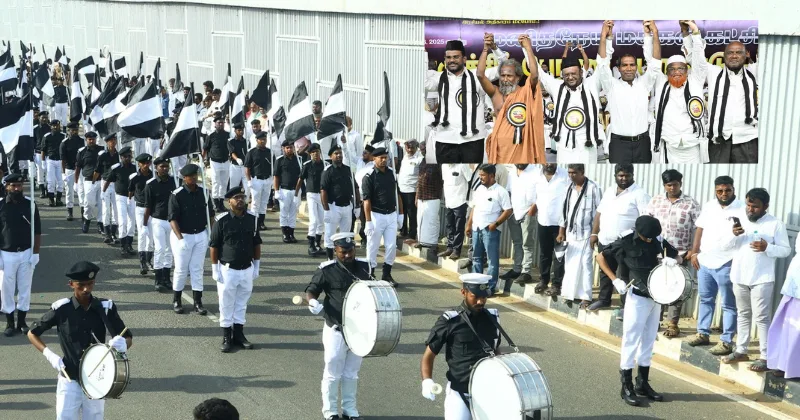
Earlier in the day, hundreds of MMK supporters participated in a 4-kilometre march from PC Perungayam to Amma Thidal near Vandiyur Toll Plaza, carrying party flags and placards. They raised slogans demanding greater Muslim representation and protection of Waqf properties.
Critics argue that the history of Muslim-centric political parties, both pre- and post-Independence, consistently revolves around demands for special rights and privileges, regardless of India’s strong democratic framework and independent judiciary. Their political and social agendas often steer the Islamic community towards separatism and seek immunity from the laws of the land.
The demands of MMK, such as proportional political representation are particularly contentious. In a democratic setup, legislators are elected through a transparent electoral process. When their leaders fail to secure victories through this system, they attempt to bypass democracy itself.
The call for a ban on EVMs and VVPATs appears to be aimed at undermining public trust in the independent Election Commission and its functioning.
Furthermore, India–Israel relations are based on nation-to-nation strategic interests. However, the demand to sever ties with Israel is driven more by religious motivations than national interest. Such appeals are not only detrimental to India’s geopolitical priorities, but also foster animosity among sections of the Muslim community towards the Indian state.
Many of the resolutions passed by such parties appear to be deliberate attempts to alienate Muslims from mainstream social integration, promoting a politics of separatism and entitlement over participation and equality.
Hindu Munnani organised the Muruga Bhakta Maanaadu at the same venue on 22 June, after facing several hurdles imposed by the DMK government through its machinery.