The Emergency: Nehru’s half dream, fulfilled by Indira Gandhi
June 5, 2026
  • Read Ecopy
  • Circulation
  • Advertise
  • Careers
  • About Us
  • Contact Us
Android AppiPhone AppArattai
Organiser
  • ‌
  • Bharat
    • Assam
    • Bihar
    • Chhattisgarh
    • Jharkhand
    • Maharashtra
    • View All States
  • World
    • Asia
    • Europe
    • North America
    • South America
    • Africa
    • Australia
  • Editorial
  • International
  • Opinion
  • RSS @ 100
  • More
    • Op Sindoor
    • Analysis
    • Sports
    • Defence
    • Politics
    • Business
    • Economy
    • Culture
    • Special Report
    • Sci & Tech
    • Entertainment
    • G20
    • Azadi Ka Amrit Mahotsav
    • Vocal4Local
    • Web Stories
    • Education
    • Employment
    • Books
    • Interviews
    • Travel
    • Law
    • Health
    • Obituary
  • Subscribe
    • Subscribe Print Edition
    • Subscribe Ecopy
    • Read Ecopy
  • ‌
  • Bharat
    • Assam
    • Bihar
    • Chhattisgarh
    • Jharkhand
    • Maharashtra
    • View All States
  • World
    • Asia
    • Europe
    • North America
    • South America
    • Africa
    • Australia
  • Editorial
  • International
  • Opinion
  • RSS @ 100
  • More
    • Op Sindoor
    • Analysis
    • Sports
    • Defence
    • Politics
    • Business
    • Economy
    • Culture
    • Special Report
    • Sci & Tech
    • Entertainment
    • G20
    • Azadi Ka Amrit Mahotsav
    • Vocal4Local
    • Web Stories
    • Education
    • Employment
    • Books
    • Interviews
    • Travel
    • Law
    • Health
    • Obituary
  • Subscribe
    • Subscribe Print Edition
    • Subscribe Ecopy
    • Read Ecopy
Organiser
  • Home
  • Bharat
  • World
  • Operation Sindoor
  • Editorial
  • Analysis
  • Opinion
  • Culture
  • Defence
  • International Edition
  • RSS @ 100
  • Magazine
  • Read Ecopy
Home Politics

The Emergency: Nehru’s half dream, fulfilled by Indira Gandhi at the cost of the republic

The period of Emergency, imposed in India from 1975 to 1977, remains a dark chapter in the nation's democratic history, marked by widespread curtailment of civil liberties, press censorship, and the detention of political opponents

Adv Karan ThakurAdv Karan Thakur
Jun 30, 2025, 07:00 am IST
in Politics, Bharat, Opinion
Follow on Google News
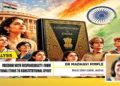
(From Left To Right) Pt Nehru, Indian Constitution, Indira Gandhi

(From Left To Right) Pt Nehru, Indian Constitution, Indira Gandhi

FacebookTwitterWhatsAppTelegramEmail

As rightly noted by Rashtriya Swayamsevak Sangh Sarkaryawah Shri Dattatreya Hosabale, the Emergency was not merely a political event but an ideological assault on the very spirit of Bharat’s democracy. In the same vein, Vice-President of India Shri Jagdeep Dhankhar has sharply remarked that inserting the words “Secular” and “Socialist” into the Constitution was a sacrilege to the vision of our founding fathers and a betrayal of the constitutional soul. These are not stray sentiments; they echo a growing national awakening that seeks to understand and correct the historical distortions imposed upon our Republic.

When we speak of the Emergency (1975–77), we often confine its origins to the authoritarian instincts of one individual, Indira Gandhi. But to understand its deeper roots, one must go further back in the political genealogy of post-independence India. The Emergency was not simply a moment of constitutional collapse. It was, in many ways, the full flowering of a political culture seeded by Jawaharlal Nehru himself, a culture that prioritized centralization over federalism, ideology over institutionalism, and dynastic continuity over democratic consensus.

It was Nehru’s half-dream of a controlled, ideological republic, dressed in the language of liberalism but increasingly intolerant of dissent, that laid the foundation for the Emergency. Indira Gandhi did not betray this dream, she completed it, brutally and unapologetically, by suspending civil liberties, erasing institutional checks, and silencing the people’s voice, all in the name of “national interest.” What Nehru left undone by design, Indira did by decree. And what the Constitution guaranteed to the people in 1950, was throttled by a family that sought to substitute itself for the state.

Pandit Nehru’s deep distrust of opposition politics and his unwavering faith in centralized state power began shaping a political architecture where democracy was procedural, but power was absolute. From the very early years of the Republic, the Nehru government displayed an aversion to decentralization. States were reorganized at the Centre’s convenience, opposition leaders were branded reactionary, and institutions such as the Planning Commission and the Congress Working Committee were used to engineer ideological conformity rather than democratic dialogue.

What was most worrying, however, was Nehru’s handling of secularism and socialism, not as inclusive principles, but as exclusionary tools. Secularism, under Nehru, did not emerge as a doctrine of equal respect for all religions. It became a selectively applied policy where religious sensitivities were managed to serve electoral arithmetic. Socialism too, instead of becoming a genuine instrument for equitable economic growth, morphed into state control without accountability, cloaked in high moralism. The seeds of ideological absolutism were firmly planted.

If Nehru’s era was marked by the subtle subjugation of institutional independence, Indira Gandhi’s Emergency was its open execution. The dismissal of elected state governments, the nationalization spree, the destruction of the judiciary’s independence, and finally, the 42nd Constitutional Amendment, these were not sudden eruptions but methodical steps taken with the confidence that the state was now indistinguishable from the Congress Party, and the Congress Party indistinguishable from the family.

The insertion of the words “Socialist” and “Secular” into the Preamble during the Emergency, without debate or mandate, was not merely symbolic. It was the final stamp on an ideological republic whose foundation had been laid much earlier. What B.R. Ambedkar and the Constituent Assembly left out Indira Gandhi forcibly added not to protect the vested interest of her family legacy but also legitimize the Emergency and silence the rising forces of cultural and ideological resistance, particularly from the RSS, the Jan Sangh, and civil society intellectuals.

Dr BR Ambedkar envisioned a constitutional democracy where the state derived its power from the people, not from a party, a dynasty, or an ideology. His Constitution was secular, but without the need for ideological branding. It was committed to social justice, but without abandoning individual liberty. It was federal in spirit, allowing India to be governed not from the top-down, but from the grassroots up.

The Emergency and the Congress’s actions during that time were nothing short of a betrayal of Ambedkar’s constitutional vision. It replaced democratic deliberation with executive fiat, parliamentary wisdom with party loyalty, and the will of the people with the will of one family.

Today, as India continues to evolve and modernize, it is imperative for this generation to understand that the Emergency was not an isolated abuse of power, but a natural consequence of a long-standing political mindset that prioritized legacy over liberty.

We must also recognize that the words inserted into the Preamble during the Emergency were not expressions of collective will, but stamps of ideological propaganda. If India was secular before 1976 and it certainly was, then those insertions were redundant. If it wasn’t, then inserting them without democratic consultation was a mockery of constitutionalism.

True constitutional patriotism demands that we restore the Constitution not just in form, but in spirit. This requires revisiting the distortions introduced under duress, confronting the truths that history has masked with myths, and affirming that no dream, however idealistic, is worth sacrificing democracy for.

The time has come to accept that Emergency was not a deviation, but a design one seeded by Nehru’s quiet paternalism and fulfilled by Indira’s loud authoritarianism. It is now up to the Republic to reject that design, and return to the constitutional vision its framers had entrusted to the people, not to the rulers.
Topics: ConstitutionJawaharlal NehruemergencyIndira Gandhi
ShareTweetSendShareSend
✮ Subscribe Organiser YouTube Channel. ✮
✮ Join Organiser's WhatsApp channel for Nationalist views beyond the news. ✮
Previous News

Indian Railways New rules for reservation from July 1, 2025: Aadhaar for Tatkal, early charts — Know more

Next News

Chabahar vs Gwadar: How diplomacy of India protected its interests amid the Iran-Israel war

Related News

PM Modi to Overtake Nehru as India's Longest-Serving Elected Prime Minister on June 10

PM Modi set to surpass Nehru’s record, become India’s longest-serving elected Prime Minister

From Partition to the National Advisory Council in 2004, Congress-led decisions are seen as having lasting impacts on India’s territorial integrity

Dark Chapter of Congress: How partition, territorial concessions and political decisions shaped India’s troubled legacy

The Uniform Civil Code debate in Assam has reignited questions around equality, cultural identity and constitutional reform in India

Equality Without Assimilation: Why Assam’s UCC debate goes beyond legal uniformity

Akhil Bharatiya Adhivakta Parishad explores India’s early constitutional battles over free speech and judicial review

The First Amendment at 75: Revisiting Organiser’s historic free speech battle against the Nehru government

Why Nehru didn't want anything to do with Somnath temple rebuilding

When Nehru opposed reconstruction of Somnath Mandir and K.M. Munshi refused to back down

Somnath Mandir's Journey Through Bloodshed and Rebirth (This image is generated from AI)

Somnath Stands Tall: How Hindu civilisation survived repeated Islamic attacks

Load More

Latest News

From the Vedas to modern sustainability (This is an AI Generated image)

World Environment Day: Rediscovering Vedic ecology, ancient wisdom for a green future

K Annamalai Resigns from BJP, Party accepts his resignation

Ex- Tamil Nadu party chief K Annamalai quits from BJP, Nitin Nabin accepts resignation

Tahir Hussain, accused in 2020 Delhi riots case

2020 Delhi Riots Case: Tahir Hussain’s lies exposed; Admits attacking Hindus, raising ‘Kafiro Ko Maaro’ slogans

Kurla resident Huzaifa Ansari held by Delhi police and ATS in alleged ISI-linked terror recruitment case

Delhi Police and Thane ATS arrest Kurla mechanic Huzaifa for alleged role in ISI-linked terror recruitment network

Will Mamata Accept Her Rebel's Help? Humayun Kabir Offers to Send Ex-Boss Back to House

Need a seat, Didi? Ex-TMC rebel Humayun Kabir offers Mamata Banerjee a route back to West Bengal assembly

Wipro Issues First Statement On Religious Conversion Case In Pune

Corporate Jihad Row at Wipro: Company breaks silence, issues first statement, says it is cooperating with police

Imtiyaz Jaleel and Nida Khan named in the SIT Chargesheet in Nashik TCS Corporate Jihad probe

AIMIM leader Imtiaz Jaleel under scanner in TCS Nashik Corporate Jihad case after name surfaces in SIT chargesheet

Hindu victim in the case who was trapped by Islamist senior

After TCS, Wipro, Pune insurance employee accuses Mohammad Sadiq of harassment; Arrested by police

AAP’s New Front? CJP Emerges as Congress’s Biggest Narrative Challenger

Congress Protests, CJP Trends: AAP harvests through CJP on ground tilled by Congress

The Maharashtra SIT chargesheet in the TCS Nashik case alleges that a woman employee was encouraged to stop visiting temples and was introduced to Islamic teachings through videos of religious preachers.

‘Allah is with us, stop going to mandir’: Chargesheet exposes new details in TCS Nashik Corporate Jihad probe

Load More
  • Privacy
  • Terms
  • Cookie Policy
  • Refund and Cancellation
  • Delivery and Shipping

© Bharat Prakashan (Delhi) Limited.
Tech-enabled by Ananthapuri Technologies

  • Home
  • Search Organiser
  • Bharat
    • Assam
    • Bihar
    • Chhattisgarh
    • Jharkhand
    • Maharashtra
    • View All States
  • World
    • Asia
    • Africa
    • North America
    • South America
    • Europe
    • Australia
  • Editorial
  • Operation Sindoor
  • Opinion
  • Analysis
  • Defence
  • Culture
  • Sports
  • Business
  • RSS @ 100
  • Entertainment
  • More ..
    • Sci & Tech
    • Vocal4Local
    • Special Report
    • Education
    • Employment
    • Books
    • Interviews
    • Travel
    • Health
    • Politics
    • Law
    • Economy
    • Obituary
  • Subscribe Magazine
  • Read Ecopy
  • Advertise
  • Circulation
  • Careers
  • About Us
  • Contact Us
  • Policies & Terms
    • Privacy Policy
    • Cookie Policy
    • Refund and Cancellation
    • Terms of Use

© Bharat Prakashan (Delhi) Limited.
Tech-enabled by Ananthapuri Technologies