
Book Review: India’s moment in a changing world
September 14, 2026
  • Read Ecopy
  • Circulation
  • Advertise
  • Careers
  • About Us
  • Contact Us
Android AppiPhone AppArattai
Organiser
  • ‌
  • Bharat
    • Assam
    • Bihar
    • Chhattisgarh
    • Jharkhand
    • Maharashtra
    • View All States
  • World
    • Asia
    • Europe
    • North America
    • South America
    • Africa
    • Australia
  • Editorial
  • International
  • Opinion
  • RSS @ 100
  • More
    • World Hindu Congress 2026
    • Op Sindoor
    • Analysis
    • Sports
    • Defence
    • Politics
    • Business
    • Economy
    • Culture
    • Special Report
    • Sci & Tech
    • Entertainment
    • G20
    • Azadi Ka Amrit Mahotsav
    • Vocal4Local
    • Web Stories
    • Education
    • Employment
    • Books
    • Interviews
    • Travel
    • Law
    • Health
    • Obituary
  • Subscribe
    • Subscribe Print Edition
    • Subscribe Ecopy
    • Read Ecopy
  • ‌
  • Bharat
    • Assam
    • Bihar
    • Chhattisgarh
    • Jharkhand
    • Maharashtra
    • View All States
  • World
    • Asia
    • Europe
    • North America
    • South America
    • Africa
    • Australia
  • Editorial
  • International
  • Opinion
  • RSS @ 100
  • More
    • World Hindu Congress 2026
    • Op Sindoor
    • Analysis
    • Sports
    • Defence
    • Politics
    • Business
    • Economy
    • Culture
    • Special Report
    • Sci & Tech
    • Entertainment
    • G20
    • Azadi Ka Amrit Mahotsav
    • Vocal4Local
    • Web Stories
    • Education
    • Employment
    • Books
    • Interviews
    • Travel
    • Law
    • Health
    • Obituary
  • Subscribe
    • Subscribe Print Edition
    • Subscribe Ecopy
    • Read Ecopy
Organiser
  • Home
  • Bharat
  • World
  • Operation Sindoor
  • Editorial
  • Analysis
  • Opinion
  • Culture
  • Defence
  • International Edition
  • RSS @ 100
  • Magazine
  • Read Ecopy
Home Bharat

Book Review: India’s moment in a changing world

'The New World’ authored by Ram Madhav examines global power shifts and India’s emerging role

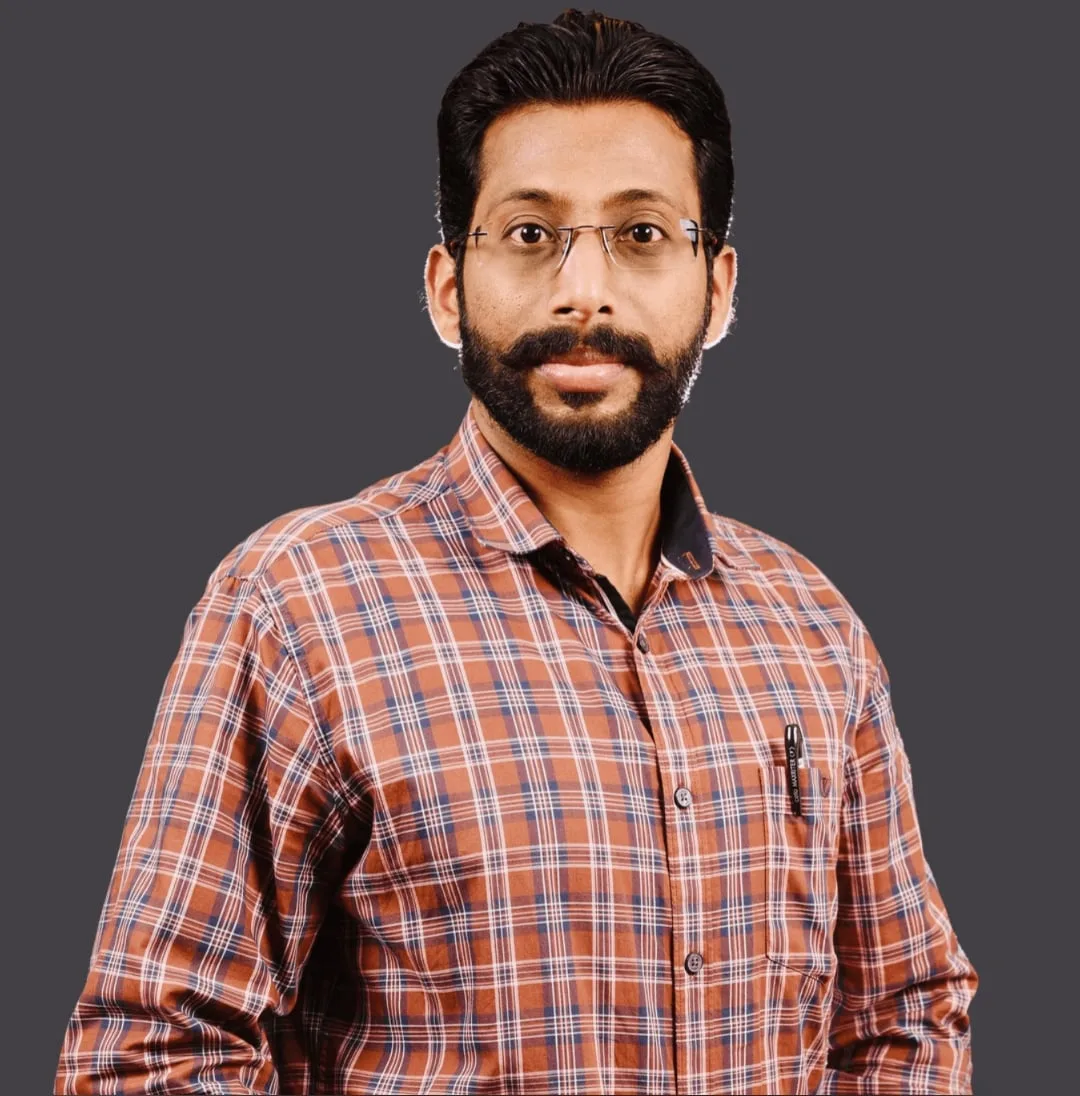
Dr Prosenjit NathDr Prosenjit Nath
Jun 24, 2025, 08:30 pm IST
inBharat, Book Review
Follow on Google News
Facebook
Twitter
WhatsAppTelegramEmail

In The New World: 21st-Century Global Order and India, Ram Madhav delivers a timely and thought-provoking assessment of the shifting tectonic plates of global power. As an influential thinker associated with India’s strategic establishment and a senior member of the Rashtriya Swayamsevak Sangh (RSS), Madhav brings ideological clarity and realpolitik pragmatism to his writing. With the liberal world order of the past seventy years under increasing strain from geopolitical rivalry to technological disruption and ecological stress, his book seeks to answer a crucial question: what kind of world is emerging, and what role can India play in shaping it?

The book begins by revisiting the cycles of rise and decline that have defined historical empires from Rome and Britain to the post-World War II hegemony of the United States. Madhav adeptly connects these historical shifts to present-day transitions, suggesting that we are witnessing not just a power realignment but a civilizational moment. The Pax Americana that underpinned the post-1945 liberal international order anchored in Western values, institutions like the UN, IMF, and World Bank, and the dominance of the dollar is losing coherence. Multilateralism is weakening, and global institutions often appear paralyzed by vetoes, competing interests, and a lack of trust.

A key theme in The New World is the transition from unipolarity to multipolarity. Madhav sees the rise of China, the resurgence of Russia, and the growing assertiveness of middle powers like Turkey, Brazil, and India as signs that we are entering a new, more diverse global order. This multipolar world, however, is not yet stable it is fluid, uncertain, and contested. The “G-Zero” world, as some analysts describe it, lacks a central leader or consensus-driven architecture. In this environment, Madhav argues, India has a rare opportunity to carve out a significant strategic and normative role.

What makes Madhav’s analysis compelling is its interdisciplinary reach. He does not restrict himself to geopolitics or international relations theory. Instead, he brings in technological, ecological, demographic, and even philosophical dimensions. In chapters on artificial intelligence and frontier technologies, Madhav explores how innovation is not just altering the tools of statecraft but reshaping the very nature of power and sovereignty. His discussion on demographics underscores the contrasting trajectories of aging Western societies and youthful nations like India, with all the attendant challenges and possibilities.

One of the book’s strengths is its accessible tone. Madhav avoids the heavy-handed jargon that often plagues academic international relations literature. His prose is lucid, engaging, and well-structured, making complex topics digestible for the general reader without compromising analytical depth. While the writing is principled and occasionally polemical, especially in critiquing Western hypocrisy and double standards, it remains grounded in facts and thoughtful reasoning.

The section on China is particularly noteworthy. Madhav critiques Beijing’s authoritarian capitalism, its revisionist ambitions, and its attempts to reshape global norms through institutions like the Belt and Road Initiative (BRI) and the Asian Infrastructure Investment Bank (AIIB). He warns against the temptation to accommodate China’s rise passively. At the same time, he cautions against crude decoupling or ideological Cold War framing. India’s strategy, he suggests, must be rooted in realism but guided by civilizational confidence.

In envisioning India’s role, Madhav is optimistic but not complacent. He sees India as a “civilizational state,” a phrase increasingly popular in the strategic lexicon, capable of offering alternative leadership based on its democratic ethos, pluralism, and cultural depth. India, he argues, must move beyond non-alignment to “multi-alignment,” engaging constructively with multiple centers of power while remaining firmly anchored in its national interest. He calls for a more assertive Indian foreign policy that is not reactive but visionary, shaping rather than merely adapting to global changes.

However, the book is not without its limitations. While Madhav outlines an ambitious global vision, there are moments where the domestic constraints facing India—such as economic fragility, institutional weaknesses, and internal political divisions—are underplayed. His faith in India’s capacity to lead on the global stage occasionally overshadows the practical challenges of state capacity and diplomatic bandwidth. Additionally, some readers may wish for a more detailed policy roadmap that goes beyond the general concepts of principle and possibility.

Still, these are minor quibbles in a work that offers a sweeping, ambitious, and deeply relevant intervention into the contemporary global discourse. The New World is not merely a book about India’s foreign policy; it is a meditation on the fate of civilization in an age of flux. Ram Madhav urges readers to recognize that international orders are not eternal they are built, contested, and reimagined. As the old fades and the new struggles to be born, the choices of emerging powers like India will matter more than ever.

In a time of global uncertainty, when the old guard no longer inspires confidence and new aspirants are still finding their voice, The New World provides clarity, perspective, and hope. It is essential reading for diplomats, scholars, students, and anyone interested in how power, values, and ideas shape our shared future. Ram Madhav has not just written a book he has issued a call to leadership. Whether India can rise to that call remains to be seen, but the intellectual groundwork has now been laid.

Topics: Dr Ram Madhav'The New World’
Dr Prosenjit Nath
Dr Prosenjit Nath
The writer is a technocrat, political analyst, and author. [Read more]
Share
Tweet
SendShareSend
✮ Subscribe Organiser YouTube Channel. ✮
✮ Join Organiser's WhatsApp channel for Nationalist views beyond the news. ✮
Previous News

US, Israeli Intel: Iran moved 400kg Uranium before strikes; 16 trucks seen near Fordow site in satellite images

Next News

Emergency & Contribution of Women: ABVP karyakarta recalls daring acts to shield RSS Pracharaks from arrest

Related News

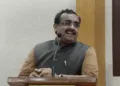
Author–thinker Dr Ram Madhav Ji at Arthayam conclave organiser by Organiser and NSE in Mumbai

‘From Romance to Resolve’: Dr Ram Madhav at Arthayam urges Bharat to turn civilisational wisdom into working models

At Hyderabad on “The New World: 21st Century Global Order and India” book discussion event.
Uma Sudhir, Ambassador Venkatesh Varma, Dr Ram Madhav Prof. Krishna Deva Rao (left- right)

Telangana: Ram Madhav urges Bharat to rise above domestic hurdles and embrace a global outlook

President of India Foundation Ram Madhav

Karnataka: Ram Madhav calls for urgent innovation & civilizational confidence to shape role of Bharat in new world

Vice-President, Jagdeep Dhankhar at the launch of the book ‘New World: 21st Century Global Order in India’

Nations act only in pursuit of their own interests not based on idealism or morality: VP Dhankhar recalls Savarkar

India’s strategic autonomy strengthened its ability to wade through the rough waters of Modern Geopolitics: Ram Madhav

Load More

Latest News

RSS Akhil Bharatiya Sah-Bauddhik Shikshan Pramukh Deepak Vispute addressing the gathering

‘Nation First’ should be the guiding principle for every individual, regardless of their Field: Deepak Vispute

‘India was not poor; it was made poor’: The truth re-emerges through Jema Ferrer’s perspective

Six years after talent manager Disha Salian was found dead, her father Satish Salian on September 11 recorded a detailed statement with the Central Bureau of Investigation (CBI), naming Shiv Sena (UBT) leader Aaditya Thackeray, actors Dino Morea and Sooraj Pancholi, and others.

Disha Salian Murder Case: Father names Aaditya Thackeray in CBI statement; Lawyer claims gang rape, murder cover-up

Release of a book at Vishwa Bandhutva Diwas programme that was organised in Ujjain

Bharat’s youth rooted in sacrifice, service & discipline can give new direction to World: Parag Abhyankar

AI Generated Representative Image

“Let Go” — But only when it suits you? Exposing the double standards of Kashmir’s political leadership

Bharatiya Kisan Sangh distributed free school uniforms, notebooks, pen bundles, bags to 7,000 students in flood-affected areas of Assam

Assam: Bharatiya Kisan Sangh distributes free school uniforms, notebooks & bags to 7,000 flood-affected students

Chinmoy Prabhu

When a Bengali Hindu suffers in Bangladesh, where does ‘Bangali-Prem’ go?

AI Generated Representative Image

BRICS Summit: Not de-dollarisation, but derisking from dollar; India scripts pragmatic shield against external shocks

RSS Sarsanghchalak Dr Mohan Bhagwat, attended the 37th annual prize distribution ceremony ‘Swaraj’ at L.K. Singhania Education Centre

Education must go beyond livelihood and focus on holistic human development: Dr Mohan Bhagwat

(Left) Prime Minister Narendra Modi and Russian President Vladimir Putin (Right) Prime Minister Narendra Modi and Chinese President Xi Jinping in the backdrop of the Rameshwaram temple corridor in the backdrop of the BRICS 2026 summit

Bharat’s civilisational pride at BRICS 2026: Rameswaram temple corridor frames world leaders

Load More
  • Privacy
  • Terms
  • Cookie Policy
  • Refund and Cancellation
  • Delivery and Shipping

© Bharat Prakashan (Delhi) Limited.
Tech-enabled by Ananthapuri Technologies

  • Home
  • Search Organiser
  • Bharat
    • Assam
    • Bihar
    • Chhattisgarh
    • Jharkhand
    • Maharashtra
    • View All States
  • World
    • Asia
    • Africa
    • North America
    • South America
    • Europe
    • Australia
  • Editorial
  • Operation Sindoor
  • Opinion
  • Analysis
  • Defence
  • Culture
  • Sports
  • Business
  • RSS @ 100
  • Entertainment
  • More ..
    • Sci & Tech
    • Vocal4Local
    • Special Report
    • Education
    • Employment
    • Books
    • Interviews
    • Travel
    • Health
    • Politics
    • Law
    • Economy
    • Obituary
  • Subscribe Magazine
  • Read Ecopy
  • Advertise
  • Circulation
  • Careers
  • About Us
  • Contact Us
  • Policies & Terms
    • Privacy Policy
    • Cookie Policy
    • Refund and Cancellation
    • Terms of Use

© Bharat Prakashan (Delhi) Limited.
Tech-enabled by Ananthapuri Technologies