The hate crimes and hate speech in India
July 24, 2026
  • Read Ecopy
  • Circulation
  • Advertise
  • Careers
  • About Us
  • Contact Us
Android AppiPhone AppArattai
Organiser
  • ‌
  • Bharat
    • Assam
    • Bihar
    • Chhattisgarh
    • Jharkhand
    • Maharashtra
    • View All States
  • World
    • Asia
    • Europe
    • North America
    • South America
    • Africa
    • Australia
  • Editorial
  • International
  • Opinion
  • RSS @ 100
  • More
    • Op Sindoor
    • Analysis
    • Sports
    • Defence
    • Politics
    • Business
    • Economy
    • Culture
    • Special Report
    • Sci & Tech
    • Entertainment
    • G20
    • Azadi Ka Amrit Mahotsav
    • Vocal4Local
    • Web Stories
    • Education
    • Employment
    • Books
    • Interviews
    • Travel
    • Law
    • Health
    • Obituary
  • Subscribe
    • Subscribe Print Edition
    • Subscribe Ecopy
    • Read Ecopy
  • ‌
  • Bharat
    • Assam
    • Bihar
    • Chhattisgarh
    • Jharkhand
    • Maharashtra
    • View All States
  • World
    • Asia
    • Europe
    • North America
    • South America
    • Africa
    • Australia
  • Editorial
  • International
  • Opinion
  • RSS @ 100
  • More
    • Op Sindoor
    • Analysis
    • Sports
    • Defence
    • Politics
    • Business
    • Economy
    • Culture
    • Special Report
    • Sci & Tech
    • Entertainment
    • G20
    • Azadi Ka Amrit Mahotsav
    • Vocal4Local
    • Web Stories
    • Education
    • Employment
    • Books
    • Interviews
    • Travel
    • Law
    • Health
    • Obituary
  • Subscribe
    • Subscribe Print Edition
    • Subscribe Ecopy
    • Read Ecopy
Organiser
  • Home
  • Bharat
  • World
  • Operation Sindoor
  • Editorial
  • Analysis
  • Opinion
  • Culture
  • Defence
  • International Edition
  • RSS @ 100
  • Magazine
  • Read Ecopy
Home Bharat

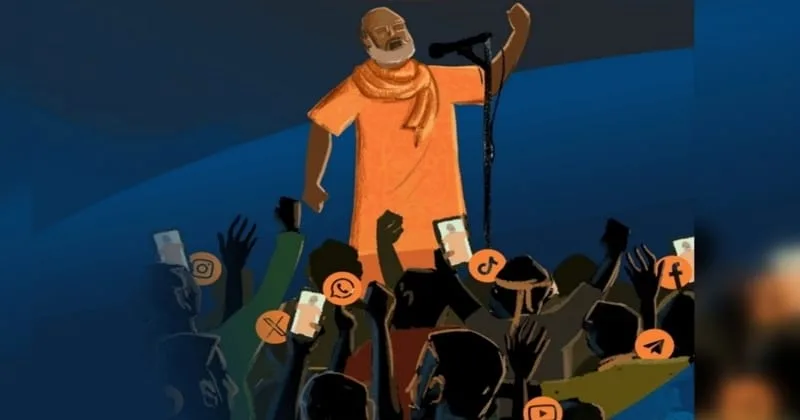
The hate crimes and hate speech in India

Hate speech in India, often overlooked or misinterpreted, continues to fuel hate crimes and deepen social divides. With biased enforcement and rising misuse of digital platforms, the urgent need for balanced regulation and context-based assessment is critical

Pankaj KumarPankaj Kumar
Jun 8, 2025, 02:00 pm IST
in Bharat, Opinion
Follow on Google News
Representative image

Representative image

FacebookTwitterWhatsAppTelegramEmail

The Hate speech often leads to Hate Crimes; these acts are considered as discriminatory in nature. The discriminatory intent has many inhuman forms and may not be accompanied by any specific intent. The perpetrator of these crimes need not have such intent. This failure on the part of the State has brought about great suffering and injury to the target person or groups on religious, political or other such grounds. The most severe impact of this violence has been on women and children. They have been made a target of the widespread and systematic attack historically. Children have been subjected to several forms of ill-treatment, including torture. Likewise, Women have been subjected to gender-based violence by the perpetrators.

Media reporting of such violence, vis-à-vis hate crimes are, everywhere lopsided. Spread of unverified, fake news, misinformation, and disinformation contributes to escalation of violence. Mischievous elements hiding behind the cloaks of newsmen or women, activists on Twitter and Facebook circulate fake news with videos and photos – in some cases even morphs or edits –that result in sporadic incidents.

Foreign powers, foreign state and non-state actors continue to take up activities that amount to interference in the internal affairs of India with ulterior designs. These foreign actors have deep-rooted nexus with a few influential civil society organisations in India that include lawyers, NGOs, purported independent media, journalists, and opposition leaders to destabilise democracy in the country. These individuals and organisations used Freedom of Speech and Expression, misinformation, and disinformation as a tool to thwart and throttle peaceful democracy in India. There has also been a continuing attempt to spread communal disharmony in India and disintegrate India. These are the subject matter of Investigation by the Ministry of Home Affairs, Government of India.

Racism, racial discrimination, xenophobia and related intolerance condoned by state governmental policies violate human rights and are incompatible with democracy, the rule of law and transparent and accountable governance. In a world where radicalisation, hate and extremism are dividing people, Inclusiveness and cultural diversity in democracy can unite the world and its citizens. No country can progress without inclusiveness and cultural diversity.

To assess the severity of the hatred, possible elements may include the cruelty or intent of the statement or harm advocated and the frequency, quantity and extent of the communication. At present, there is no definition of hate speech and no separate legislature to curb hate speech. However, a Bill was introduced in Rajya Sabha in December 2023. At present, there are provisions such as Sections 153A, 153B, 505, and 295A of the Indian Penal Code. Hate Speech is narrowly construed by the law enforcement agencies in India. Hate Speech is directed only at the ‘Minority Muslims’ wherein the Hindu majority are seen as Instigators and the Muslim Minorites are treated as victims.

The context is of great importance when assessing whether particular statements are likely to incite discrimination, hostility or violence against the target group, and it may have a direct bearing on both intent and/or causation. Analysis of the context should place the speech act within the social and political context prevalent at the time the speech was made and disseminated.

The speaker’s position or status in society should be considered, specifically the individual’s or organisation’s standing in the context of the audience to whom the speech is directed.

Negligence and recklessness are not sufficient for an act to be an offence. In this regard, it requires the activation of a triangular relationship between the object and subject of the speech act as well as the audience.

The content of the speech constitutes one of the key foci of the court’s deliberations and is a critical element of incitement. Content analysis may include the degree to which the speech was provocative and direct, as well as the form, style, and nature of arguments deployed in the speech or the balance struck between arguments deployed.

The extent includes such elements as the reach of the speech act, its public nature, its magnitude and the size of its audience. Other elements to consider include whether the speech is public, what means of dissemination are used, for example, by a single leaflet or broadcast in the mainstream media or via the Internet, the frequency, quantity and extent of the communications, whether the audience had the means to act on the incitement, whether the statement (or work) is circulated in a restricted environment or widely accessible to the general public.

The Incitement, by definition, is an inchoate crime. The action advocated through incitement speech does not have to be committed for said speech to amount to a crime. Nevertheless, some degree of risk of harm must be identified. It means that the courts will have to determine that there was a reasonable probability that the speech would succeed in inciting actual action against the target group, recognizing that such causation should be rather direct.

A ‘positively persuasive’ evidence must be submitted in these cases of sporadic violence and hate speech. The voluntary professional codes of conduct for the media and journalists should reflect the principle of equality, and effective steps should be taken to promulgate and implement such codes, which is missing in the context of all Hate Crimes and Hate Speech incidents leading to crimes in India.

Any restrictions must be formulated in a way that makes clear that its sole purpose is to protect individuals and communities belonging to ethnic, national or religious groups, holding specific beliefs or opinions, whether of a religious or other nature, from hostility, discrimination or violence, rather than to protect belief systems, religions or institutions as such from criticism.

The freedom to exercise or not exercise one’s religion or belief cannot exist if the freedom of expression is not respected, as free public discourse depends on respect for the diversity of convictions which people may have. Likewise, freedom of expression is essential to creating an environment in which constructive discussion about religious matters can be held.

The existing provisions Sections 153A, 153B, 505, and 295A of the Indian Penal Code are sufficient to address Hate Speech; to make it Religious neutral, the hate speech may be analysed on the basis of context, speaker, intent, content and form, extent of the speech act, likelihood and imminence. At present, hate speech is “Minority Centric” as seen through the lens of Law enforcement agencies in India.




Topics: Fake NewsSocial HarmonyFreedom of ExpressionHate CrimesReligious ToleranceIndia LawHate Speech
ShareTweetSendShareSend
✮ Subscribe Organiser YouTube Channel. ✮
✮ Join Organiser's WhatsApp channel for Nationalist views beyond the news. ✮
Previous News

Four-fold doctrine for return & resettlement of the exiled Kashmiri Pandits

Next News

Mineral Diplomacy: India taps central Asia in critical minerals mission to cut China dependency, fuel green growth

Related News

Delhi Police claimed 480 Pakistan-linked accounts spread fake content during the NEET-UG protests

Operation Sindoor Network Now Targeting NEET-UG Protests? Delhi police blocks 480 Pakistan-linked accounts

Radical agitators are using fake narratives and violent protests under the guise of student activism to undermine national institutions

Mask Off: How radical agitators use fake news, street violence and digital deception to undermine India’s rule of law

Writer Taslima Nasrin

Taslima Nasrin: A voice under attack from fundamentalism and leftist groups

Guruji MS Golwalkar: The lessons for social harmony and united Hindu society

Jagannath Rath Yatra is more than a sacred procession, it reflects India's enduring values of social harmony and cultural unity

Jagannath Rath Yatra: A living symbol of India’s civilisational values advancing from tradition to the future

The Madras HC dismisses DMK leader Ponmudi plea in hate speech case

Tamil Nadu: Madras HC refuses to hear Ponmudi’s plea over disparaging remarks on saivite, vaishnavite religious symbols

Load More

Latest News

Security forces checking the vehicles as they intensify crackdown on terror networks in J&K

J&K: Houses of LeT operatives Aadil Thokar, Haroon Ganai demolished; 2,500 suspected OGWs detained

Permanent Representative of India to the United Nations Parvathaneni Harish speaks at United Nations Security Council session

India rejects Pakistan at UN: Links Indus Waters Treaty to cross-border terrorism, reaffirms J&K stand

Karnataka KPSC Recruitment Scam: Congress govt under fire for selling seats for Rs 80 lakh each

Union Minister Mansukh Mandaviya urged India’s 124-member contingent in Glasgow to compete with passion

Commonwealth Games 2026: Invoking blessings of Ma Durga & Mahakali, Mandaviya urges Indian squad to play without fear

Internal planning chats have raised questions over the political messaging behind Kolkata's proposed student solidarity march

Student Protest or Political Agenda? Internal chats raise questions over Kolkata’s proposed Solidarity March

Preparations underway on Bada Danda in Puri for the Bahuda Yatra

Bahuda Yatra 2026: Puri prepares for grand return of Mahaprabhu Jagannath amid tight security and devotee surge

Delhi Police claimed 480 Pakistan-linked accounts spread fake content during the NEET-UG protests

Operation Sindoor Network Now Targeting NEET-UG Protests? Delhi police blocks 480 Pakistan-linked accounts

DRDO Develops Indigenous Expendable Turbojet Engine for Defence

DRDO develops India’s first indigenous 350-kg thrust class expendable turbojet engine

Prime Minister Narendra Modi

PM Modi promises ‘more strict actions against paper leaks’ amid CJP protests

Rouse Avenue Court to Fast-Track Public Examination Paper Leak Cases

Amid NEET protest paper leak cases to be heard by special fast track court at Rouse Avenue

Load More
  • Privacy
  • Terms
  • Cookie Policy
  • Refund and Cancellation
  • Delivery and Shipping

© Bharat Prakashan (Delhi) Limited.
Tech-enabled by Ananthapuri Technologies

  • Home
  • Search Organiser
  • Bharat
    • Assam
    • Bihar
    • Chhattisgarh
    • Jharkhand
    • Maharashtra
    • View All States
  • World
    • Asia
    • Africa
    • North America
    • South America
    • Europe
    • Australia
  • Editorial
  • Operation Sindoor
  • Opinion
  • Analysis
  • Defence
  • Culture
  • Sports
  • Business
  • RSS @ 100
  • Entertainment
  • More ..
    • Sci & Tech
    • Vocal4Local
    • Special Report
    • Education
    • Employment
    • Books
    • Interviews
    • Travel
    • Health
    • Politics
    • Law
    • Economy
    • Obituary
  • Subscribe Magazine
  • Read Ecopy
  • Advertise
  • Circulation
  • Careers
  • About Us
  • Contact Us
  • Policies & Terms
    • Privacy Policy
    • Cookie Policy
    • Refund and Cancellation
    • Terms of Use

© Bharat Prakashan (Delhi) Limited.
Tech-enabled by Ananthapuri Technologies