India tightens noose on Chinese CCTV surveillance
June 5, 2026
  • Read Ecopy
  • Circulation
  • Advertise
  • Careers
  • About Us
  • Contact Us
Android AppiPhone AppArattai
Organiser
  • ‌
  • Bharat
    • Assam
    • Bihar
    • Chhattisgarh
    • Jharkhand
    • Maharashtra
    • View All States
  • World
    • Asia
    • Europe
    • North America
    • South America
    • Africa
    • Australia
  • Editorial
  • International
  • Opinion
  • RSS @ 100
  • More
    • Op Sindoor
    • Analysis
    • Sports
    • Defence
    • Politics
    • Business
    • Economy
    • Culture
    • Special Report
    • Sci & Tech
    • Entertainment
    • G20
    • Azadi Ka Amrit Mahotsav
    • Vocal4Local
    • Web Stories
    • Education
    • Employment
    • Books
    • Interviews
    • Travel
    • Law
    • Health
    • Obituary
  • Subscribe
    • Subscribe Print Edition
    • Subscribe Ecopy
    • Read Ecopy
  • ‌
  • Bharat
    • Assam
    • Bihar
    • Chhattisgarh
    • Jharkhand
    • Maharashtra
    • View All States
  • World
    • Asia
    • Europe
    • North America
    • South America
    • Africa
    • Australia
  • Editorial
  • International
  • Opinion
  • RSS @ 100
  • More
    • Op Sindoor
    • Analysis
    • Sports
    • Defence
    • Politics
    • Business
    • Economy
    • Culture
    • Special Report
    • Sci & Tech
    • Entertainment
    • G20
    • Azadi Ka Amrit Mahotsav
    • Vocal4Local
    • Web Stories
    • Education
    • Employment
    • Books
    • Interviews
    • Travel
    • Law
    • Health
    • Obituary
  • Subscribe
    • Subscribe Print Edition
    • Subscribe Ecopy
    • Read Ecopy
Organiser
  • Home
  • Bharat
  • World
  • Operation Sindoor
  • Editorial
  • Analysis
  • Opinion
  • Culture
  • Defence
  • International Edition
  • RSS @ 100
  • Magazine
  • Read Ecopy
Home Bharat

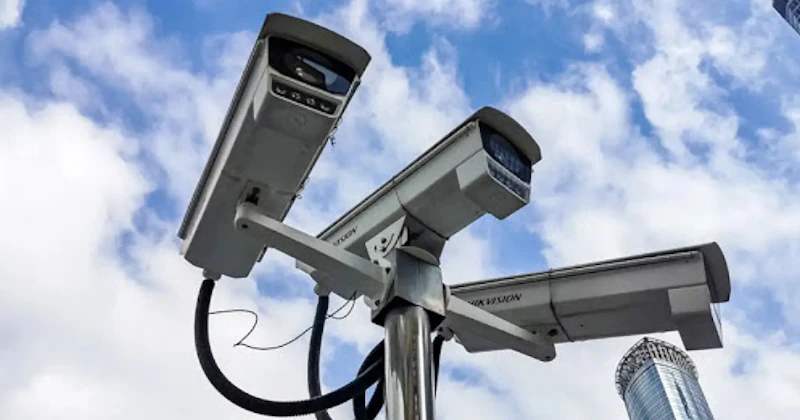
India tightens noose on Chinese CCTV surveillance: Mandates source code, facility inspections amid Espionage fears

India has mandated security checks, including source code submission and facility inspections, for all internet-connected CCTV cameras to counter potential Chinese surveillance threats. The move impacts major players like Hikvision and Xiaomi, aiming to bolster national cybersecurity despite industry pushback

WEBDESKWEBDESK
May 29, 2025, 11:00 pm IST
in Bharat
Follow on Google News
FacebookTwitterWhatsAppTelegramEmail

India has rolled out stringent new rules mandating all manufacturers of internet-connected CCTV cameras—whether domestic or foreign—to submit their hardware, software, and source code for security assessments in Indian government labs before selling their products in the country. The mandate, applicable to all cameras manufactured or imported after April 9, 2025, marks a sweeping overhaul of surveillance gear regulations, with a direct impact on Chinese giants Hikvision, Xiaomi, and Dahua.

The directive stems from mounting concerns over potential Chinese espionage through surveillance infrastructure. In 2021, then Minister of State for Communications and IT, Sanjay Dhotre, warned Parliament that approximately 10 lakh CCTV cameras deployed across various Indian government institutions were of Chinese origin and posed a national security risk. Fears that these cameras could relay sensitive footage to Chinese servers have since amplified calls for decisive action.

“There is always an espionage risk. Anyone can operate and control internet-connected CCTV cameras sitting in an adverse location,” said Gulshan Rai, India’s former cybersecurity chief (2015–2019), speaking to Reuters. “They need to be robust and secure.”

Despite industry pushback, the Indian government has refused to backtrack. On April 13, top Indian officials met with executives from 17 major surveillance gear manufacturers—including Hanwha, Motorola, Bosch, Honeywell, and Xiaomi. The manufacturers pleaded for delayed implementation, citing concerns about insufficient testing capacity, commercial disruption, and confidentiality risks over source code disclosure.

But the government held firm, asserting that the policy addresses a “genuine security issue” and applies uniformly, not targeting any specific country. Officials emphasized that the rules are designed to uplift the cybersecurity standards of all surveillance systems across India.

Ajay Dubey, Hanwha’s Director for South Asia, warned that “millions of dollars will be lost from the industry, sending tremors through the market.” Manufacturers have expressed grave concerns over prolonged approval delays, disruption to infrastructure rollouts, and the possibility of invasive factory inspections.

Under the new norms, CCTV manufacturers must now ensure their devices feature tamper-proof enclosures, high-grade malware detection systems, and robust encryption protocols. Devices using proprietary communication protocols—such as non-standard network interfaces—are subject to even stricter scrutiny, including mandatory disclosure of sensitive source code.

A critical clause in the new policy allows Indian cybersecurity authorities to conduct physical inspections of manufacturing units abroad, empowering them to directly assess vulnerabilities and compliance at source. This unprecedented step signals a no-compromise approach to tech sovereignty and hardware integrity.

Until now, only surveillance gear procured by the Indian government underwent security assessment. The updated regulations now cover all CCTV cameras—public and private—ushering in a new era of comprehensive surveillance governance.

Also Read: BSNL turns profitable after 17 years: Rs 280 crore Q4 profit signals telecom giant’s historic revival

The Indian surveillance market is projected to surge to $7 billion by 2030, from $3.5 billion in 2024, according to Counterpoint Research analyst Varun Gupta. The sector is currently dominated by China’s Hikvision and Dahua, which hold about 30 per cent market share, while India’s own CP Plus leads with 48 per cent. Roughly 27 per cent of CCTV demand arises from the public sector, with 73 per cent stemming from enterprise clients, hospitality firms, and residential users.

Delhi alone is home to over 250,000 CCTV cameras—a testament to the ubiquity of surveillance technology in India’s urban fabric.

Topics: Chinese CCTVCCTV CamerasDahuaChinese CCTV surveillanceSecurity assessmentsHikvision
ShareTweetSendShareSend
✮ Subscribe Organiser YouTube Channel. ✮
✮ Join Organiser's WhatsApp channel for Nationalist views beyond the news. ✮
Previous News

“Daughters of country fulfilling their responsibility”, Defence Minister lauds ‘role of women’ in armed forces

Next News

“Declaration of 140 crore Indians, Operation Sindoor has not ended yet”: PM Modi in West Bengal

Related News

Representative Image

Kota Cares Campaign: New guidelines introduced for 2025-26 academic session to enhance student safety and welfare

Representative image

China’s Surveillance cameras with “Skin Color Analytics” raise human rights concerns

Central Railway to enhance safety of women passengers with CCTVs, TalkBack systems

Arunachal MLA Ninong Ering urges PM Modi to ban Chinese CCTV cameras, as they can be “eyes and ears for Beijing”

Load More

Latest News

(Left) Ramalinga Reddy (Right) KH Muniyappa

Karnataka: Ramalinga Reddy resigns, Muniyappa voices displeasure; Congress rebellion grows over portfolio allocation

MP Child Rights Commission uncovers massive record discrepancies at illegal residential Madrasa

MP Child Rights Commission uncovers massive discrepancies at Mandsaur Madrasa, questions fate of missing girls

Barkatullah University to be renamed as Vagdevi Bhojpal University

MP: Barkatullah University to be renamed as Vagdevi Bhojpal University; Varsity’s executive council approves proposal

How the Gulf Crisis Is Rewriting the Global Energy Order and Why India Holds the Next Ace

How the Gulf Crisis Is Rewriting the Global Energy Order and Why India Holds the Next Ace

Senior Advocate Prashant Bhushan

Delhi Anti-Hindu Riots: Prashant Bhushan’s ‘Cover Blown’? Held meetings, conspired with anti-nationals Umar, Sharjeel

Russia pitches for the co-production of Fifth Generation Su-57 with India

Russian President Putin renews Su-57 offer to India; Signals full access to 5th gen stealth fighter jet technology

Representative Image

Karnataka Terror Link Probe: Alla Baksh arrested in Tumakuru over links with foreign terrorists

From the Vedas to modern sustainability (This is an AI Generated image)

World Environment Day: Rediscovering Vedic ecology, ancient wisdom for a green future

K Annamalai Resigns from BJP, Party accepts his resignation

Ex- Tamil Nadu party chief K Annamalai quits from BJP, Nitin Nabin accepts resignation

Tahir Hussain, accused in 2020 Delhi riots case

2020 Delhi Riots Case: Tahir Hussain’s lies exposed; Admits attacking Hindus, raising ‘Kafiro Ko Maaro’ slogans

Load More
  • Privacy
  • Terms
  • Cookie Policy
  • Refund and Cancellation
  • Delivery and Shipping

© Bharat Prakashan (Delhi) Limited.
Tech-enabled by Ananthapuri Technologies

  • Home
  • Search Organiser
  • Bharat
    • Assam
    • Bihar
    • Chhattisgarh
    • Jharkhand
    • Maharashtra
    • View All States
  • World
    • Asia
    • Africa
    • North America
    • South America
    • Europe
    • Australia
  • Editorial
  • Operation Sindoor
  • Opinion
  • Analysis
  • Defence
  • Culture
  • Sports
  • Business
  • RSS @ 100
  • Entertainment
  • More ..
    • Sci & Tech
    • Vocal4Local
    • Special Report
    • Education
    • Employment
    • Books
    • Interviews
    • Travel
    • Health
    • Politics
    • Law
    • Economy
    • Obituary
  • Subscribe Magazine
  • Read Ecopy
  • Advertise
  • Circulation
  • Careers
  • About Us
  • Contact Us
  • Policies & Terms
    • Privacy Policy
    • Cookie Policy
    • Refund and Cancellation
    • Terms of Use

© Bharat Prakashan (Delhi) Limited.
Tech-enabled by Ananthapuri Technologies