
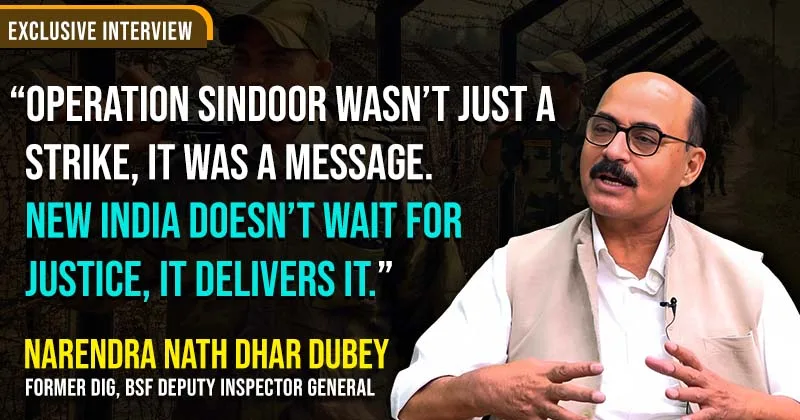
Operation Sindoor was a message. New India doesn't wait for justice, it delivers it: Narendra Nath Dhar Dubey
June 28, 2026
  • Read Ecopy
  • Circulation
  • Advertise
  • Careers
  • About Us
  • Contact Us
Android AppiPhone AppArattai
Organiser
  • ‌
  • Bharat
    • Assam
    • Bihar
    • Chhattisgarh
    • Jharkhand
    • Maharashtra
    • View All States
  • World
    • Asia
    • Europe
    • North America
    • South America
    • Africa
    • Australia
  • Editorial
  • International
  • Opinion
  • RSS @ 100
  • More
    • Op Sindoor
    • Analysis
    • Sports
    • Defence
    • Politics
    • Business
    • Economy
    • Culture
    • Special Report
    • Sci & Tech
    • Entertainment
    • G20
    • Azadi Ka Amrit Mahotsav
    • Vocal4Local
    • Web Stories
    • Education
    • Employment
    • Books
    • Interviews
    • Travel
    • Law
    • Health
    • Obituary
  • Subscribe
    • Subscribe Print Edition
    • Subscribe Ecopy
    • Read Ecopy
  • ‌
  • Bharat
    • Assam
    • Bihar
    • Chhattisgarh
    • Jharkhand
    • Maharashtra
    • View All States
  • World
    • Asia
    • Europe
    • North America
    • South America
    • Africa
    • Australia
  • Editorial
  • International
  • Opinion
  • RSS @ 100
  • More
    • Op Sindoor
    • Analysis
    • Sports
    • Defence
    • Politics
    • Business
    • Economy
    • Culture
    • Special Report
    • Sci & Tech
    • Entertainment
    • G20
    • Azadi Ka Amrit Mahotsav
    • Vocal4Local
    • Web Stories
    • Education
    • Employment
    • Books
    • Interviews
    • Travel
    • Law
    • Health
    • Obituary
  • Subscribe
    • Subscribe Print Edition
    • Subscribe Ecopy
    • Read Ecopy
Organiser
  • Home
  • Bharat
  • World
  • Operation Sindoor
  • Editorial
  • Analysis
  • Opinion
  • Culture
  • Defence
  • International Edition
  • RSS @ 100
  • Magazine
  • Read Ecopy
Home Bharat

Operation Sindoor was a message. New India doesn’t wait for justice, it delivers it: Narendra Nath Dhar Dubey

Nishant Kumar AzadNishant Kumar Azad
May 19, 2025, 08:30 pm IST
in Bharat, Interviews
Follow on Google News
FacebookTwitterWhatsAppTelegramEmail

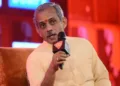
Narendra Nath Dhar Dubey, who played a central role in neutralising Ghazi Baba, mastermind of the Parliament attack, is one of the most accomplished counter-terror officers India has produced. Recently, he once again came into limelight when a movie named ‘Ground Zero’ was made on him. In this gripping conversation with Senior Assistant Editor of Organiser Weekly Nishant Kumar Azad, former BSF Deputy Inspector General and Kirti Chakra recipient opens up about ‘Operation Sindoor,’ his three-decade-long experience in Kashmir, the evolution of Pakistan-sponsored terrorism, the transformation in India’s security doctrine, and the role of agencies like BSF and NIA in today’s hybrid warfare. Excerpts:

Let’s begin with the most brutal terror attack on Hindu tourists in Pahalgam on April 22, which shook the nation. In response, Bharat launched ‘Operation Sindoor’. Sir, how do you view this entire episode?

Operation Sindoor has happened and as the Prime Minister Modi said, “it is still ongoing” and rightly so. I see it as a response to a long-standing reality: Pakistan’s intent in Kashmir has remained unchanged since 1947 territorial aggression cloaked in ideology and religion.

Since 2019, the Valley had seen relative calm, with only selective killings. But the Pahalgam attack, where Hindu tourists were brutally killed in front of their families, shattered the illusion of peace. It wasn’t just terrorism; it was a deliberate provocation. When terrorists said, “Go and tell Modi…,” it was meant to humiliate the Indian state. For me, it was heartbreaking. We had spent decades building a stable Kashmir, one where tourism revived and youth found purpose. The abrogation of Article 370 and commencement of Vande Bharat train to Srinagar were milestones, which Pakistan couldn’t digest. But this time, India didn’t issue warnings or file dossiers. This is New India—we hit back.

Operation Sindoor struck deep inside Pakistani geography, not just PoJK. We neutralised over 100 terrorists, including those housed in Bahawalpur (JeM HQ) and Muridke (LeT HQ), the very places from where 26/11 was directed, under ISI coordination. So let me be clear: If you won’t return terrorists for trial, India will no longer wait. India will act.

You talked about targeted killings. We have seen a troubling rise in it, especially of migrant workers from outside Kashmir. Also, after a year of attacks shifting to Jammu, this sudden attack in Kashmir feels like a tactical diversion. How do you interpret this pattern?

You have raised an important point. Let’s begin with the tourists first. Attacks on tourists were rare, some kidnappings happened in 1994–95, but mass killings like what the world witnessed in Baisaran, Pahalgam are unprecedented. It marks a new and disturbing chapter in Kashmir’s history.

Now, on targeted killings, this isn it new. The ethnic cleansing of Kashmiri Hindus began in the late ’80s. Entire families were compelled to flee overnight, leaving behind homes and lives they had built for generations, while locals pretended not to know why. Later came the Chittisinghpura massacre, the Nadimarg killings and now, migrant labourers and minority professionals are being targeted again. From Bihar masons to Hindu pharmacists to Sikh teachers, anyone non-Kashmiri or non-Muslim has become a soft target.

The message is chillingly clear: “No non-Muslim presence in Kashmir.” It’s a calculated and consistent attempt at religious cleansing.

Terrorists chose to refocus on Kashmir from Jammu. Beginning January 2023, Hindus in Jammu were attacked, starting with the Dangri-Rajouri massacre, followed by ambushes, encounters, and the pilgrims returning from Shivkhori mandir, where nine pilgrims were killed. These weren’t random acts, they were religion-targeted killings.

From late 2022, infiltration was ramped up via Kotli and Poonch. The Pir Panjal range gives strategic depth to whoever controls it. And the terrorists we now face aren’t foot soldiers from Karachi slums, they are highly trained, tech-enabled guerrilla fighters. They use American weapons, Chinese spy cams, magnetic IEDs, and record their brutal killings for psychological warfare.

After the abrogation of Article 370, J&K remained largely peaceful and recently, even Assembly elections were conducted with impressive voter turnout. Do you think that these consistent terror attacks sponsored by Pakistan are an attempt to destabilise J&K?

I do not believe that the larger Kashmiri society expected something like the Pahalgam attack. What changed with abrogation of Article 370 and creation of the Union Territory was that it broke a psychological myth that this Article was untouchable. But when the Government revoked it in Parliament, the transition was remarkably peaceful. I was in Kashmir on August 29, 2019, yes, it was shut, but it was calm.

Now compare the 1996 elections I helped conduct, where polling staff had to be flown in from Delhi and escorted in bulletproof vehicles, to the record voter turnout in 2024. That’s a massive shift. And Pakistan can’t digest this—they see their grip loosening. Our leadership has openly spoken about PoJK, and even seats have been reserved for it through delimitation.

Why is Pakistan reacting now? Because its internal situation is collapsing, its Army controls the country, not the other way around. They are stretched thin on the Durand Line, facing revolts in Balochistan and attacks from the TTP. Even China, despite its investments, is wary of Pakistan’s fragility.

Today’s war mode is completely high-tech. But during your posting in Kashmir, technology wasn’t so advanced. You had to rely on human assets. Given the risks and lack of communication tools back then, how did you build such a ‘feedback mechanism’?

In high-stakes situations, you have to evolve. Operation Sindoor in 2025 showed that today’s warfare is nothing like it was in 1999. Back then, we had to physically scale mountains to reclaim posts – tech was minimal, and communication was primitive. Therefore, wireless sets, handwritten notes, messages had to be physically carried.

Mobile phones barely existed in Kashmir then. So we compensated with human intelligence. We knew every face in the village, memorised maps, coordinates, and built a network of informants who acted as our eyes and ears.

Even today, with satellites and drones, real confirmation still comes from human sources. Tech is important, but ground-level human assets remain irreplaceable and I believe our forces are reinforcing that pillar again.

As you have also served in the National Investigation Agency (NIA), could you help us understand howNIA since its formation in 2008 has played a seminal role in tackling cross-border terror networks and has effectively disrupted terror funding mechanisms over the years?

Terrorism today is borderless. Incidents may happen in one district, but the planning often spans continents. Local police simply can’t handle such complex networks.

That’s why the Government created the NIA, a federal agency with sovereign powers to investigate terrorism nationwide. States are legally bound to cooperate.

One major breakthrough was in choking terror funding. In 2017, NIA raided multiple Hurriyat offices, exposed their illegal financial networks, and severed Pakistan-backed money channels. Top terrorists and their associates were booked under UAPA and war conspiracy charges – not just arrested, but investigated to the root, exposing Hawala routes, ISI links, and foreign funding patterns.

NIA shifted the game from reactive policing to strategic dismantling of terror ecosystems.

Topics: Narendra Nath Dhar DubeyArticle 370NIABalochistanPahalgam AttackOperation Sindoorterror funding mechanismstargeted killings
Nishant Kumar Azad
Nishant Kumar Azad
@azad_nishantNishant Kumar Azad works as a Senior Correspondent in the Organiser which is the oldest and most widely circulated nationalist English weekly of Bharat. An ambulatory reporter, he predominantly writes about political issues, with a particular underscoring on state politics in Jammu & Kashmir and West Bengal. Withal, he has an enthrallment for intersections of politics and society and its heft on our daily life. His journalistic works have often been adduced in Parliament Library compendiums. He has conducted interviews with conspicuous political figures, cultural emissaries, and sports stars. He is noted for his work as a pollster and for being the sole journalist in India who went on the ground to cover the post-election violence in West Bengal and met the rape victims. [Read more]
ShareTweetSendShareSend
✮ Subscribe Organiser YouTube Channel. ✮
✮ Join Organiser's WhatsApp channel for Nationalist views beyond the news. ✮
Previous News

Operation Sindoor: When peace becomes selective — The hypocrisy of pseudo-liberalism

Next News

Baloch freedom fighters expose vulnerability of Pakistan Army

Related News

NIA Chargesheets 11 JMB Terror Operatives in Assam Terror Conspiracy Case

NIA files chargesheets against 11 Islamist terrorists of JMB offshoot terror plot in Assam, Tripura and Bengal

Joint Drill being held by security forces in Arunachal Pradesh

Arunachal Pradesh: Army-ITBP joint drill boosts border security readiness

On the occasion of Dr Syama Prasad Mookerjee’s State-Level Balidan Diwas , Chief Minister Shri Mohan Charan Majhi and others at an event organized at Jayadev Bhawan on June 23, 2026

“Article 370 abrogation fulfilled Dr Syama Prasad Mookerjee’s dream,” says Odisha CM Majhi at Balidan Divas programme

Delhi Chief Minister Rekha Gupta paid tribute to Bharatiya Jana Sangh founder Syama Prasad Mookerjee on his death anniversary

Article 370 abrogation was the greatest tribute to Syama Prasad Mookerjee: Delhi CM Rekha Gupta

Remembering Dr Shyama Prasad Mookerjee on his death anniversary – A great Nationalist and architect of political vision

Families besiege Quetta’s Huda Jail over alleged secret trial of Dr Mahrang Baloch

Pakistan’s ‘Faceless Trial’: Families besiege Quetta’s Huda jail over alleged secret trial of Dr Mahrang Baloch

Load More

Latest News

Amit Shah Launches Bharat Taxi In Gujarat, Positions Cooperative Model As Alternative to private players

Bharat Taxi launched in Gujarat: What is India’s cooperative ride-hailing platform & How it challenges private players?

West Bengal Govt set to table UCC Bill on Monday

West Bengal UCC Bill Explained: What Uniform Civil Code covers, Why Govt is bringing it, What it means for state

Prime Minister Narendra Modi: A sincere effort to translate Gandhi’s philosophy of antyodaya into practice

Chief Minister Mohan Charan Majhi at the launch of the Udyami Odisha MSME Programme and the Odisha Women Entrepreneurship Platform (WEP).

Odisha: CM Majhi unveils major MSME drive, launches women entrepreneurship platform and new industrial clusters

'Respect Must Be Reciprocal': Masih Alinejad, Kasparov Attack Iran's FIFA Pride Flag Demand

Iranian Activist Masih Alinejad & Garry Kasparov urge FIFA,” Do not bend to radical Islamist demands on pride symbols”

A student protest about the Israeli war on Gaza takes place at the University of California, Berkeley's Sather Gate on October 16, 2023

What is Driving America’s University Crisis: Falling enrolment, rising debt or ideological politics?

Muharram Procession Targeted? Pune businessman Faiyaz Premji held with thousands of poison capsules

Muharram mass poisoning plot in Mumbai foiled; Faiyaz Nisar arrested with 14,900 rat poison capsules

Suicide bomber detonates bomb at Rangers HQ in Karachi; At least 9 people reportedly killed

Karachi Blasts: Jamaat Ul Ahrar – splinter group of TTP claims responsibility; 9 killed including 6 Sindh Rangers

A representative image generated using AI

Exclusive | ‘He is only a Muslim’: Inside Madras HC judgment striking down Backward Class Muslim status for converts

St Peter & Paul Sea Foods Exports

Tiruvallur Ammonia Gas Leak: Death toll rises to 15; BJP questions delay in action, seeks Rs 25 lakh compensation

Load More
  • Privacy
  • Terms
  • Cookie Policy
  • Refund and Cancellation
  • Delivery and Shipping

© Bharat Prakashan (Delhi) Limited.
Tech-enabled by Ananthapuri Technologies

  • Home
  • Search Organiser
  • Bharat
    • Assam
    • Bihar
    • Chhattisgarh
    • Jharkhand
    • Maharashtra
    • View All States
  • World
    • Asia
    • Africa
    • North America
    • South America
    • Europe
    • Australia
  • Editorial
  • Operation Sindoor
  • Opinion
  • Analysis
  • Defence
  • Culture
  • Sports
  • Business
  • RSS @ 100
  • Entertainment
  • More ..
    • Sci & Tech
    • Vocal4Local
    • Special Report
    • Education
    • Employment
    • Books
    • Interviews
    • Travel
    • Health
    • Politics
    • Law
    • Economy
    • Obituary
  • Subscribe Magazine
  • Read Ecopy
  • Advertise
  • Circulation
  • Careers
  • About Us
  • Contact Us
  • Policies & Terms
    • Privacy Policy
    • Cookie Policy
    • Refund and Cancellation
    • Terms of Use

© Bharat Prakashan (Delhi) Limited.
Tech-enabled by Ananthapuri Technologies