
DGMO talks: India's strategic military channel for peace
October 10, 2026
  • Read Ecopy
  • Circulation
  • Advertise
  • Careers
  • About Us
  • Contact Us
Android AppiPhone AppArattai
Organiser
  • ‌
  • Bharat
    • Assam
    • Bihar
    • Chhattisgarh
    • Jharkhand
    • Maharashtra
    • View All States
  • World
    • Asia
    • Europe
    • North America
    • South America
    • Africa
    • Australia
  • Editorial
  • International
  • Opinion
  • RSS @ 100
  • More
    • World Hindu Congress 2026
    • Op Sindoor
    • Analysis
    • Sports
    • Defence
    • Politics
    • Business
    • Economy
    • Culture
    • Special Report
    • Sci & Tech
    • Entertainment
    • G20
    • Azadi Ka Amrit Mahotsav
    • Vocal4Local
    • Web Stories
    • Education
    • Employment
    • Books
    • Interviews
    • Travel
    • Law
    • Health
    • Obituary
  • Subscribe
    • Subscribe Print Edition
    • Subscribe Ecopy
    • Read Ecopy
  • ‌
  • Bharat
    • Assam
    • Bihar
    • Chhattisgarh
    • Jharkhand
    • Maharashtra
    • View All States
  • World
    • Asia
    • Europe
    • North America
    • South America
    • Africa
    • Australia
  • Editorial
  • International
  • Opinion
  • RSS @ 100
  • More
    • World Hindu Congress 2026
    • Op Sindoor
    • Analysis
    • Sports
    • Defence
    • Politics
    • Business
    • Economy
    • Culture
    • Special Report
    • Sci & Tech
    • Entertainment
    • G20
    • Azadi Ka Amrit Mahotsav
    • Vocal4Local
    • Web Stories
    • Education
    • Employment
    • Books
    • Interviews
    • Travel
    • Law
    • Health
    • Obituary
  • Subscribe
    • Subscribe Print Edition
    • Subscribe Ecopy
    • Read Ecopy
Organiser
  • Home
  • Bharat
  • World
  • Operation Sindoor
  • Editorial
  • Analysis
  • Opinion
  • Culture
  • Defence
  • International Edition
  • RSS @ 100
  • Magazine
  • Read Ecopy
Home Bharat

DGMO talks: India’s strategic military channel for peace and preparedness

DGMO-level talks between India and Pakistan serve as a critical real-time military channel to manage ceasefires, de-escalate tensions, and prevent border conflicts. Operating beyond the spotlight, the DGMO ensures tactical clarity and national security through direct, crisis-driven communication.

Siddhartha DaveSiddhartha Dave
May 12, 2025, 07:30 pm IST
inBharat, Defence
Follow on Google News
Facebook
Twitter
WhatsAppTelegramEmail

In the chessboard of South Asian geopolitics, few roles are as critical—and as understated—as that of the Director General of Military Operations (DGMO) in the Indian Army. While diplomacy often plays out in global forums and public statements, it is at the DGMO-level talks that the real-time military nerve center of India’s strategic communication with Pakistan operates—especially when the Line of Control (LoC) turns into a flashpoint.

In times of both confrontation and cooperation, DGMO talks have emerged as a vital communication channel that upholds ceasefire agreements, diffuses border tensions, and ensures the safety of India’s soldiers and civilians alike.

Who is the DGMO and What Does He Do?

The DGMO is a senior lieutenant general who heads the Military Operations Directorate at Army Headquarters in New Delhi. His responsibilities include overseeing operational planning, intelligence coordination, crisis response, and interface with other military and civil agencies during active operations or sensitive situations.

Importantly, the DGMO also serves as the key liaison with his counterpart in Pakistan. Through a dedicated hotline established between India and Pakistan in 1971, the DGMOs engage in direct communication—especially during border skirmishes, ceasefire violations, or high-alert situations.

DGMO Talks: Not just protocol, but a tactical necessity

While often low-key, these military-to-military talks are far from symbolic. They carry operational significance, allowing for clarification, warning, and at times, conflict resolution—without the noise of media or the delays of diplomatic bureaucracy.

These interactions are typically:

  • Crisis-focused – involving incidents like unprovoked firing, infiltration attempts, or terrorist attacks.
  • Fact-verification exercises – to prevent escalation based on misinformation.
  • Confidence-building tools – to renew ceasefire commitments or agree on humanitarian gestures like returning bodies of fallen soldiers.

Key DGMO Talks Between India and Pakistan

1. February 25, 2021 – Ceasefire Reaffirmation

  • Context: Cross-border firing had become a near-daily threat to both military personnel and civilians along the LoC.
  • Action: The two DGMOs held a hotline conversation and issued a joint statement—a rare diplomatic move—agreeing to strictly observe the 2003 Ceasefire Agreement.
  • Impact: This led to a remarkable drop in ceasefire violations, allowing border villages to breathe a sigh of relief. For the first time in years, farmers returned to their fields without fear of mortar shells.

2. April 30, 2025 – Warning After the Pahalgam Attack

  • Context: Following the brutal terrorist attack in Pahalgam (J&K) that killed 26 civilians, border tensions escalated.
  • Action: India’s DGMO used the hotline to issue a stern warning to Pakistan against unprovoked ceasefire violations and support to terror elements.
  • Impact: The talk served as a military warning, clearly stating India’s right to respond to any provocation—a message that resonated both militarily and diplomatically.

3. May 10, 2025 – Ceasefire Agreement Under International Pressure

  • Context: In the days following retaliatory Indian airstrikes and missile attacks on Pakistani military installations, the region was on the brink of full-scale conflict.
  • Action: With intervention from global actors including the U.S., both nations agreed to an immediate ceasefire. The DGMOs were instrumental in communicating and executing this agreement on ground.
  • Impact: Although the ceasefire initially held, violations resumed shortly after, revealing the fragile nature of trust in Indo-Pak military relations.

Lessons from the LoC: Why DGMO Talks Matter

  • Silent but Strategic: DGMO talks don’t make headlines like peace summits, but they often prevent wars in real time.
  • Tactical Clarity: They ensure situational awareness and coordination, avoiding escalations based on false intelligence or overreaction.
  • Military Autonomy: These talks are free from political posturing, focusing solely on security, discipline, and operational clarity.

Preparedness with Prudence

India’s commitment to peace must always be matched with military preparedness. The DGMO-level talks exemplify this principle—acting as a pressure valve during crises and a pragmatic platform for temporary stability. While diplomacy has its space, it is the DGMO who often holds the line—literally and metaphorically—at our nation’s borders.

As Pakistan continues to flirt with proxy warfare and ceasefire breaches, India’s DGMO remains not just a messenger of peace, but a sentinel of sovereignty.


Topics: Indian ArmyIndia and Pakistanmilitary talksPahalgam AttackDGMO talks
Siddhartha Dave
Siddhartha Dave
Siddhartha Dave is an alumnus of the United Nations University in Tokyo and a former Lok Sabha Research Fellow. He writes on foreign affairs and national security. [Read more]
Share
Tweet
SendShareSend
✮ Subscribe Organiser YouTube Channel. ✮
✮ Join Organiser's WhatsApp channel for Nationalist views beyond the news. ✮
Previous News

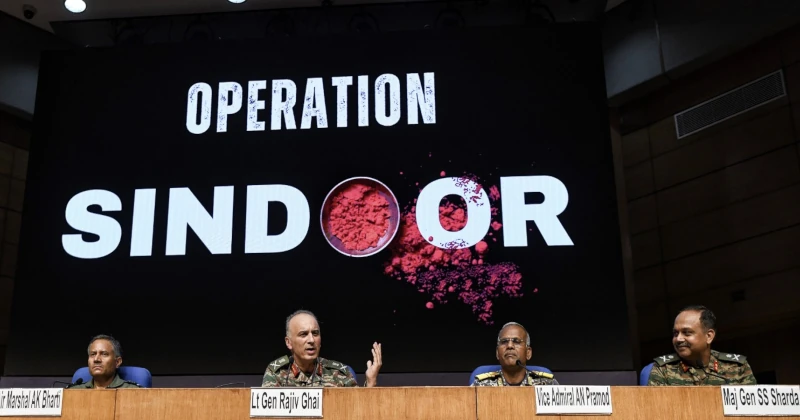
“No chance for Pakistan to breach our multi-layered defence system,” Lt Gen Rajiv Ghai

Next News

India’s Triumph in Operation Sindoor: Key takeaways from the stoppage of firing with Pakistan

Related News

Chinmaya Amrit Yatra meets Param Vir Chakra awardee Captain Bana Singh, highlighting his courage, simplicity and love for Bharat

Chinmaya Amrit Yatra: Captain Bana Singh recalls Siachen battle, his love for Jammu and message to youth

Indian Army conducts drill on national highway near Pakistan border

National Highway turns military runway in Pakistan border; Indian Army’s Rudra, Dhruv & Chetak sends strategic message

A decade after the Surgical Strikes, India’s counter-terror response has evolved from Uri and Balakot to Operation Sindoor

10 years of surgical strikes: From Uri to Balakot and Operation Sindoor, how India’s counter-terror response evolved

The Indian Army has launched AASHVAST to detect hidden software and electronic vulnerabilities in military drones

Indian Army strengthens drone security with AASHVAST lab to detect software vulnerabilities & Chinese components

The Communist armed struggle continued after the Nizam’s surrender, raising questions over its objectives and fight against the Indian Army

Hyderabad Liberation: Why the communists continued their armed struggle against the Indian Army after Nizam’s surrender

Chinese President Xi Jinping and Prime Minister Modi at BRICS Summit, 2026

BRICS Summit: China inks declaration on Pahalgam attack & counter-terrorism; India’s win amid Beijing-Islamabad ties

Load More

Latest News

Ayodhya is set to glow with 33 lakh earthen lamps during the 10th Deepotsav from November 5 to 7 under the leadership of CM Yogi Adityanath

Ayodhya Deepotsav 2026: 33 lakh diyas to illuminate Ram Ki Paidi and Saryu riverfront from November 5 to 7

A rare 130-year-old Bhagavad Gita measuring just 4 × 4.4 cm yet containing around 350 printed pages has been found in Tikamgarh

Matchbox-sized Bhagavad Gita with 350 pages: Rare 130-year-old copy found in Tikamgarh leaves experts intrigued

ECI cracks down on voter roll abuse, caps Form 7 apps at 10 per elector during claim period

Open letter to citizens: 124 former bureaucrats defend ECI, urge proof for ‘rigged elections’ claims

Left joins Jantar Mantar CJP protest attacking CEC over “Vote Chori” — Who’s actually ‘Left’ to Vote for CPIM?

Keralam PSC scam probe: Pro-left leader slips from 1st to 5th rank after revaluation exposes unvalued questions

Ayush sector opens new employment opportunities for women as female participation exceeds 50 per cent in several segments (This is an AI generated image)

Ayush services emerge as major employment avenue for women; Female workforce participation reaches 43 per cent

Akie Abe, wife of former Japanese Prime Minister late Shinzo Abe met RSS Sarkaryavah Dattatreya Hosabale

Wife of late Shinzo Abe, Akir Abe meet RSS Sarkaryavah Dattatreya Hosabale; discuss Bharat-Japan ties

Former Aam Aadmi Party (AAP) councillor Tahir Hussain

2020 Delhi Riots Case: Tahir Hussain convicted; Court finds former AAP councillor guilty of abetment for rioting

A new study highlights PM Modi’s Gujarat water reforms and their evolution into national water governance initiatives

From Gujarat to India: New case study traces 25-year water governance journey & India’s lessons for the global south

Load More
  • Privacy
  • Terms
  • Cookie Policy
  • Refund and Cancellation
  • Delivery and Shipping

© Bharat Prakashan (Delhi) Limited.
Tech-enabled by Ananthapuri Technologies

  • Home
  • Search Organiser
  • Bharat
    • Assam
    • Bihar
    • Chhattisgarh
    • Jharkhand
    • Maharashtra
    • View All States
  • World
    • Asia
    • Africa
    • North America
    • South America
    • Europe
    • Australia
  • Editorial
  • Operation Sindoor
  • Opinion
  • Analysis
  • Defence
  • Culture
  • Sports
  • Business
  • RSS @ 100
  • Entertainment
  • More ..
    • Sci & Tech
    • Vocal4Local
    • Special Report
    • Education
    • Employment
    • Books
    • Interviews
    • Travel
    • Health
    • Politics
    • Law
    • Economy
    • Obituary
  • Subscribe Magazine
  • Read Ecopy
  • Advertise
  • Circulation
  • Careers
  • About Us
  • Contact Us
  • Policies & Terms
    • Privacy Policy
    • Cookie Policy
    • Refund and Cancellation
    • Terms of Use

© Bharat Prakashan (Delhi) Limited.
Tech-enabled by Ananthapuri Technologies