Remembering Damodar Hari Chapekar on Balidan Diwas
June 10, 2026
  • Read Ecopy
  • Circulation
  • Advertise
  • Careers
  • About Us
  • Contact Us
Android AppiPhone AppArattai
Organiser
  • ‌
  • Bharat
    • Assam
    • Bihar
    • Chhattisgarh
    • Jharkhand
    • Maharashtra
    • View All States
  • World
    • Asia
    • Europe
    • North America
    • South America
    • Africa
    • Australia
  • Editorial
  • International
  • Opinion
  • RSS @ 100
  • More
    • Op Sindoor
    • Analysis
    • Sports
    • Defence
    • Politics
    • Business
    • Economy
    • Culture
    • Special Report
    • Sci & Tech
    • Entertainment
    • G20
    • Azadi Ka Amrit Mahotsav
    • Vocal4Local
    • Web Stories
    • Education
    • Employment
    • Books
    • Interviews
    • Travel
    • Law
    • Health
    • Obituary
  • Subscribe
    • Subscribe Print Edition
    • Subscribe Ecopy
    • Read Ecopy
  • ‌
  • Bharat
    • Assam
    • Bihar
    • Chhattisgarh
    • Jharkhand
    • Maharashtra
    • View All States
  • World
    • Asia
    • Europe
    • North America
    • South America
    • Africa
    • Australia
  • Editorial
  • International
  • Opinion
  • RSS @ 100
  • More
    • Op Sindoor
    • Analysis
    • Sports
    • Defence
    • Politics
    • Business
    • Economy
    • Culture
    • Special Report
    • Sci & Tech
    • Entertainment
    • G20
    • Azadi Ka Amrit Mahotsav
    • Vocal4Local
    • Web Stories
    • Education
    • Employment
    • Books
    • Interviews
    • Travel
    • Law
    • Health
    • Obituary
  • Subscribe
    • Subscribe Print Edition
    • Subscribe Ecopy
    • Read Ecopy
Organiser
  • Home
  • Bharat
  • World
  • Operation Sindoor
  • Editorial
  • Analysis
  • Opinion
  • Culture
  • Defence
  • International Edition
  • RSS @ 100
  • Magazine
  • Read Ecopy
Home Bharat

Remembering Damodar Hari Chapekar on Balidan Diwas: Early torchbearer of India’s armed struggle against colonial rule

Damodar Hari Chapekar, was the fearless revolutionary who led one of the earliest armed uprisings against British tyranny by assassinating Plague Commissioner Rand in 1897. Along with his brothers, he sacrificed his life for India’s freedom, igniting a legacy of resistance that inspired generations.

WEBDESKWEBDESK
Apr 18, 2025, 10:05 am IST
in Bharat
Follow on Google News
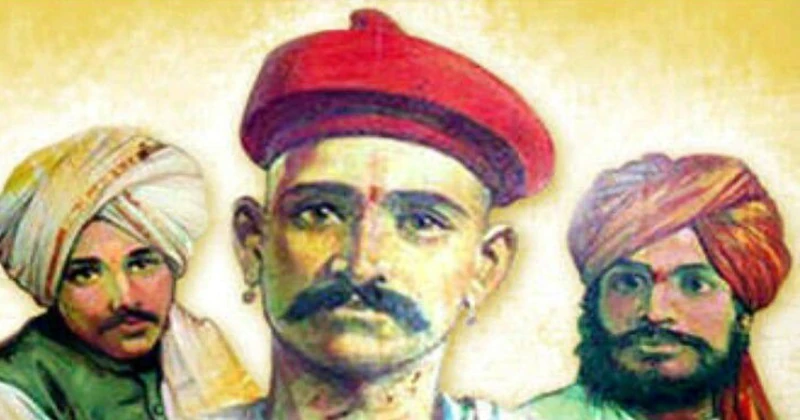
Chapekar brothers

Chapekar brothers

FacebookTwitterWhatsAppTelegramEmail

On April 18, in the year 1898, a 28-year-old young man ascended the gallows in the Yerwada Jail of Pune, clutching a copy of Lokmanya Tilak’s Gita Rahasya, and smilingly placed the noose around his own neck. That man was Damodar Hari Chapekar, the eldest of the Chapekar brothers, whose daring assassination of British Plague Commissioner Walter Charles Rand marked one of the earliest acts of armed revolution against the oppressive British Raj.

Though largely forgotten by the mainstream historical discourse, Damodar Chapekar’s legacy lives on in the hearts of those who seek to reclaim the true story of India’s freedom struggle—one that was not merely won through petitions and negotiations but through courage, sacrifice, and unflinching patriotism.

Damodar Hari Chapekar (eldest of the Chapekar brothers) was hanged by the British on Apr 18, 1898, for the assassination of Commissioner Rand in #Pune (22 June 1897).

The other two #ChapekarBrothers Balkrishna Hari Chapekar and Vasudeo Hari Chapekar were hanged in 1899.

The… pic.twitter.com/XzVPsYqyzS

— Amit Paranjape (@aparanjape) April 18, 2025

Born on June 25, 1869, in Chinchwad near Pune, Damodar came from a devout and culturally rich family. His father, Haripant Chapekar, was a renowned Kirtankar—a traditional devotional storyteller. Damodar and his younger brothers, Balkrishna (b. 1873) and Vasudev (b. 1879), grew up immersed in Kirtan, recitations, and the spirit of Swaraj—an idea that grew increasingly potent under the influence of Lokmanya Bal Gangadhar Tilak and his nationalist publication Kesari.

Young Damodar was a man of many talents: he was a keen singer, poet, and physical fitness enthusiast. But above all, he was a passionate patriot. Tilak’s arrest deeply affected him—he refused to eat, wept inconsolably, until his mother offered him words of steel: “Tilak taught us to fight, not cry.”

Birth of ‘Rashtra Hitechhu Mandal’

Determined to serve the motherland, Damodar formed the ‘Rashtra Hitechhu Mandal’ (Association of National Well-wishers), a youth group that believed in physical strength, moral resolve, and nationalist unity. The news of revolutionary Vasudev Balwant Phadke’s death in British custody further ignited the fire of rebellion. At Sinhagad Fort, the brothers vowed to carry forward Phadke’s incomplete mission.

Damodar’s attempts to join the British army were denied—perhaps a blessing in disguise. He instead turned to mass communication through devotional performances and fiery public speeches, skillfully using Kirtan as a vehicle for political awakening.

Atrocities during the plague epidemic

The tinderbox moment came in 1897, when a deadly plague struck Pune. Appointed as Plague Commissioner, Walter Charles Rand enforced inhuman, intrusive policies: forcefully entering homes with boots on, violating sacred spaces, and misbehaving with women. These egregious acts of colonial violence provoked widespread outrage.

Tilak and Agarkar condemned the British tyranny through their writings, leading to their imprisonment. The Chapekar brothers decided that enough was enough. Inspired by Shivaji’s resistance against oppression, the trio resolved to assassinate Rand and his aide, Lt. Ayerst.

22 June 1897: The night the empire trembled

On the night of Queen Victoria’s Diamond Jubilee, the British celebrated with pomp at a club in Pune. As Rand and Ayerst left the festivities, Damodar leapt onto Rand’s carriage and fired shots, critically wounding him. Simultaneously, Balkrishna shot Ayerst, who died instantly. Rand succumbed to his injuries days later on July 3, 1897.

It was not just an act of retribution—it was a thunderclap that shattered the illusion of British invincibility.

In the days that followed, the British scrambled to identify the assailants. A reward of Rs 20,000 led to betrayal by the Dravid brothers, former associates of the Chapekars. Damodar was arrested, followed by Balkrishna. In an act of righteous vengeance, Vasudev Chapekar and Vinayak Ranade executed the betrayers and even attacked a constable who had persecuted their family.

On April 18, 1898, Damodar Hari Chapekar embraced veergati. Balkrishna and Vasudev followed in 1899, all executed by hanging. Their associate Ranade was also sent to the gallows. Thus, a family of patriots was annihilated—but their spirit became immortal.

Despite their sacrifice, the Chapekar brothers were sidelined in mainstream history. Their contribution was buried under the glorification of a select few. Yet, their valor left an indelible mark. A young Veer Vinayak Damodar Savarkar, deeply inspired by their courage, went on to become a firebrand revolutionary himself.

In recent years, Prime Minister Narendra Modi referenced the Chapekars in Parliament, calling out the systematic erasure of revolutionary heroes by historians loyal to one political dynasty. “The great sin of forgetting real heroes like the Chapekars,” he said, “must be corrected. The truth must come out.”

Topics: Damodar Hari ChapekarBritish tyrannyFreedom struggleChapekar brothers
ShareTweetSendShareSend
✮ Subscribe Organiser YouTube Channel. ✮
✮ Join Organiser's WhatsApp channel for Nationalist views beyond the news. ✮
Previous News

UK officials alarmed by Chinese-made drones surveying critical infrastructure despite security warnings

Next News

“Baloch women are no accidental participants but conscious part of resistance movement,” says Gulzadi Baloch

Related News

Union Home Minister Amit Shah and other leaders paid tributes to revolutionary Sukhdev Thapar on his birth anniversary

Sukhdev Thapar Birth Anniversary: Amit Shah and other leaders pay tribute to fearless revolutionary hero

Equal status for Vande Mataram: A double honour for Bengal

Notes from the Pilgrimage to the Cellular Jail at Kala Pani; A reminder of the horrors of British colonialism

1946 Revolt by the Sailors of Royal Indian Navy against the British Raj

Feb 18, 1946 Naval Revolt that shook foundation of the British Raj 80 years ago; Continued legacy of Azad Hind Fauz

Indian social activist Ammu Swaminathan (Left) and Freedom fighter Sarojini Naidu (Right)

Constitution Day: From freedom struggle to founding document, how nationalist women built constitutional soul of Bharat

A fact check by the Organiser has debunked the false narrative of Congress and has hailed the role of RSS in ousting British out of India

The AI deception of Congress: False propaganda against RSS exposed

Load More

Latest News

India Deploys 12 Nuclear Warheads: Heralds doctrinal shift to script strategic deterrence against multi-front threat

J&K: Zojila tunnel clears key hurdle; Signals new era of connectivity for Ladakh

How Cockroach politics is hollowing out Bharatiya democratic culture

RSS centenary year is a time for renewed resolve and greater commitment to nation-building: Dr Mohan Bhagwat

Ex-DMK Minister Senthil Balaji (Right Side-File Photo)

Tamil Nadu: CBI books Rs 397 cr transformer tender scam from ex-DMK Minister Senthil Balaji’s tenure (2021-2023)

Border Security Force (BSF) officials inspect the Single Row Fencing (SRF) at a Border Out Post area (India-Bangladesh border)

Infiltration and Border Management: Saving the Siliguri corridor

External Affairs Ministry spokesperson Randhir Jaiswal, slams Pakistan over the recent killings in POJK

‘Hope Pakistan is held accountable’: India reacts after 20 killed in Pakistan Occupied Jammu & Kashmir

China’s anti-BLA offensive hits snag as UN members demand proof

UN Setback for China and Pakistan: US and allies stall move to ban Baloch Liberation Army

West Asia Conflict: Collective response to energy crisis

Atul Limaye Ji Sah Sarkaryavah, Rashtriya Swayamsevak Sangh while addressing a Pramukh Jan Gosthi Rashtriya at Raipur, Chhattisgarh

Chhattisgarh: Society must lead its own transformation through collective initiative: Atul Limaye

Load More
  • Privacy
  • Terms
  • Cookie Policy
  • Refund and Cancellation
  • Delivery and Shipping

© Bharat Prakashan (Delhi) Limited.
Tech-enabled by Ananthapuri Technologies

  • Home
  • Search Organiser
  • Bharat
    • Assam
    • Bihar
    • Chhattisgarh
    • Jharkhand
    • Maharashtra
    • View All States
  • World
    • Asia
    • Africa
    • North America
    • South America
    • Europe
    • Australia
  • Editorial
  • Operation Sindoor
  • Opinion
  • Analysis
  • Defence
  • Culture
  • Sports
  • Business
  • RSS @ 100
  • Entertainment
  • More ..
    • Sci & Tech
    • Vocal4Local
    • Special Report
    • Education
    • Employment
    • Books
    • Interviews
    • Travel
    • Health
    • Politics
    • Law
    • Economy
    • Obituary
  • Subscribe Magazine
  • Read Ecopy
  • Advertise
  • Circulation
  • Careers
  • About Us
  • Contact Us
  • Policies & Terms
    • Privacy Policy
    • Cookie Policy
    • Refund and Cancellation
    • Terms of Use

© Bharat Prakashan (Delhi) Limited.
Tech-enabled by Ananthapuri Technologies