5,000-year-old Shiva Linga: Harappa discovery challenges colonial narratives on Indus Valley's Hindu roots
September 14, 2026
  • Read Ecopy
  • Circulation
  • Advertise
  • Careers
  • About Us
  • Contact Us
Android AppiPhone AppArattai
Organiser
  • ‌
  • Bharat
    • Assam
    • Bihar
    • Chhattisgarh
    • Jharkhand
    • Maharashtra
    • View All States
  • World
    • Asia
    • Europe
    • North America
    • South America
    • Africa
    • Australia
  • Editorial
  • International
  • Opinion
  • RSS @ 100
  • More
    • World Hindu Congress 2026
    • Op Sindoor
    • Analysis
    • Sports
    • Defence
    • Politics
    • Business
    • Economy
    • Culture
    • Special Report
    • Sci & Tech
    • Entertainment
    • G20
    • Azadi Ka Amrit Mahotsav
    • Vocal4Local
    • Web Stories
    • Education
    • Employment
    • Books
    • Interviews
    • Travel
    • Law
    • Health
    • Obituary
  • Subscribe
    • Subscribe Print Edition
    • Subscribe Ecopy
    • Read Ecopy
  • ‌
  • Bharat
    • Assam
    • Bihar
    • Chhattisgarh
    • Jharkhand
    • Maharashtra
    • View All States
  • World
    • Asia
    • Europe
    • North America
    • South America
    • Africa
    • Australia
  • Editorial
  • International
  • Opinion
  • RSS @ 100
  • More
    • World Hindu Congress 2026
    • Op Sindoor
    • Analysis
    • Sports
    • Defence
    • Politics
    • Business
    • Economy
    • Culture
    • Special Report
    • Sci & Tech
    • Entertainment
    • G20
    • Azadi Ka Amrit Mahotsav
    • Vocal4Local
    • Web Stories
    • Education
    • Employment
    • Books
    • Interviews
    • Travel
    • Law
    • Health
    • Obituary
  • Subscribe
    • Subscribe Print Edition
    • Subscribe Ecopy
    • Read Ecopy
Organiser
  • Home
  • Bharat
  • World
  • Operation Sindoor
  • Editorial
  • Analysis
  • Opinion
  • Culture
  • Defence
  • International Edition
  • RSS @ 100
  • Magazine
  • Read Ecopy
Home Bharat

5,000-year-old Shiva Linga: Harappa discovery challenges colonial narratives on Indus Valley’s Hindu roots

Archaeologist MS Vats unearthed a stone structure resembling a Shiva Linga at Harappa in 1940, sparking debates on the Indus Valley Civilisation’s connection to Sanatan Dharma. Similar findings at Kalibangan and other sites suggest that Shiva worship and ritualistic practices may have existed over 5,000 years ago

WEBDESKWEBDESK
Mar 27, 2025, 09:00 am IST
inBharat, Culture
Follow on Google News
Facebook
Twitter
WhatsAppTelegramEmail

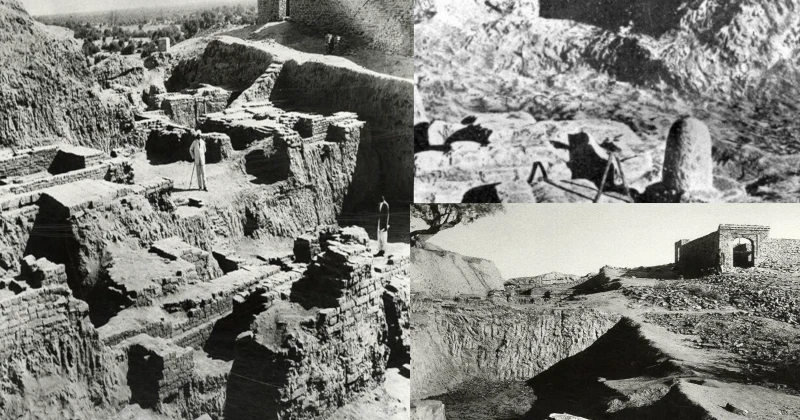
Archaeologist MS Vats unearthed three enigmatic stone structures resembling Shiva Lingas at the Harappa excavation site in 1940. These artefacts, potentially dating back over 5,000 years, raise serious questions about the deeply rooted spiritual traditions of the civilisation and their connection to Sanatan Dharma.

The Harappa site, located on the now-dry banks of the Ravi River in eastern Punjab, Pakistan, has been one of the most significant excavation sites of the Indus Valley Civilisation (IVC). Since the first systematic excavations were initiated by British archaeologist Sir John Hubert Marshall in 1921, findings at Harappa and its twin city Mohenjo-daro have revealed an advanced urban civilisation complete with sophisticated drainage systems, well-planned city grids, and monumental structures indicating a highly organised administrative system. However, the discovery of what appears to be a Shiva Linga at Harappa—along with similar findings in Kalibangan and other IVC sites—suggests that religious and spiritual elements within the civilisation were far more pronounced than previously acknowledged.

The 1940 Discovery: A Shiva Linga in Trench Ai?

The most intriguing find came in 1940 when archaeologist M.S. Vats uncovered a striking stone structure in Trench Ai, buried 5 feet 6 inches below the surface. According to his official excavation report (Excavation at Harappa, Vol. 2), the artifact measured 11 inches in height and 7 inches in diameter, resembling a traditional Shiva Linga—a symbol of Bhagwan Shiva worshipped in Sanatan Dharma since time immemorial.

Despite its clear physical resemblance to a Linga, scholars have hesitated to categorise it definitively as an object of worship. Was it merely a random stone artifact, or does its discovery signify a long-standing tradition of Shiva worship dating back to the Indus Valley Civilisation? If the latter is true, this would fundamentally reshape our understanding of the region’s religious history, directly linking it to the present-day Hindu civilisation that continues to revere the Shiva Linga as a sacred symbol.

The discovery at Harappa is not an isolated incident. Similar findings at Kalibangan, an important IVC site located in present-day Rajasthan, India, lend further credence to this theory. Noted archaeologist B.B. Lal discovered a terracotta representation that bears a striking resemblance to a Shiva Linga, dating back to approximately 2500-1900 BCE.

Other archaeological finds, including fire altars, water purification structures, and seals depicting horned deities resembling Pashupati (an early form of Shiva), suggest that ritualistic and religious practices were an integral part of Indus Valley society. Given the clear symbolic connections to later Vedic and Hindu traditions, dismissing these findings as mere coincidences raises more questions than answers.

For decades, mainstream academic discourse—heavily influenced by colonial-era biases—has sought to separate the Indus Valley Civilisation from later Hindu traditions. Western scholars and even some Indian historians have resisted acknowledging the direct link between the Indus Valley Civilisation and Sanatan Dharma, often arguing that the civilisation had no tangible religious structures or scriptural connections.

But with mounting evidence of Shiva Lingas, fire altars, ritualistic water tanks, and Pashupati-like seals, the claim that Hindu traditions evolved separately from the IVC becomes increasingly untenable. If the Indus people indeed worshipped Bhagwan Shiva in some form, it would mean that Hindu spiritual beliefs are not only among the oldest in the world but that they have survived virtually unchanged for over 5,000 years.

This has profound implications. It challenges the artificially imposed divide between the Indus Valley Civilisation and later Vedic traditions, reinforcing the idea that Sanatan Dharma is not just a religion but an ancient, unbroken cultural continuum that dates back to the dawn of civilisation itself.


Topics: HinduismIndus Valley CivilisationSanatan DharmaartefactsShiva LingaShiva Linga Harappa discovery
Share
Tweet
SendShareSend
✮ Subscribe Organiser YouTube Channel. ✮
✮ Join Organiser's WhatsApp channel for Nationalist views beyond the news. ✮
Previous News

Maharaja Chhatrasal: The hero who defeated Aurangzeb and established Bundelkhand’s Hindu state

Next News

Minority status doesn’t exempt Jains, Buddhists, Sikhs from Hindu Marriage Act: MP High Court

Related News

September 11 reflects a striking contrast between Swami Vivekananda’s message of universal brotherhood and the violence driven by fanaticism

Swami Vivekananda’s Historic Chicago Speech: A powerful call for religious harmony and acceptance

Ujjain’s Khade Hanuman Murti Stays Put as Simhastha Road Project Hits Roadblock

Ujjain’s Khade Hanuman ji’s Murti refuses to budge, leaving authorities in a fix

A unique 21-gun salute marked Bhagwan Krishna’s birth at Rajasthan’s historic Shrinathji Mandir as Janmashtami celebrations unfolded across India

Janmashtami 2026: Rajasthan’s historic Shrinathji Mandir marks Bhagwan Krishna’s birth with unique 21-gun salute

UP CM Yogi Adityanath

“No one could erase Sanatan Dharma”: Uttar Pradesh CM Yogi Adityanath celebrates Janmashtami in Mathura

Janmashtami: Communist slander and institutional conspiracy against Sri Aurobindo’s Krishna consciousness

Sri Krishna Janmashtami: The divine exists; therefore serve dharma

Load More

Latest News

A representative image

Bankers Books Evidence Act 2026 to replace 1891 law from October 1: Here’s what will change?

SSC CGL exam Schedule (This is an AI generated image)

SSC CGL Tier 1 exams from September 30 to October 30; Check schedule and admit card details, vacancies

New Delhi, Sep 12 (ANI): Prime Minister Narendra Modi holds a bilateral meeting with Chinese President Xi Jinping on the sidelines of the BRICS Summit 2026, in New Delhi on Saturday. External Affairs Minister S. Jaishankar, NSA Ajit Doval and Principal Secretaries to the PM, Pramod Kumar Mishra and Shaktikanta Das also present. (@MEAIndia X/ANI Photo)

BRICS 2026: Why Putin, Xi and Pezeshkian meetings stand out in PM Modi’s diplomacy

Odisha Chief Minister Mohan Charan Majhi addresses the media at Bhubaneswar airport after returning from his UAE visit on September 13, 2026.

Odisha secures Rs 2.43 lakh crore investment proposals during CM Majhi’s five-day UAE outreach programme

Bhagwan Ganesh

Ganesh Chaturthi: Rationale behind worshipping Bhagwan Ganesh

RSS Akhil Bharatiya Sah-Bauddhik Shikshan Pramukh Deepak Vispute addressing the gathering

‘Nation First’ should be the guiding principle for every individual, regardless of their Field: Deepak Vispute

‘India was not poor; it was made poor’: The truth re-emerges through Jema Ferrer’s perspective

Six years after talent manager Disha Salian was found dead, her father Satish Salian on September 11 recorded a detailed statement with the Central Bureau of Investigation (CBI), naming Shiv Sena (UBT) leader Aaditya Thackeray, actors Dino Morea and Sooraj Pancholi, and others.

Disha Salian Murder Case: Father names Aaditya Thackeray in CBI statement; Lawyer claims gang rape, murder cover-up

Release of a book at Vishwa Bandhutva Diwas programme that was organised in Ujjain

Bharat’s youth rooted in sacrifice, service & discipline can give new direction to World: Parag Abhyankar

AI Generated Representative Image

“Let Go” — But only when it suits you? Exposing the double standards of Kashmir’s political leadership

Load More
  • Privacy
  • Terms
  • Cookie Policy
  • Refund and Cancellation
  • Delivery and Shipping

© Bharat Prakashan (Delhi) Limited.
Tech-enabled by Ananthapuri Technologies

  • Home
  • Search Organiser
  • Bharat
    • Assam
    • Bihar
    • Chhattisgarh
    • Jharkhand
    • Maharashtra
    • View All States
  • World
    • Asia
    • Africa
    • North America
    • South America
    • Europe
    • Australia
  • Editorial
  • Operation Sindoor
  • Opinion
  • Analysis
  • Defence
  • Culture
  • Sports
  • Business
  • RSS @ 100
  • Entertainment
  • More ..
    • Sci & Tech
    • Vocal4Local
    • Special Report
    • Education
    • Employment
    • Books
    • Interviews
    • Travel
    • Health
    • Politics
    • Law
    • Economy
    • Obituary
  • Subscribe Magazine
  • Read Ecopy
  • Advertise
  • Circulation
  • Careers
  • About Us
  • Contact Us
  • Policies & Terms
    • Privacy Policy
    • Cookie Policy
    • Refund and Cancellation
    • Terms of Use

© Bharat Prakashan (Delhi) Limited.
Tech-enabled by Ananthapuri Technologies