Researchers discovered the brain cells that regulate eating
June 24, 2026
  • Read Ecopy
  • Circulation
  • Advertise
  • Careers
  • About Us
  • Contact Us
Android AppiPhone AppArattai
Organiser
  • ‌
  • Bharat
    • Assam
    • Bihar
    • Chhattisgarh
    • Jharkhand
    • Maharashtra
    • View All States
  • World
    • Asia
    • Europe
    • North America
    • South America
    • Africa
    • Australia
  • Editorial
  • International
  • Opinion
  • RSS @ 100
  • More
    • Op Sindoor
    • Analysis
    • Sports
    • Defence
    • Politics
    • Business
    • Economy
    • Culture
    • Special Report
    • Sci & Tech
    • Entertainment
    • G20
    • Azadi Ka Amrit Mahotsav
    • Vocal4Local
    • Web Stories
    • Education
    • Employment
    • Books
    • Interviews
    • Travel
    • Law
    • Health
    • Obituary
  • Subscribe
    • Subscribe Print Edition
    • Subscribe Ecopy
    • Read Ecopy
  • ‌
  • Bharat
    • Assam
    • Bihar
    • Chhattisgarh
    • Jharkhand
    • Maharashtra
    • View All States
  • World
    • Asia
    • Europe
    • North America
    • South America
    • Africa
    • Australia
  • Editorial
  • International
  • Opinion
  • RSS @ 100
  • More
    • Op Sindoor
    • Analysis
    • Sports
    • Defence
    • Politics
    • Business
    • Economy
    • Culture
    • Special Report
    • Sci & Tech
    • Entertainment
    • G20
    • Azadi Ka Amrit Mahotsav
    • Vocal4Local
    • Web Stories
    • Education
    • Employment
    • Books
    • Interviews
    • Travel
    • Law
    • Health
    • Obituary
  • Subscribe
    • Subscribe Print Edition
    • Subscribe Ecopy
    • Read Ecopy
Organiser
  • Home
  • Bharat
  • World
  • Operation Sindoor
  • Editorial
  • Analysis
  • Opinion
  • Culture
  • Defence
  • International Edition
  • RSS @ 100
  • Magazine
  • Read Ecopy
Home World

Researchers discovered the brain cells that regulate eating

Researchers have identified specialised neurons in the brainstem of mice that control the decision to stop eating, integrating various sensory inputs. This discovery could lead to new treatments for obesity by understanding how the brain regulates food intake

WEBDESKWEBDESK
Feb 19, 2025, 11:00 pm IST
in World, Health
Follow on Google News
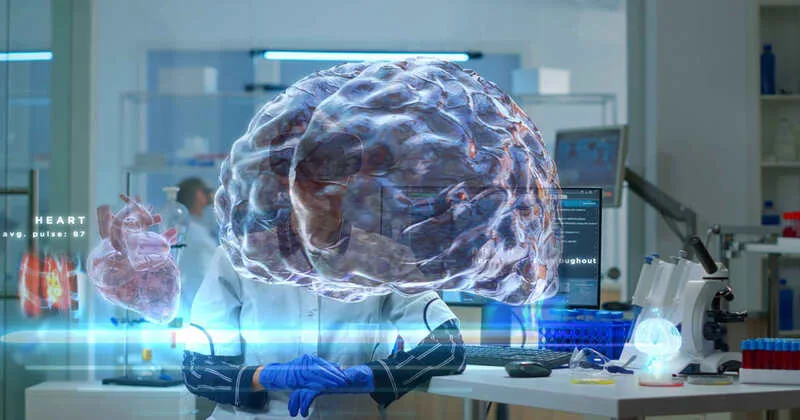
Representative image

Representative image

FacebookTwitterWhatsAppTelegramEmail

Scientists have found specialised neurons in the brains of mice that order the animals to stop eating. Though many feeding circuits in the brain are known to play a role in monitoring food intake, scientists also believe that the neurons in those circuits do not make the final decision to cease eating a meal.

The neurons identified by the Columbia scientists, a new element of these circuits, are located in the brainstem, the oldest part of the vertebrate brain. Their discovery could lead to new treatments for obesity.

“These neurons are unlike any other neuron involved in regulating satiation,” says Alexander Nectow, a physician-scientist at Columbia University Vagelos College of Physicians and Surgeons, who led the research with Srikanta Chowdhury, an associate research scientist in the Nectow lab.

“Other neurons in the brain are usually restricted to sensing food put into our mouth, or how food fills the gut, or the nutrition obtained from food. The neurons we found are special in that they seem to integrate all these different pieces of information and more.”

The decision to stop eating is a familiar phenomenon. “It happens every time we sit down to eat a meal: At a certain point while we’re eating, we start to feel full, and then we get fuller, and then we get to a point where we think, okay, that’s enough,” Nectow says.

How does the brain know when the body has had enough — and how does it act on that information to stop eating? Other researchers had previously tracked the decision-making cells to the brainstem, but the leads ended there in previous research.

Nectow and Chowdhury deployed new single-cell techniques that make it possible to peer into a region of the brain and discern different types of cells that until now have been difficult to distinguish from one another.

“This technique — spatially resolved molecular profiling — allows you to see cells where they are in the brainstem and what their molecular composition looks like,” Nectow says.

During their profiling of a brainstem region known for processing complex signals, the researchers spotted previously unrecognized cells that had similar characteristics to other neurons involved in regulating appetite. “We said, ‘Oh, this is interesting. What do these neurons do?’

To see how the neurons influenced eating, the researchers engineered the neurons so they could be turned on and off, by the researcher, with light.

When the neurons were activated by the light, the mice ate much smaller meals. The intensity of the activation determined how quickly animals stopped eating. “Interestingly, these neurons don’t just signal an immediate stop; they help the mice to slow down their eating gradually,” Chowdhury says.

Nectow and Chowdhury also looked at how other eating circuits and hormones affected the neurons. The researchers found that the neurons were silenced by a hormone that increases appetite and activated by a GLP-1 agonist, a class of drugs now popular for treating obesity and diabetes. These experiments found that these inputs helped the neurons track each bite the mice took.

“Essentially these neurons can smell food, see food, feel food in the mouth and in the gut, and interpret all the gut hormones that are released in response to eating,” Nectow says. “And ultimately, they leverage all of this information to decide when enough is enough.”

Though the specialised neurons were found in mice, Nectow says their location in the brainstem, a part of the brain that is essentially the same in all vertebrates, suggests that humans likely have the same neurons.


(With inputs from ANI)

 

Topics: Eating regulationObesity researchAppetite controlBrain cellsColumbia University
ShareTweetSendShareSend
✮ Subscribe Organiser YouTube Channel. ✮
✮ Join Organiser's WhatsApp channel for Nationalist views beyond the news. ✮
Previous News

Pakistan kills 30 terrorists in intelligence-based operation in South Waziristan

Next News

J&K: Fake faith healer Maulvi Aijaz Sheikh gets 14-year jail term for raping minor boys in Sopore

Related News

Columbia University revises seminar description after Indian students protest equating Hindu nationalism with Pakistan’s terrorism

Columbia University revises seminar description equating Hindu nationalism with Pakistan’s terrorism after protest

Finance Minister Nirmala Sitharaman

US: “India well-positioned to capitalise on new growth opportunities,” says Nirmala Sitharaman

American Paradox: Pro-Palestine Campus protests in the US Universities

MEA Spokesperson Randhir Jaiswal

US Protests: Democracies need balance between freedom of speech, expression and order says, India’s MEA

Representative Image

US: New York Police, State troopers arrest 300 demonstrators as pro-Palestine protests intensify at Columbia University

NYPD Contingent at Columbia University

Columbia University Protests 2024: New York Police brutally expels demonstrators occupying Hamilton Hall

Load More

Latest News

President Droupadi Murmu confers the Padma Shri on former civil servant R.V.S. Mani on June 23, 2026.

Former MHA official RVS Mani honoured with Padma Shri for contributions to internal security

Tamil Nadu: Temple funds only for temple property; TVK govt concedes before Madras High Court

Keralam’s former Industries Secretary, Mohammed Haneesh IAS (Right Side)

Keralam Cashew Scam: Former Industries Secretary Md Haneesh apologises before High Court after contempt proceedings

Tamil Nadu: Assembly Speaker directs all bureaucrats to strictly follow warrant of precedence after Mayor-MLA row

Kamakhya Mandir

Kamakhya Mandir’s Ambubachi Mela: The ancient tradition that honours the menstruation of mother Earth

Amazon in dock for mocking Hindu Gods

Amazon File: From Ganesha to Aryabhata – Has Amazon India become a platform for Anti-Hindu narratives?

The West Bengal Budget 2026–27 aims to drive growth through infrastructure, industry, innovation and welfare

Reimagining Bengal: How the West Bengal Budget 2026–27 seeks to balance growth, welfare & economic transformation

Pratiraksha is Gujarat Police's Aadhaar-based verification platform designed to identify illegal workers and prevent identity fraud in industrial sectors

Pratiraksha: How Gujarat police uses Aadhaar verification to secure industrial workforce against identity fraud

Israel-Iran crisis has highlighted not only shifting dynamics of West Asia but also growing confidence of India's foreign policy

India, Israel and the rise of strategic autonomy in an era of global geopolitical realignment

Saleem and Jaleel arrested in forced religious conversion case

Karnataka Conversion Case: Forced conversion of Hindu woman and minor son sparks outrage; Saleem and Jaleel arrested

Load More
  • Privacy
  • Terms
  • Cookie Policy
  • Refund and Cancellation
  • Delivery and Shipping

© Bharat Prakashan (Delhi) Limited.
Tech-enabled by Ananthapuri Technologies

  • Home
  • Search Organiser
  • Bharat
    • Assam
    • Bihar
    • Chhattisgarh
    • Jharkhand
    • Maharashtra
    • View All States
  • World
    • Asia
    • Africa
    • North America
    • South America
    • Europe
    • Australia
  • Editorial
  • Operation Sindoor
  • Opinion
  • Analysis
  • Defence
  • Culture
  • Sports
  • Business
  • RSS @ 100
  • Entertainment
  • More ..
    • Sci & Tech
    • Vocal4Local
    • Special Report
    • Education
    • Employment
    • Books
    • Interviews
    • Travel
    • Health
    • Politics
    • Law
    • Economy
    • Obituary
  • Subscribe Magazine
  • Read Ecopy
  • Advertise
  • Circulation
  • Careers
  • About Us
  • Contact Us
  • Policies & Terms
    • Privacy Policy
    • Cookie Policy
    • Refund and Cancellation
    • Terms of Use

© Bharat Prakashan (Delhi) Limited.
Tech-enabled by Ananthapuri Technologies