India to have 'One Nation, One Time' system with indigenous satellite technology under PM Modi’s leadership
June 6, 2026
  • Read Ecopy
  • Circulation
  • Advertise
  • Careers
  • About Us
  • Contact Us
Android AppiPhone AppArattai
Organiser
  • ‌
  • Bharat
    • Assam
    • Bihar
    • Chhattisgarh
    • Jharkhand
    • Maharashtra
    • View All States
  • World
    • Asia
    • Europe
    • North America
    • South America
    • Africa
    • Australia
  • Editorial
  • International
  • Opinion
  • RSS @ 100
  • More
    • Op Sindoor
    • Analysis
    • Sports
    • Defence
    • Politics
    • Business
    • Economy
    • Culture
    • Special Report
    • Sci & Tech
    • Entertainment
    • G20
    • Azadi Ka Amrit Mahotsav
    • Vocal4Local
    • Web Stories
    • Education
    • Employment
    • Books
    • Interviews
    • Travel
    • Law
    • Health
    • Obituary
  • Subscribe
    • Subscribe Print Edition
    • Subscribe Ecopy
    • Read Ecopy
  • ‌
  • Bharat
    • Assam
    • Bihar
    • Chhattisgarh
    • Jharkhand
    • Maharashtra
    • View All States
  • World
    • Asia
    • Europe
    • North America
    • South America
    • Africa
    • Australia
  • Editorial
  • International
  • Opinion
  • RSS @ 100
  • More
    • Op Sindoor
    • Analysis
    • Sports
    • Defence
    • Politics
    • Business
    • Economy
    • Culture
    • Special Report
    • Sci & Tech
    • Entertainment
    • G20
    • Azadi Ka Amrit Mahotsav
    • Vocal4Local
    • Web Stories
    • Education
    • Employment
    • Books
    • Interviews
    • Travel
    • Law
    • Health
    • Obituary
  • Subscribe
    • Subscribe Print Edition
    • Subscribe Ecopy
    • Read Ecopy
Organiser
  • Home
  • Bharat
  • World
  • Operation Sindoor
  • Editorial
  • Analysis
  • Opinion
  • Culture
  • Defence
  • International Edition
  • RSS @ 100
  • Magazine
  • Read Ecopy
Home Bharat

India to have ‘One Nation, One Time’ system with indigenous satellite technology under PM Modi’s leadership

The Modi government’s 'One Nation, One Time' initiative uses India’s NavIC satellites and atomic clocks to provide accurate and synchronised time across the country. This reduces dependence on foreign systems, strengthens national security, and improves efficiency in key areas like banking, power grids, and transportation, supporting the goal of a Atmanirbhar Bharat i.e., self-reliant India

WEBDESKWEBDESK
Jan 31, 2025, 09:00 pm IST
in Bharat, Sci & Tech
Follow on Google News
Representative Image

Representative Image

FacebookTwitterWhatsAppTelegramEmail

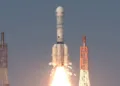
India is gearing up for a revolutionary change in how time is disseminated across the country. The transition to a unified time system, coined “one nation, one time,” is set to be powered by India’s indigenous satellite technology. This significant upgrade leverages the Navigation with Indian Constellation (NavIC) and atomic clocks to enhance timekeeping accuracy, ensure independence from foreign systems, and bolster national security.

The Modi government has been at the forefront of implementing transformative initiatives that prioritize technological self-reliance and national security. This recent push for the ‘One Nation, One Time’ initiative, powered by India’s indigenous satellite system NavIC, is yet another testament to its commitment to strengthening the country’s infrastructure and technological capabilities. By adopting this precise and independent time dissemination system, the government is enabling critical sectors to achieve synchronized operations while enhancing national security.

How the System Works
The new time dissemination framework relies on the Navigation with Indian Constellation (NavIC), a homegrown satellite navigation system developed by ISRO. NavIC will connect with the National Physical Laboratory (NPL), which will serve as the primary reference for India’s Standard Time. Atomic clocks stationed at multiple locations will ensure precise synchronization of time across the country.

Key centers involved in the project include:

Faridabad (NPL Headquarters): Acts as the primary reference hub for IST, receiving time signals from NavIC.
Ahmedabad, Bengaluru, Bhubaneswar, and Guwahati: These cities host atomic clocks linked through optic fiber networks to disseminate synchronized time with millisecond-level accuracy.

What is an Atomic Clock?
An atomic clock is a highly precise device that measures time using the vibrations of atoms. Unlike traditional clocks, atomic clocks have exceptional accuracy, deviating by only one second every 100 million years. This reliability makes them essential for applications requiring microsecond or millisecond precision.

Atomic clocks at the mentioned centers will ensure uniformity across the nation by aligning all local systems to Coordinated Universal Time (UTC). This synchronized system will eliminate discrepancies and ensure consistent timekeeping for digital watches, smartphones, laptops, and other devices.

Significance of ‘One Nation, One Time’

The project carries several strategic and functional benefits:

Reduced Dependence on Foreign Systems
Until now, India relied on GPS-based time services from foreign satellites. The adoption of NavIC eliminates this dependency, fostering technological self-reliance.
Enhanced National Security
A robust, indigenous time dissemination network ensures secure operations in critical sectors such as power grids, telecommunications, banking and financial services, transportation systems
By minimizing reliance on external systems, the risk of cyber threats and external disruptions is significantly reduced.

Precision for Modern Applications
Accurate timekeeping is crucial for synchronization in modern infrastructure. For instance:
Telecommunications networks rely on precise timestamps to ensure seamless data transfer.
Power grids use synchronized time to monitor and balance supply-demand fluctuations.
Navigation systems, including air traffic control, require accurate timestamps to ensure safety and efficiency.
Legal and Official Standardisation
The consumer affairs department has mandated the exclusive use of IST as the official time reference for all legal, commercial, and governmental documents. This measure ensures consistency across all sectors.

Historical Context and Development
The concept of establishing India’s own time dissemination system emerged after the Kargil War in 1999. The war exposed India’s reliance on foreign satellites for precise location and time data, prompting the government to prioritize indigenous solutions. The emphasis on strategic initiatives like NavIC showcases Modi’s focus on national priorities. The collaboration between ISRO, NPL, and other key organizations reflects the government’s ability to bring together multiple stakeholders for a common goal.

How Will the Transition Happen?

The transition to the new system involves a multi-phase process:

Technical Upgrades: NPL, in collaboration with ISRO, has completed the deployment of atomic clocks and established optic fiber connections between key centers.
Testing and Calibration: NavIC’s link with NPL has already been tested, ensuring millisecond-level accuracy. Adjustments will be made to align the clocks across the five centers.
Regulatory Measures: The consumer affairs department has notified draft rules mandating IST as the sole time reference for official use. Specialized fields such as astronomy, navigation, and scientific research will require government approval for deviations.

The successful implementation of ‘one nation, one time’ will position India among the few countries with self-reliant, state-of-the-art timekeeping systems. It also lays the groundwork for further advancements, such as:

  • Improved accuracy for satellite-based communication and navigation.
  • Enhanced precision in scientific research and experiments.
  • Strengthened infrastructure for emerging technologies like 5G and smart grids.

The move towards ‘one nation, one time’ is a landmark initiative that reflects India’s technological prowess and strategic foresight. By leveraging indigenous satellite technology and atomic clocks, the country is set to achieve unprecedented levels of accuracy, efficiency, and security in timekeeping. This transition not only underscores India’s commitment to self-reliance but also ensures a robust and future-ready infrastructure for critical sectors.

By eliminating dependency on foreign systems, the government is ensuring that India remains secure in an increasingly digitised and interconnected world. This shift is critical as the nation embraces emerging technologies like 5G, artificial intelligence, and smart infrastructure. Also, one of the Modi government’s primary objectives has been to strengthen India’s national security, and the ‘One Nation, One Time’ system addresses this concern. Precise and synchronised timekeeping is critical for sectors like defense, power grids, banking, and transportation. By establishing a secure, indigenous time dissemination system, the government is minimising the risk of cyber threats and foreign disruptions that could potentially compromise these systems.


Topics: National Physical Laboratory5GISRONavICNavigation with Indian ConstellationOne Nation One Time
ShareTweetSendShareSend
✮ Subscribe Organiser YouTube Channel. ✮
✮ Join Organiser's WhatsApp channel for Nationalist views beyond the news. ✮
Previous News

Indian Government tightens grip on illegal immigration, three-tier deportation strategy adopted

Next News

Chhattisgarh: EOW intensifies probe into alleged irregularities in procurement of medical items worth Rs 411 crores

Related News

India’s Chandrayaan-2 Helps Reveal Water Ice in the Moon’s Shadowed South Pole

How ISRO’s Chandrayaan-2 gifted the world moon water; The orbiter that changed lunar science forever

A representative image

National Jute Board expands ISRO-backed digital crop monitoring system to strengthen jute sector planning

Representative Image (This is an AI generated image)

National Technology Day 2026: Mapping India’s rise from nuclear power to digital leader

GalaxEye’s mission Drishti launch marks a defining leap for India’s private space sector with world’s first OptoSAR satellite

Mission Drishti: GalaxEye deploys India’s largest private satellite with breakthrough all-weather imaging capability

Representative Image

Indian broadcasters delink from Chinese satellites; Aims to consolidate strategic security in space technology

Representative Image of ISRO satellite helping in Agriculture

How ISRO is transforming farming with satellites, AI and Data

Load More

Latest News

The Porumamilla inscription and the ancient science behind a reservoir that survived 650 years

India’s 655-Year-Old Water Policy: The Porumamilla inscription that turned stone into a manual of hydrology

India’s Permanent Representative to the United Nations Ambassador Harish Parvathaneni

India slams Pakistan at UNSC for peddling false narratives on Jammu & Kashmir

Keralam: Pathanamthitta temple property occupied beyond lease period reclaimed by devotees

A series of high-level engagements signals New Delhi's growing focus on building interoperable security networks across the Indo-Pacific

India strengthens Indo-Pacific security architecture with new defence and maritime partnerships

Prime Minister Narendra Modi

“Makes every Indian proud”: PM Modi hails India’s 7.7 per cent GDP growth in FY 2025-26

Once known for maoist violence, Minpa now leads healthcare revolution with telemedicine services in Sukma

From Maoist Stronghold to Healthcare Hub: How Chhattisgarh’s Minpa is transforming through telemedicine & development

Dr Surendra Jain, Joint General secretary, VHP

VHP Demands Audit of Waqf Properties Amid Encroachment Claims: “Land should go to rightful owner,” says Surendra Jain

A Special NIA Court has framed charges against banned PFI and 20 office bearers, including E. Abubakar and O.M.A. Salam, under UAPA and IPC

PFI Terror Case: Special NIA court charges Abubakar, Salam & others for alleged conspiracy to wage war against India

Prime Minister Narendra Modi with women during an event (Old image used for representative purposes)

The Nari Shakti Decade: How 12 years of policy reforms under Modi govt transformed lives of women in Bharat

Ritabrata Banerjee, expelled by Mamata Banerjee from TMC, has been appointed as the Leader of the Opposition in Bengal assembly.

TMC House Divided: Mamata’s party battles Itself as LoP row exposes deepening cracks after BJP’s big blow

Load More
  • Privacy
  • Terms
  • Cookie Policy
  • Refund and Cancellation
  • Delivery and Shipping

© Bharat Prakashan (Delhi) Limited.
Tech-enabled by Ananthapuri Technologies

  • Home
  • Search Organiser
  • Bharat
    • Assam
    • Bihar
    • Chhattisgarh
    • Jharkhand
    • Maharashtra
    • View All States
  • World
    • Asia
    • Africa
    • North America
    • South America
    • Europe
    • Australia
  • Editorial
  • Operation Sindoor
  • Opinion
  • Analysis
  • Defence
  • Culture
  • Sports
  • Business
  • RSS @ 100
  • Entertainment
  • More ..
    • Sci & Tech
    • Vocal4Local
    • Special Report
    • Education
    • Employment
    • Books
    • Interviews
    • Travel
    • Health
    • Politics
    • Law
    • Economy
    • Obituary
  • Subscribe Magazine
  • Read Ecopy
  • Advertise
  • Circulation
  • Careers
  • About Us
  • Contact Us
  • Policies & Terms
    • Privacy Policy
    • Cookie Policy
    • Refund and Cancellation
    • Terms of Use

© Bharat Prakashan (Delhi) Limited.
Tech-enabled by Ananthapuri Technologies