How Constitution of India in 1950 redressed the cruel and exploitative legal framework of the British colonialists
June 23, 2026
  • Read Ecopy
  • Circulation
  • Advertise
  • Careers
  • About Us
  • Contact Us
Android AppiPhone AppArattai
Organiser
  • ‌
  • Bharat
    • Assam
    • Bihar
    • Chhattisgarh
    • Jharkhand
    • Maharashtra
    • View All States
  • World
    • Asia
    • Europe
    • North America
    • South America
    • Africa
    • Australia
  • Editorial
  • International
  • Opinion
  • RSS @ 100
  • More
    • Op Sindoor
    • Analysis
    • Sports
    • Defence
    • Politics
    • Business
    • Economy
    • Culture
    • Special Report
    • Sci & Tech
    • Entertainment
    • G20
    • Azadi Ka Amrit Mahotsav
    • Vocal4Local
    • Web Stories
    • Education
    • Employment
    • Books
    • Interviews
    • Travel
    • Law
    • Health
    • Obituary
  • Subscribe
    • Subscribe Print Edition
    • Subscribe Ecopy
    • Read Ecopy
  • ‌
  • Bharat
    • Assam
    • Bihar
    • Chhattisgarh
    • Jharkhand
    • Maharashtra
    • View All States
  • World
    • Asia
    • Europe
    • North America
    • South America
    • Africa
    • Australia
  • Editorial
  • International
  • Opinion
  • RSS @ 100
  • More
    • Op Sindoor
    • Analysis
    • Sports
    • Defence
    • Politics
    • Business
    • Economy
    • Culture
    • Special Report
    • Sci & Tech
    • Entertainment
    • G20
    • Azadi Ka Amrit Mahotsav
    • Vocal4Local
    • Web Stories
    • Education
    • Employment
    • Books
    • Interviews
    • Travel
    • Law
    • Health
    • Obituary
  • Subscribe
    • Subscribe Print Edition
    • Subscribe Ecopy
    • Read Ecopy
Organiser
  • Home
  • Bharat
  • World
  • Operation Sindoor
  • Editorial
  • Analysis
  • Opinion
  • Culture
  • Defence
  • International Edition
  • RSS @ 100
  • Magazine
  • Read Ecopy
Home Bharat

How Constitution of India in 1950 redressed the cruel and exploitative legal framework of the British colonialists

On January 26, 1950, the Constitution of India came into effect, marking a transformative moment in the nation's history. This monumental document replaced the oppressive and exploitative legal framework of British colonial rule with a vision rooted in justice, equality, and democracy

V Maruti Laxminarasimha DasV Maruti Laxminarasimha Das
Jan 26, 2025, 01:30 pm IST
in Bharat
Follow on Google News
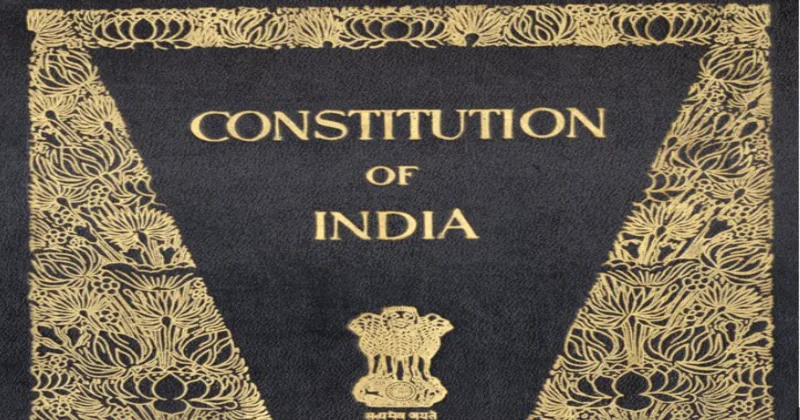
Image of the constitution of India

Image of the constitution of India

FacebookTwitterWhatsAppTelegramEmail

Even though Indians got Independence in 1947 and the constitution came into effect in 1950s, many stark realities of the atrocities, cruelty and inhumanity of the Colonials Britishers are skilfully hidden from the Indian public.  It is time to repeatedly inform the significance of the change brought over by the Constitution of Independent India.

“WE, THE PEOPLE OF INDIA, having solemnly resolved to constitute”

The above is a very powerful sentence from the Preamble of India as it conveys their power to write a new framework of governance with the new Indian constitution after Independence from British rule.

3.5 Crore Indians Died Of Starvation Due to Neglect By British Colonialists

Before India’s Independence, the situation was very worse under British rule. Since battle of Plassey in 1757, the people of India have lost the most basic rights. 3.5 crore Indians died of starvation in the British rule. Even the rule of women monarchs like Victoria was not of any use.

The women monarchs were as brutal and as remorseless as the male kings. The 1857 revolt, the destruction of Gurukul system, the apartheid against native educated, repression after 1857, destruction of native industry to favor the British industrialists all happened under Queen Victoria. Calling themselves ‘Gentlemen and Ladies’, they committed insane cruelty on Indians.

British Colonialists Treated Indian Subjects Worse Than Hitler Treated Jews

We know the atrocity of Hitler and how badly he treated the Jews in the concentration camps. However, it is worth noting the amount of food provided to such camps was reportedly twice as much as what the British rulers distributed to famine-affected people in India.  This was after lakhs were left to die and ignored initially by the British. In all this time, there was no shortage of food produced in India, just an uncaring attitude to the rights and needs of Indians in British rule. The British used to sell the foodgrains at record profits outside India to profiteer while lakhs of Indians died slowly and painfully.

British Colonialists Disrespected Indian Culture – Demonizing It As Superstition

In 1835, after the Indian Education Act, the gurukul system was destroyed by depriving it of funding and by not recognizing the graduates from gurukul education, thereby denying them jobs in 75 per cent of India, which was ruled by the British. Laws like ‘Criminal Tribes Act of 1871’ branded certain communities as criminals by birth, while the “Rowlatt Act” granted the police the power to arrest anyone without cause. These kinds of laws stand as stark testaments to the inhumanity of British colonial rule. To add insult to injury, during severe famines many colonial Britishers found fault with Indians for not killing the cows and eating them to escape death from hunger. It is a testimony to the moral and philosophical superiority of Indians that they treated the misfortune of British rule as ‘maya’ to bear with unspeakable cruelty and pursued a better life in the next birth by bearing the painful circumstances. It is said the opposite of love is not hate but to stop caring. The British rule of India is a tragic example of such an opposite and also of a demoniacal rule.

Now, let us look at the Indian constitution further and how the preamble addresses and kicks out the lousy British framework for exploitation, misrule and inhumanity. In the constitution of 1950 submitted by Ambedkar, there were only 3 words that summarized the preamble – Sovereign, Democratic and Republic. In the next section, let us see how those words are a radical improvement over the British colonial constitution.

By Choosing Sovereignty – Indians Wanted Relief From Domination Of British

By Sovereign it means, Indian public will control their destiny. Previously, the Viceroy and Executive Council of India appointed by the King or Queen of England would determine the rules. On certain topics, Indians were not allowed to debate in the legislatures and on other topics they were not allowed to vote. In addition to that unfairness, there have been multiple instances where the Viceroy vetoed even unanimously voted bills in the Central Legislature of India. British interests do not concern of Indians determined the decisions of the Viceroy of India.

The many Viceroys of India have repeatedly enacted laws rejected by elected representatives of British India, collected taxes and misused taxes for expenditures refused by the people’s representatives of India.

By Choosing Republic – Indians Rejected the Tyranny Of British Royalty

The misery of Indians under British rule happened under 8 kings and queens. Not only were the Kings and Queens of England the Monarchs and highest powers but also the Supreme governors of Church of England. Despite all the powers of the rulers – the public faced a miserable life. The power of the monarchs was not in the service of the common man of India. Making India a Republic is a rejection of the tyranny of the British Monarchs.

Not one British monarch showed any significant sympathy to the plight of the Indian public and it is no surprise that the summary rejection of monarchy and becoming a Republic which is the opposite of monarchy was a carefully made choice.

The confidence in leadership to emerge from the public might have been influenced by the experiences in India in the early 20th century with the rise of leaders like Swami Vivekananda, Lal, Bal, Pal, Bose, Ambedkar, and Sardar Patel to name a few. All of them were not sons of any royal dynasty but came from regular families and turned out to be great leaders who earned the confidence of the public.

By Choosing Democracy – Rejected The British Policy of Vetoing Public Voice

During British time there was no universal voting right. Only those owning property could vote. At one time, during British colonial rule, a mere 1 person out of 250 Indians had a right to vote. Further, as explained above the bills passed by the legislatures had no value as the Viceroy or the Governor of the British Presidencies which ruled 75 per cent of India could veto the bills and not respect the voice of the Indian public. By choosing democracy for the Indian constitution, the makers of our constitution made the majority opinion of the people of India the supreme power that rules the country.

Topics: PreambleColonial RuleConstitution of IndiaBritishSwami VivekanandaConstituent AssemblyRepublic Day
ShareTweetSendShareSend
✮ Subscribe Organiser YouTube Channel. ✮
✮ Join Organiser's WhatsApp channel for Nationalist views beyond the news. ✮
Previous News

Uphold sanctity of democracy, preserve integrity & unity of nation: RSS Sarkaryavah Dattatreya Hosabale in Manipur 

Next News

Republic Day: From ‘Lakhpati Didi Initiative’ to ‘Evolution of Banking Services’, tableaux highlight India’s progress

Related News

United States: Life-size statue of Swami Vivekananda unveiled in Chicago; Resonates the message of service & harmony

More than 1,000 temple trustees and Hindu organisations across Maharashtra have opposed the proposed Act, alleging it threatens temple land rights and traditional religious institutions. In this regard, a memorandum was submitted to Maharashtra CM Devendra Fadnavis on May 15 by Maharashtra Mandir Mahasangh

Maharashtra Devasthan Inams Abolition Draft Act, 2026: Not just ‘Inam’, but sacred heritage

The Indians who arrived in Trinidad as slaves to work in British plantations in 1890s

Indian Arrival Day 2026: British sent them in chains, they built a civilization; Untold story of Indians in Trinidad

From Red to Saffron in Naxalbari: Changing Colour of the Maoist Epicentre

RSS Sarkaryavah’s tour to the west: The enriching outreach

Facebook post shared by Pallikkonam Rajeev (courtesy: Facebook) dated on April 24. (Left Side)

Kerala: Derogatory FB Post on Swami Vivekananda, Yogi Adityanath; Complaint Filed in UP Seeking Strict Action

Load More

Latest News

Prime Minister Narendra Modi

‘Maoism is breathing its last’: PM Modi highlights crackdown on red terror in last 12 years and growth in tribal areas

(Left) Dr Shyama Prasad Mookerjee (Right) West Bengal CM Suvendu Adhikari

Syama Prasad Mookerjee was instrumental in creation of West Bengal’: CM Suvendu Adhikari

Female recruitment in Jihadist networks emerges as major security concern

Khadija Terror Case: Female recruitment, online radicalisation in Jihadi networks poses major security concern

Outcry grows after Dalits in Theeyathur village carry deceased woman across paddy fields due to lack of burial access

Tamil Nadu: Dalits forced to carry deceased woman through paddy fields as Pudukkottai village lacks road access

ASI transfers Rakhigarhi skeletal remains to Anthropological Survey of India for detailed examination

Rakhigarhi’s ancient secrets to be unveiled as human skeletal remains reach AnSI for advanced scientific analysis

Dr Syama Prasad Mookerjee: A Life That Still Guides Bharat’s National Resolve

(Left) Maoist Arms seized (Right) Security personnel with the seized arms of Maoists

Odisha: Major Maoist arms cache recovered in Koraput, sixth such seizure within two weeks

Delhi Chief Minister Rekha Gupta paid tribute to Bharatiya Jana Sangh founder Syama Prasad Mookerjee on his death anniversary

Article 370 abrogation was the greatest tribute to Syama Prasad Mookerjee: Delhi CM Rekha Gupta

Prime Minister Narendra Modi

Viksit Bharat: PM Modi slams Congress — ‘Blocks development, claims credit’

(Left) Petrol bomb hurled at BJP leader’s clinic opposite newly inaugurated RSS office in Bhatinda (Right) BJP leader Dr Tarsem Garg

Punjab: Petrol bomb hurled at BJP leader’s clinic opposite newly inaugurated RSS office in Bhatinda

Load More
  • Privacy
  • Terms
  • Cookie Policy
  • Refund and Cancellation
  • Delivery and Shipping

© Bharat Prakashan (Delhi) Limited.
Tech-enabled by Ananthapuri Technologies

  • Home
  • Search Organiser
  • Bharat
    • Assam
    • Bihar
    • Chhattisgarh
    • Jharkhand
    • Maharashtra
    • View All States
  • World
    • Asia
    • Africa
    • North America
    • South America
    • Europe
    • Australia
  • Editorial
  • Operation Sindoor
  • Opinion
  • Analysis
  • Defence
  • Culture
  • Sports
  • Business
  • RSS @ 100
  • Entertainment
  • More ..
    • Sci & Tech
    • Vocal4Local
    • Special Report
    • Education
    • Employment
    • Books
    • Interviews
    • Travel
    • Health
    • Politics
    • Law
    • Economy
    • Obituary
  • Subscribe Magazine
  • Read Ecopy
  • Advertise
  • Circulation
  • Careers
  • About Us
  • Contact Us
  • Policies & Terms
    • Privacy Policy
    • Cookie Policy
    • Refund and Cancellation
    • Terms of Use

© Bharat Prakashan (Delhi) Limited.
Tech-enabled by Ananthapuri Technologies