Hansa Mehta: The voice of women in drafting of India’s Constitution
July 31, 2026
  • Read Ecopy
  • Circulation
  • Advertise
  • Careers
  • About Us
  • Contact Us
Android AppiPhone AppArattai
Organiser
  • ‌
  • Bharat
    • Assam
    • Bihar
    • Chhattisgarh
    • Jharkhand
    • Maharashtra
    • View All States
  • World
    • Asia
    • Europe
    • North America
    • South America
    • Africa
    • Australia
  • Editorial
  • International
  • Opinion
  • RSS @ 100
  • More
    • Op Sindoor
    • Analysis
    • Sports
    • Defence
    • Politics
    • Business
    • Economy
    • Culture
    • Special Report
    • Sci & Tech
    • Entertainment
    • G20
    • Azadi Ka Amrit Mahotsav
    • Vocal4Local
    • Web Stories
    • Education
    • Employment
    • Books
    • Interviews
    • Travel
    • Law
    • Health
    • Obituary
  • Subscribe
    • Subscribe Print Edition
    • Subscribe Ecopy
    • Read Ecopy
  • ‌
  • Bharat
    • Assam
    • Bihar
    • Chhattisgarh
    • Jharkhand
    • Maharashtra
    • View All States
  • World
    • Asia
    • Europe
    • North America
    • South America
    • Africa
    • Australia
  • Editorial
  • International
  • Opinion
  • RSS @ 100
  • More
    • Op Sindoor
    • Analysis
    • Sports
    • Defence
    • Politics
    • Business
    • Economy
    • Culture
    • Special Report
    • Sci & Tech
    • Entertainment
    • G20
    • Azadi Ka Amrit Mahotsav
    • Vocal4Local
    • Web Stories
    • Education
    • Employment
    • Books
    • Interviews
    • Travel
    • Law
    • Health
    • Obituary
  • Subscribe
    • Subscribe Print Edition
    • Subscribe Ecopy
    • Read Ecopy
Organiser
  • Home
  • Bharat
  • World
  • Operation Sindoor
  • Editorial
  • Analysis
  • Opinion
  • Culture
  • Defence
  • International Edition
  • RSS @ 100
  • Magazine
  • Read Ecopy
Home Bharat

Hansa Mehta: The voice of women in drafting of India’s Constitution

As Bharat is all set to celebrate its Republic Day on January 26, it is important to look into the role of Hansa Mehta, a remarkable figure in India's freedom struggle and a staunch advocate for gender equality, played a pivotal role in shaping the Constitution of independent India. A fierce believer in justice and human rights, she was instrumental in ensuring that women’s voices were heard and their rights secured in the foundational document of the nation

WEBDESKWEBDESK
Jan 25, 2025, 06:00 pm IST
in Bharat
Follow on Google News
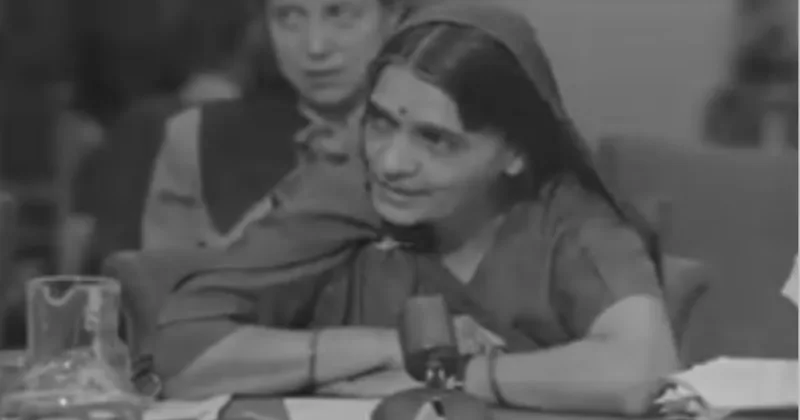
Hansa Mehta who served in the constituent assembly from 1946-1949

Hansa Mehta who served in the constituent assembly from 1946-1949

FacebookTwitterWhatsAppTelegramEmail

Hansa Jivraj Mehta, the daughter of Manubhai Mehta, the Dewan of Baroda state, her education-in Baroda university, and London, and her list of accomplishments would have been out of place in any other period of Indian history.

She was also first woman vice chancellor in India with her 2-year term at the SNDT university in Bombay.

Internationally she had served as a member of the United Nations sub-committee on the status of women, and vice chair, with Eleanor Roosevelt on the United Nations Universal Declaration of Human Rights committee.

Hansa Mehta served in the constituent assembly from 1946-1949. She was a member of the Fundamental rights sub-committee, the advisory committee and the provincial constitutional committee.

On 15th August 1947, a few minutes after midnight, Hansa Mehta on behalf of the ‘women of India’ had the honour of presenting the Indian National Flag to the assembly. This was the first flag to fly over Independent India.

Before her stint in the constituent assembly, Hansa Mehta had made her mark as an educationist, writer, feminist and reformist. As an educator, she fought for continuing education for both boys and girls, set up home sciences as a university subject, and started a post graduate school of social work.

The AIWC during her time, started the Lady Irvin College in New Delhi, a women’s college for home science, educational research and teacher training.

A staunch feminist, Hansa Mehta drafted the Indian Women’s Charter of Rights and Duties during the 18th AIWC session in Hyderabad in 1946. The charter demanded that women be treated as equal to men, and be given the civic rights, education, health on par with the men. The charter also called for equal pay, equal distribution of property, and equal application of marriage laws. The charter went above and beyond its intended audience, when the United Nations Declaration of Human Rights adopted the ideas into its document.

As a reformist, Hansa Mehta played an integral role as a part of a strong women’s movement that pushed for abolition of child marriage (Sarada Act), abolition of the devdasi system, insistence of better educational opportunities for women and in personal law reforms.

With Rajkumari Amrit Kaur she framed the famed Indian Women’s Charter of Rights and Duties and fought for the Uniform Civil Code;

And with Vijaylakshmi Pandit she worked on women’s equality and human rights in the UN.

Hansa Mehta’s most significant contribution to the constituent assembly debates was in trying to make the Uniform Civil Code (UCC) a justiciable part of the constitution. As part of the fundamental rights sub committee, she along with Rajkumari Amrit Kaur, Ambedkar and Manoo Masani saw the UCC as part of the ‘state’s responsibility” to establish a single Indian identity over multiple religious identities.

Hansa Mehta’s speeches in the assembly reflect her deeply held conviction that equality across the board for all humans was the surest way to ensure justice for all.

She was dismissive of the idea of privileges, and concurred that they were not in the spirit of democracy.

Her reflections on the constitution in a speech given on 22nd November 1949 pointed out that while “nowhere in the Constitution have we defined ‘minorities’”, the constitution has made every effort to ensure that everyone were guaranteed equal protection of law, equality of status, opportunity and religious rights.

She successfully championed her cause changing the phrase in the Universal Declaration of Human Rights, from “All men are born free and equal” to “All human beings are born free and equal.”

She worked indefatigably for education and women’s rights post her UN service. She went on to serve on the board of UNESCO and was awarded the Padma Bhushan in 1959.

The legacy that Hansa Mehta has left behind is a testament to her indefatigable spirit and dedication to the simple idea that all humans should be equal, educated and empowered.

Participation in Debates

11.162.116

Hansa Mehta: In spite of all that and in spite of all the many complicated problems that we had to tackle, I feel that we have not done badly. The most difficult problem that we had to tackle was the problem of Minorities. Nowhere in the Constitution we have defined ‘Minorities’. We accepted the definition that was given to us by the last Rulers. They created religious minorities, communal minorities in order to help their policy of divide and rule and that policy has culminated in the partition of this country. We do not want any more partitions. What do the minorities want? What can be their claims? The Constitution guarantees equal protection of law, equality of status, equality of opportunity; the Constitution guarantees religious rights. What more can the Minorities ask for? If they want privileges, that is not in the spirit of democracy. They cannot ask for privileges. The only exception, however, I would like to make is in the case of the Scheduled Castes. They have suffered and suffered long at the hands of the Hindu society and any exception in their case would be making amends to what they have suffered. In this connection, the abolition of untouchability is the greatest thing that we have done and posterity will be very very proud of this.

Hansa Mehta: The other item to which I wish to draw the attention of the House is the Common civil Code. To my mind this is much more important than even the national language. We have too many personal laws in this country and these personal laws are dividing the nation today. It is therefore very essential if we want to build up one nation to have one Civil Code. It must, however, be remembered that the Civil Code that we wish to have must be on a par with, or in advance of, the most progressive of the personal laws in the country. Otherwise, it will be a retrograde step and it will not be acceptable to all.
Topics: Uniform Civil CodeConstituent AssemblyRepublic DayHansa Mehta
ShareTweetSendShareSend
✮ Subscribe Organiser YouTube Channel. ✮
✮ Join Organiser's WhatsApp channel for Nationalist views beyond the news. ✮
Previous News

Mahakumbh welcomes Ramnami sect devotees adorned with ‘Ram’ tattoos from Chhattisgarh for holy dip

Next News

Gujarat govt’s crackdown on hotels misusing Hindu names to hide Muslim ownership; 27 lose GSRTC contracts

Related News

Protest, pattern and prognosis

CM Dhami Announces Special Agniveer Cell, 10% Reservation in State Jobs for Retired Agniveers

Uttarakhand: CM Dhami unveils first dedicated Agniveer cell, homestay grants and job benefits for ex-servicemen

Madhya Pradesh's Uniform Civil Code draft proposes mandatory registration of live-in relationships

Madhya Pradesh: UCC draft proposes mandatory registration of live-in relationships, divorce & inheritance laws

West Bengal Govt set to table UCC Bill on Monday

West Bengal UCC Bill Explained: What Uniform Civil Code covers, Why Govt is bringing it, What it means for state

The Uniform Civil Code debate in Assam has reignited questions around equality, cultural identity and constitutional reform in India

Equality Without Assimilation: Why Assam’s UCC debate goes beyond legal uniformity

Assam CM Himanta Biswa Sarma

Assam Passes UCC: Congress party’s proposed amendment over second wife rejected

Load More

Latest News

J&K police seize properties of Pakistan-based terrorists

J&K: Properties of 16 Pakistan-based terrorists & handlers seized in Ramban, Reasi districts

Dignitaries on the stage at national seminar organised by Sanskritik Gaurav Sansthan in New Delhi

Sanskritik Gaurav Sansthan calls for retaining age of consent to 18, strengthening Bharatiya values, family institution

AI Generated Image

World’s Oldest Tree in Bihar: The banyan bridges radiocarbon science and Bharat’s civilisational heritage

A representative image

India’s industrial output accelerates to 7.3 percent in June; Manufacturing, electricity drive strong growth

Representative Image

Exposing Western Media Hypocrisy: Glorifying CJP protest in India, Selective ignorance of Pakistan’s violence in PoJK

PM Surya Ghar Yojana: Nearly 19 Lakh Households Receive Zero Electricity Bills

PM Surya Ghar Scheme: Over 19 lakh households receive zero electricity bills, over 40 lakh rooftop solar installations

Years of policy neglect constrained medical education, limiting opportunities, infrastructure and healthcare access across India (AI-generated image)

Congress-Era Medical Scarcity to BJP-Led Expansion: How India’s medical education infrastructure transformed after 2014

A representative image

India leads global tiger conservation with 3,682 tigers, science-based policies and technology-driven monitoring

Representative Image

Group Life Insurance vs Family Life Insurance: Which offers better protection?

Bangladeshi infiltrators residing in Assam expelled from the state in 48 hours

Assam: 39 Bangladeshi infiltrators expelled in 48 hours as CM Sarma steps up measures to protect state security

Load More
  • Privacy
  • Terms
  • Cookie Policy
  • Refund and Cancellation
  • Delivery and Shipping

© Bharat Prakashan (Delhi) Limited.
Tech-enabled by Ananthapuri Technologies

  • Home
  • Search Organiser
  • Bharat
    • Assam
    • Bihar
    • Chhattisgarh
    • Jharkhand
    • Maharashtra
    • View All States
  • World
    • Asia
    • Africa
    • North America
    • South America
    • Europe
    • Australia
  • Editorial
  • Operation Sindoor
  • Opinion
  • Analysis
  • Defence
  • Culture
  • Sports
  • Business
  • RSS @ 100
  • Entertainment
  • More ..
    • Sci & Tech
    • Vocal4Local
    • Special Report
    • Education
    • Employment
    • Books
    • Interviews
    • Travel
    • Health
    • Politics
    • Law
    • Economy
    • Obituary
  • Subscribe Magazine
  • Read Ecopy
  • Advertise
  • Circulation
  • Careers
  • About Us
  • Contact Us
  • Policies & Terms
    • Privacy Policy
    • Cookie Policy
    • Refund and Cancellation
    • Terms of Use

© Bharat Prakashan (Delhi) Limited.
Tech-enabled by Ananthapuri Technologies