The bitterly cold weather in Delhi is being warmed up by the much-debated Delhi Assembly Elections, scheduled for the fifth of February, 2025. Political parties such as the Bharatiya Janata Party (BJP), Indian National Congress (INC), and Aam Aadmi Party (AAP) are vying for voters’ attention as the elections draw near by unveiling guarantees and manifestos.
Over the past three decades, Delhi’s political landscape has undergone a seismic transformation. The INC, once the dominant force governing the city until 2013, saw its influence wane under the weight of corruption allegations and anti-incumbency sentiments. The emergence of the AAP in 2012 marked a turning point, ushering in a new political era. By 2015, the AAP rose to power, relegating the BJP to the role of the primary opposition party, while the INC faded into near irrelevance in Delhi’s political arena.
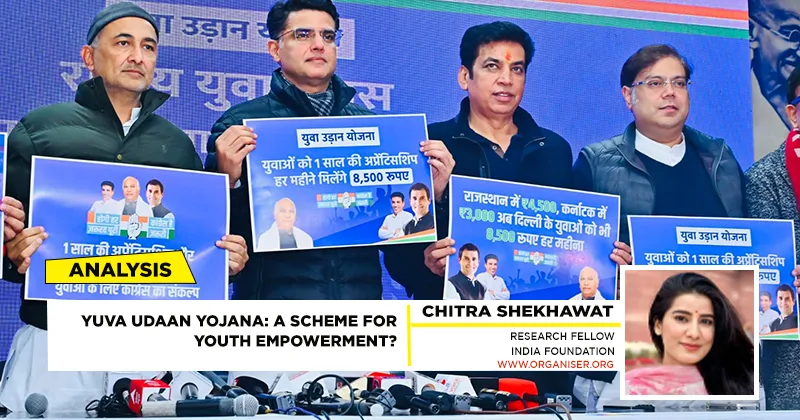
As the elections draw closer, the INC has unveiled its flagship proposal, the Yuva Udaan Yojana. If the party wins, this scheme promises a monthly stipend of Rs 8,500 for educated yet unemployed youth in Delhi. While aimed at resonating with Delhi’s young voters, the initiative has sparked debate about its economic sustainability. Critics argue that such measures, while politically strategic, could strain the city’s financial health, blurring the lines between genuine welfare policies and populist freebies. With each party intensifying its campaign, the battle for Delhi’s political future promises to be dynamic and contentious.
Freebies, as noted in a Reserve Bank of India (RBI) report, are defined as welfare measures provided at no cost to the public. It is important to mention that schemes such as the ‘Yuva Udaan Yojana’ aim to attract unemployed, educated youth. The younger generation is a priceless asset, brimming with resilience, serving as a beacon for a better future and a treasure of hope for every nation. Young people are surrounded by limitless possibilities and possess the freedom to choose and explore. The true force driving progress is youthfulness, characterised by a vision paired with commitment, excitement ignited by discovery, and the determination to work diligently. They push boundaries, labour tirelessly towards their goals, and relish the thrill of adventure due to their enthusiasm.
However, schemes that prioritise handouts over empowerment can dampen this dynamic spirit. Excessive freebies risk fostering complacency, reducing motivation, and discouraging self-reliance. Instead of inspiring youth to aim higher and seize opportunities, such programs may weaken their ambition and limit their economic potential. This stifling of innovation and entrepreneurial spirit could, in turn, hinder broader societal and economic development.
Declaring schemes solely to sway voters undermines the fundamental principle of free and fair elections, which demands an impartial electoral process. This practice distorts the electoral landscape and erodes the legitimacy of the democratic system. These promises, offered at no cost, come with a hidden price for everyone. After an election, governments often encounter substantial funding needs to fulfil their campaign commitments. This can result in increased government borrowing, leading to higher taxes that are ultimately shouldered by the country’s taxpayers, either directly or indirectly.
Recently, the government of Himachal Pradesh, a state burdened by a debt of 95,000 crore rupees, had to request that its citizens voluntarily renounce 125 units of free electricity subsidies. Sukhvinder Singh ‘Sukhu’, the Chief Minister, also volunteered to do the same, hoping to aid the state electricity board in saving Rs. 200 crore.
The situation in Himachal highlights the significance of fiscal responsibility for states and the necessity of understanding financial feasibility. Ultimately, the costs of freebie schemes are borne by innocent citizens who find themselves trapped in the hope of false or unfulfilled promises. Numerous issues related to freebies are currently before the Supreme Court of India.
“Freebies may create a situation wherein the State Government cannot provide basic amenities due to lack of funds and the State is pushed towards imminent bankruptcy. Unless there is a conscious unanimous decision to stop (hand-outs), freebies will continue to destroy the economy.”-An observation by Chief Justice N V Ramana as a head of a 3-member Supreme Court Bench.
It is the need of the hour for the country’s youth to understand the distinction between welfare schemes for developing youth and freebies as tools for political gains. Beneficiaries of such hand-outs schemes are political parties. It is essential to understand that the agenda of any political party cannot be greater than a nation’s economic progress and the well-being of its people. National interests should always be prioritised over trivial political gains.
Welfare schemes are structured initiatives designed to empower individuals and communities. They aim to create sustainable opportunities and foster long-term growth. In contrast, freebies are often distributed as part of electoral promises before elections, prioritising short-term satisfaction while bypassing structural issues and undermining fiscal prudence. Welfare programmes increase the capacity and independence of individuals, but excessive reliance on freebies erodes accountability, fosters dependency, and leads to a deficit of funds for essential development needs. By placing electoral victories above genuine progress, this approach not only undermines the foundation of societal development but also hinders a nation’s advancement. Freebies risk jeopardising initiatives aimed at building a resilient and self-sufficient community by promoting a culture of assistance, which poses serious challenges to sustainable development.
Almost half of the population is under thirty years old. This demographic advantage, if utilised effectively, can significantly enhance our country’s economic growth while maintaining a sustainable long-term economic model. Political parties, instead of announcing handouts and misleading young, intelligent minds, should focus on creating job opportunities that unlock the potential of these young individuals.
Creating employment opportunities is more than simply a means to earn money; it is also a vital aspect of individual empowerment, community stability, and national growth. It instils confidence and self-reliance in young people, offering them the means to support themselves and their families, achieve economic independence, and make significant contributions to their communities, ultimately aiding in nation-building. Securing stable jobs through legitimate processes based on hard work or through government-sponsored initiatives is the most effective path to attaining economic security and enhancing quality of life. A well-employed youth can stimulate consumer demand, encourage investment in local economies, and drive national economic progress.
Remember Swami Vivekananda’s call for the youth to recognise their latent potential to achieve their objectives. “Arise, awake, and stop not until the goal is reached. Take risks in your life. If you win, you can lead! If you lose, you can guide.”