Guru Tegh Bahadur Shaheedi Diwas: Remembering the defender of religious freedom and human rights
December 5, 2025
  • Read Ecopy
  • Circulation
  • Advertise
  • Careers
  • About Us
  • Contact Us
Android AppiPhone AppArattai
Organiser
  • ‌
  • Bharat
    • Assam
    • Bihar
    • Chhattisgarh
    • Jharkhand
    • Maharashtra
    • View All States
  • World
    • Asia
    • Europe
    • North America
    • South America
    • Africa
    • Australia
  • Editorial
  • International
  • Opinion
  • RSS @ 100
  • More
    • Op Sindoor
    • Analysis
    • Sports
    • Defence
    • Politics
    • Business
    • Economy
    • Culture
    • Special Report
    • Sci & Tech
    • Entertainment
    • G20
    • Azadi Ka Amrit Mahotsav
    • Vocal4Local
    • Web Stories
    • Education
    • Employment
    • Books
    • Interviews
    • Travel
    • Law
    • Health
    • Obituary
  • Subscribe
    • Subscribe Print Edition
    • Subscribe Ecopy
    • Read Ecopy
  • ‌
  • Bharat
    • Assam
    • Bihar
    • Chhattisgarh
    • Jharkhand
    • Maharashtra
    • View All States
  • World
    • Asia
    • Europe
    • North America
    • South America
    • Africa
    • Australia
  • Editorial
  • International
  • Opinion
  • RSS @ 100
  • More
    • Op Sindoor
    • Analysis
    • Sports
    • Defence
    • Politics
    • Business
    • Economy
    • Culture
    • Special Report
    • Sci & Tech
    • Entertainment
    • G20
    • Azadi Ka Amrit Mahotsav
    • Vocal4Local
    • Web Stories
    • Education
    • Employment
    • Books
    • Interviews
    • Travel
    • Law
    • Health
    • Obituary
  • Subscribe
    • Subscribe Print Edition
    • Subscribe Ecopy
    • Read Ecopy
Organiser
  • Home
  • Bharat
  • World
  • Operation Sindoor
  • Editorial
  • Analysis
  • Opinion
  • Culture
  • Defence
  • International Edition
  • RSS @ 100
  • Magazine
  • Read Ecopy
Home Bharat

Guru Tegh Bahadur Shaheedi Diwas: Remembering the defender of religious freedom and human rights

Shaheedi Diwas honours the martyrdom of Guru Tegh Bahadur, the ninth Sikh Guru, who was executed in 1675 for refusing to convert to Islam under Mughal Emperor Aurangzeb's rule. His sacrifice for religious freedom and human rights continues to inspire millions and shapes Sikh identity, with memorials commemorating his legacy worldwide.

WEBDESKWEBDESK
Nov 24, 2024, 08:00 am IST
in Bharat, Culture
Follow on Google News
FacebookTwitterWhatsAppTelegramEmail

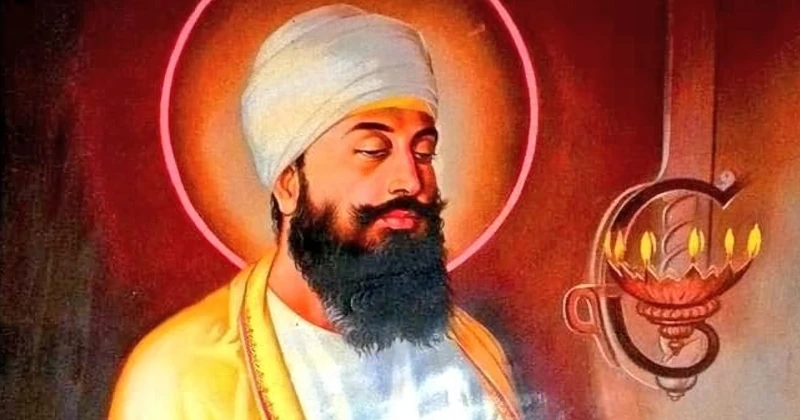
Every year on November 24th, Sikhs around the world gather to observe Shaheedi Diwas, to honour the supreme sacrifice of Guru Tegh Bahadur, the ninth Guru of Sikhism. This solemn day marks the anniversary of Guru Tegh Bahadur’s execution by the Mughal Emperor Aurangzeb in 1675. The Guru’s martyrdom for the cause of religious freedom and human rights remains a defining moment in Sikh history, shaping the identity of the Sikh community and strengthening their resolve to defend justice and equality.

Guru Tegh Bahadur was born on April 1, 1621, in Amritsar, Punjab, as the youngest son of Guru Hargobind, the sixth Guru of Sikhism, and Mata Nanaki. His birth name was Tyaga Mal, meaning one who renounces worldly attachments. From a young age, Guru Tegh Bahadur was imbued with the teachings of Sikhism, learning the scriptures, Vedas, Upanishads, and Puranas. He was trained in martial arts, archery, and horsemanship, reflecting the Guru’s commitment to both spiritual and physical discipline.

As the Sikh community’s spiritual leader, Guru Hargobind sought to instill in his children the values of both spiritual enlightenment and military readiness, recognising the need for Sikhs to defend their faith against external oppression. Guru Tegh Bahadur’s early life was marked by service to the community and personal devotion, embodying the principles of humility, justice, and courage.

Guru Tegh Bahadur: The Defender of Faith

Guru Tegh Bahadur’s most notable contribution came in the form of his unwavering stance against religious persecution. During the reign of Emperor Aurangzeb, the Mughal ruler sought to impose Islam on non-Muslim populations across India, including Hindus and Sikhs. Aurangzeb’s policy of forced conversions and the oppression of religious minorities led to widespread suffering, particularly among the Hindus of Kashmir.

In the face of this forced religious conversion, Guru Tegh Bahadur stood as a beacon of freedom of conscience. When a group of Kashmiri Pandits appealed to him for help, asking him to resist Aurangzeb’s oppressive policies, Guru Tegh Bahadur took a bold stand. He declared that the freedom to practice one’s faith was an inalienable human right, and no ruler had the right to dictate what religion a person should follow. This unwavering commitment to religious freedom earned him the title “Hind ki Chadar” or “Shield of India,” symbolizing his role as the protector of India’s diverse religious traditions.

The Anointment of Guru Tegh Bahadur as the Ninth Guru

Before his martyrdom, Guru Tegh Bahadur had spent many years traveling across India, spreading the teachings of the first Sikh Guru, Guru Nanak. During this period, he visited various places including Mathura, Agra, Allahabad, Varanasi, and the distant regions of Assam and Bengal, where he established langars (community kitchens) and water wells, providing for the poor and marginalised communities. He is credited with founding Anandpur Sahib, a holy city in the foothills of the Himalayas, which would later become the birthplace of the Khalsa, the Sikh warrior community established by his son, Guru Gobind Singh.

Guru Tegh Bahadur’s selection as the ninth Sikh Guru occurred in 1664. After the death of Guru Har Krishan, the eighth Sikh Guru, his followers were uncertain about who would succeed him. The name Baba Bakala was mentioned by Guru Har Krishan as the place where his successor would be found. Various claimants to the Guruship emerged, but it was only when the wealthy merchant Baba Makhan Shah Labana recognised Guru Tegh Bahadur’s spiritual authority that the true successor was confirmed. After making his offering, Baba Labana joyfully proclaimed, “Guru Ladho Re!” (I have found the Guru), marking the public recognition of Guru Tegh Bahadur’s leadership.

Guru Tegh Bahadur’s contributions to Sikhism are immense, particularly through his writings. He composed 116 hymns that are included in the Guru Granth Sahib, the central scripture of Sikhism. His compositions address the nature of God, human relationships, service, and the human condition, offering deep philosophical reflections on dignity, death, deliverance, and spiritual discipline. His hymns also serve as a guide for Sikhs in their personal lives, emphasizing truth, compassion, and selflessness.

His emphasis on service to humanity is reflected in his establishment of community kitchens (langars), which continue to provide free meals to people of all backgrounds in Gurdwaras (Sikh temples) worldwide. He also promoted the establishment of wells and water systems to serve local communities, demonstrating his commitment to both spiritual and material welfare.

Guru Tegh Bahadur’s martyrdom remains one of the most defining events in Sikh history. In 1675, after publicly defying the Mughal Emperor Aurangzeb’s orders to convert to Islam, Guru Tegh Bahadur was arrested, tortured, and beheaded in Delhi. The Guru’s refusal to abandon his faith and submit to the pressure of forced conversion was a powerful statement of resistance against tyranny.

On the day of his execution, Guru Tegh Bahadur remained calm and resolute, never wavering in his commitment to his beliefs. His martyrdom had a profound impact on the Sikh community, strengthening their resolve to fight against oppression and laying the groundwork for the eventual establishment of the Khalsa by his son, Guru Gobind Singh.

In honour of his sacrifice, Gurdwara Sis Ganj Sahib in Delhi stands at the site where Guru Tegh Bahadur was beheaded, and Gurdwara Rakab Ganj Sahib marks the place where his body was cremated. These sacred shrines, along with many others across India, commemorate the Guru’s martyrdom and his steadfast defense of religious freedom.

The martyrdom of Guru Tegh Bahadur, along with the sacrifices made by his companions, Bhai Mati Dass, Bhai Sati Das, and Bhai Dayala, became a rallying point for Sikhs to stand firm against persecution. Guru Gobind Singh, the tenth Guru, was deeply influenced by his father’s sacrifice and, in time, would formalize the Khalsa, a community of committed Sikhs dedicated to the defense of religious freedom and human dignity.

On Shaheedi Diwas, Sikhs worldwide reflect on the legacy of Guru Tegh Bahadur. His sacrifice for the freedom of religion and the right to practice one’s faith without fear of persecution continues to inspire millions around the world. His life and teachings serve as a reminder of the importance of tolerance, justice, and human rights—values that transcend religious boundaries and remain essential to the world today.

Topics: Shaheedi DiwasSikh HistoryGuru Granth SahibSikhismGuru Tegh Bahadur
Share22TweetSendShareSend
✮ Subscribe Organiser YouTube Channel. ✮
✮ Join Organiser's WhatsApp channel for Nationalist views beyond the news. ✮
Previous News

Pakistan: 37 killed in sectarian Shia-Sunni violence in Pak’s Khyber Pakhtunkhwa province, toll may rise further

Next News

Birth Anniversary of Lachit Borphukan: The hero who is hailed as of “Shivaji of the Northeast”

Related News

How centuries of division pushed Sikhs away from their divine mission

Uttar Pradesh Chief Minister Yogi Adityanath (Left)

Uttar Pradesh: CM Yogi slammed Mughals & Aurangzeb for trying to Islamise India; Hailed Sikhs for denouncing them

Prime Minister Modi Spoke at the 350th Shaheedi Diwas of Sri Guru Tegh Bahadur

Guru Tegh Bahadur’s life, sacrifice is great source of inspiration: PM Modi

Guru Tegh Bahadur’s martyrdom stands among the most profound sacrifices

Hind-di-Chadar: Guru Tegh Bahadur’s timeless sacrifice for dharma

Representative Image

Guru Tegh Bahadur’s martyrdom for protection of faith, humanity will forever illuminate our society: PM Modi

350th Martyrdom Day of Sri Tegh Bahadur Ji: Upholding dharma, resisting injustice

Load More

Comments

The comments posted here/below/in the given space are not on behalf of Organiser. The person posting the comment will be in sole ownership of its responsibility. According to the central government's IT rules, obscene or offensive statement made against a person, religion, community or nation is a punishable offense, and legal action would be taken against people who indulge in such activities.

Latest News

Thirupparankundram Karthigai Deepam utsav

Andhra Pradesh: AP Dy CM Pawan Kalyan reacts to Thirupparankundram row, flags concern over religious rights of Hindus

23rd India-Russia Annual Summit

India-Russia Summit heralds new chapter in time-tested ties: Inks MoUs in economic, defence, tourism & education

DGCA orders probe into IndiGo flight disruptions; Committee to report in 15 days

BJYM leader Shyamraj with Janaki

Kerala: Widow of BJP worker murdered in 1995 steps into electoral battle after three decades at Valancherry

Russian Sber bank has unveiled access to its retail investors to the Indian stock market by etching its mutual fund to Nifty50

Scripting economic bonhomie: Russian investors gain access to Indian stocks, Sber unveils Nifty50 pegged mutual funds

Petitioner S Vignesh Shishir speaking to the reporters about the Rahul Gandhi UK citizenship case outside the Raebareli court

Rahul Gandhi UK Citizenship Case: Congress supporters create ruckus in court; Foreign visit details shared with judge

(L) Kerala High Court (R) Bouncers in Trippoonithura temple

Kerala: HC slams CPM-controlled Kochi Devaswom Board for deploying bouncers for crowd management during festival

Fact Check: Rahul Gandhi false claim about govt blocking his meet with Russian President Putin exposed; MEA clears air

Union Minister for Road Transport and Highways Nitin Gadkari (Right)

India set for highway overhaul as Union Minister Nitin Gadkari unveils nationwide shift to MLFF electronic tolling

RSS Akhil Bharatiya Prachar Pramukh Shri Sunil Ambekar

When Narrative Wars result in bloodshed, countering them becomes imperative: Sunil Ambekar

Load More
  • Privacy
  • Terms
  • Cookie Policy
  • Refund and Cancellation
  • Delivery and Shipping

© Bharat Prakashan (Delhi) Limited.
Tech-enabled by Ananthapuri Technologies

  • Home
  • Search Organiser
  • Bharat
    • Assam
    • Bihar
    • Chhattisgarh
    • Jharkhand
    • Maharashtra
    • View All States
  • World
    • Asia
    • Africa
    • North America
    • South America
    • Europe
    • Australia
  • Editorial
  • Operation Sindoor
  • Opinion
  • Analysis
  • Defence
  • Culture
  • Sports
  • Business
  • RSS @ 100
  • Entertainment
  • More ..
    • Sci & Tech
    • Vocal4Local
    • Special Report
    • Education
    • Employment
    • Books
    • Interviews
    • Travel
    • Health
    • Politics
    • Law
    • Economy
    • Obituary
  • Subscribe Magazine
  • Read Ecopy
  • Advertise
  • Circulation
  • Careers
  • About Us
  • Contact Us
  • Policies & Terms
    • Privacy Policy
    • Cookie Policy
    • Refund and Cancellation
    • Terms of Use

© Bharat Prakashan (Delhi) Limited.
Tech-enabled by Ananthapuri Technologies