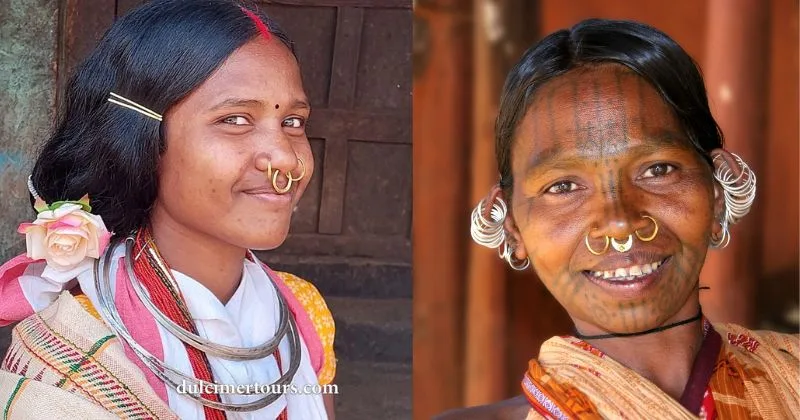
Raj Empowerment is a multidimensional social process that allows individuals to gain control over their own lives, communities and society by addressing issues that they deem necessary. It is the process of having and exploiting resources in an agentic manner to obtain the desired outcome, such as gender equality, improved well-being, more freedom and balanced decision-making power. The World Bank characterises empowerment as the process of enhancing an individual’s or group’s capacity to make purposive choices and to transform those choices into desired actions and outcomes. Empowerment can be understood through various dimensions, including the ability to make choices, concern for gender-related attitudes and beliefs, and achievements in the economic, social and cultural realms. It can be understood by a three-dimensional model of empowerment that includes enabling resources (school attainment, wage work, access to information and pivotal life events), intrinsic agency (attitude to wife-beating) and instrumental agency (participation in household decisions) . we have also adopted those dimensions for defining women’s empowerment. A higher level of empowerment leads to increased opposition to intimate partner violence, improves women’s socioeconomic status through increased physical mobility, and amplifies influence on household and financial decisions .
In some selected indicators, the empowerment status of women in Northeast India is comparatively better than that in the rest of the country . In recent years, tribal women have been empowered through several self-help groups and entrepreneurial activities . The empowerment of women through entrepreneurial activities has led to women’s empowerment in many ways, such as socioeconomic opportunities, property rights, political representation, social equality, personal rights, family development and community development
In India, tribal women have long been marginalised, facing socio-economic challenges that hinder their overall development. Historically, tribal women, in particular, have suffered from multiple layers of marginalization due to their gender, community status, and lack of access to education, healthcare, and employment opportunities. However, under the leadership of Prime Minister Narendra Modi, efforts have been amplified to address these disparities and focus on tribal women’s empowerment, laying the foundation for long-term socio-economic upliftment. This article will explore the various initiatives, policies, and their impact on the empowerment of tribal women during the Modi era.
1. Historical Context of Tribal Women in India
Before delving into the policies and programs introduced by the Modi government, it is important to understand the historical context of tribal women in India. Tribal communities make up around 8.6% of India’s population, with a significant portion residing in remote areas of the country. For decades, these communities have been excluded from mainstream development, and tribal women have faced numerous challenges such as:
– Health Disparities: Tribal communities often rely on subsistence agriculture and forest produce, with limited access to markets or alternative livelihoods.
Tribal women have had minimal access to healthcare services, leading to high maternal mortality rates, malnutrition, and poor reproductive health.
– Education Gap: Historically, education among tribal women has lagged behind national averages due to the inaccessibility of schools and cultural stigmas around women’s education.
– Gender Discrimination: Patriarchal norms within tribal communities have limited women’s participation in decision-making processes, both at home and within the community.
In this context, the challenge for any government would be to address the multiple layers of disadvantage tribal women face, including intersecting issues of gender, caste, and geographical remoteness.
2. Focus on Tribal Development Under the Modi Government
Since taking office in 2014, Prime Minister Modi’s government has emphasized “Sabka Saath, Sabka Vikas” (Together with All, Development for All) as its central tenet. Tribal communities, which have been historically overlooked, became an integral part of this inclusive development strategy. Several initiatives, both targeted at tribal communities broadly and at women specifically, have been launched to empower tribal women and improve their socio-economic standing.
A. Van Dhan Yojana: Economic Empowerment Through Forest Produce
One of the significant schemes launched under the Modi government, aimed at improving the economic conditions of tribal communities, is the Van Dhan Yojana. This initiative seeks to harness the traditional knowledge of tribal communities in forest produce, with a special focus on empowering tribal women. The program provides tribal women with training, financial resources, and market access to sell value-added products like honey, bamboo crafts, herbal medicines, and other minor forest produce.
Under this scheme, tribal women form self-help groups (SHGs) and cooperatives to aggregate and process forest produce, thereby increasing their incomes. Van Dhan Vikas Kendras (VDVKs) have been established across tribal-dominated regions to serve as hubs for training, value addition, and marketing. The scheme has helped to provide tribal women with entrepreneurial opportunities and a sustainable source of income, significantly enhancing their economic independence.
B. Mahila Shakti Kendra Scheme
The Mahila Shakti Kendra (MSK) scheme, launched in 2017, is another key initiative that aims to empower rural women, including those from tribal communities. Under the MSK scheme, community-level workers are deployed in rural areas to support and train women in various skills, health, and legal rights. Tribal women, often unaware of their rights and entitlements, benefit from this initiative through access to government schemes, awareness programs on health and education, and training in livelihood generation.
The scheme also focuses on addressing the educational gaps among tribal women, providing them with training in digital literacy, entrepreneurship, and financial literacy. This initiative is particularly important in tribal regions where traditional gender roles often limit women’s opportunities for education and formal employment.
C. Beti Bachao Beti Padhao
The Beti Bachao Beti Padhao initiative, launched in 2015, has been a flagship program of the Modi government aimed at addressing the declining child sex ratio and promoting the education of the girl child. While the program has a national reach, its focus on vulnerable populations, including tribal communities, has been crucial in improving the status of tribal girls and women.
In many tribal areas, cultural and economic factors have historically resulted in lower educational attainment for girls. BBBP, through its awareness campaigns and financial incentives for families to educate their daughters, has contributed to increased school enrollment rates among tribal girls. The long-term impact of this scheme is likely to be profound, as educated tribal women are more likely to participate in the labor market, have better health outcomes, and contribute to the socio-economic development of their communities.
D. Ujjwala Yojana: Improving Health and Reducing Drudgery
The *Pradhan Mantri Ujjwala Yojana (PMUY)*, launched in 2016, aims to provide clean cooking fuel (LPG) to rural households, with a special focus on economically weaker sections, including tribal families. For tribal women, this scheme has been transformative, as it has reduced their dependence on traditional biomass for cooking, which is both time-consuming and hazardous to health.
Prior to the implementation of PMUY, many tribal women spent hours collecting firewood from forests, leading to physical exhaustion and limiting their time for other productive activities. The use of biomass also exposed them to indoor air pollution, contributing to respiratory illnesses. By providing tribal women with access to LPG, the Ujjwala Yojana has not only improved their health but also freed up time that they can now dedicate to education, skill development, or income-generating activities.
3. Empowerment Through Education and Skill Development
Recognizing the importance of education and skills for empowerment, the Modi government has also launched several initiatives specifically aimed at improving the educational and employment prospects of tribal women.
A. Eklavya Model Residential Schools (EMRS)
The Eklavya Model Residential Schools (EMRS), initiated by the Ministry of Tribal Affairs, aim to provide quality education to tribal children, including girls, in remote areas. These schools offer not only formal education but also extracurricular activities and vocational training. By focusing on the holistic development of tribal children, especially girls, EMRS plays a critical role in nurturing future tribal leaders and professionals.
For tribal girls, these residential schools provide a safe and conducive environment for learning, away from the societal pressures and gender norms that often limit their educational opportunities in their native communities.
B. National Education Policy 2020
The National Education Policy (NEP) 2020, introduced during Modi’s second term, emphasizes inclusive education with a focus on disadvantaged groups, including tribal communities. The policy seeks to reduce the dropout rates among tribal girls by making education more accessible and relevant to their cultural context. NEP 2020 promotes the use of local languages as a medium of instruction in the early stages of schooling, which is crucial for tribal communities where children often speak dialects or languages other than Hindi or English.
The policy also highlights the importance of vocational training and skill development, enabling tribal women to acquire skills that are in demand in the local economy. By fostering a more inclusive education system, the NEP 2020 is expected to bridge the educational gap that has long existed for tribal women.
4. Political Empowerment: Increased Representation
Political participation and representation are key components of women’s empowerment. Under the Modi government, there has been a concerted effort to ensure that tribal women have a voice in decision-making processes, both at the local and national levels.
A. Panchayati Raj Institutions (PRI
Panchayati Raj Institutions (PRIs) have been strengthened during the Modi era, with an emphasis on the active participation of women in local governance. Tribal women, who were often excluded from leadership roles due to traditional norms, are now being encouraged to participate in PRIs through various capacity-building programs. The increased representation of tribal women in PRIs allows them to address local issues, including education, health, and infrastructure, from a gender-sensitive perspective.
B. Tribal Women Leaders in National Politics
The rise of prominent tribal women leaders in national politics has also been a notable development during the Modi era. In 2022, the election of Droupadi Murmu as India’s first tribal woman President marked a historic moment for the empowerment of tribal women. Murmu’s journey from a tribal village in Odisha to the highest constitutional office in the country serves as an inspiration for tribal women across India, demonstrating that barriers to political participation can be overcome.
5. Challenges and the Road Ahead
While significant progress has been made in empowering tribal women under the Modi government, challenges remain. The socio-economic marginalization of tribal communities, compounded by geographical isolation, continues to limit the reach of government schemes in some areas. Furthermore, traditional gender norms and patriarchal structures within tribal societies still pose barriers to the full empowerment of women.
To ensure that the benefits of these initiatives reach all tribal women, there is a need for continued focus on:
– Improving Access to Services: Ensuring that healthcare, education, and economic resources reach the most remote tribal areas.
– Addressing Gender Norms: Engaging with tribal men and community leaders to change traditional attitudes toward women’s roles.
– Expanding Skill Development: Providing more opportunities for tribal women to acquire marketable skills, including digital literacy and entrepreneurship training.
The empowerment of tribal women in India, especially under Prime Minister Modi’s leadership, signifies an important step towards inclusive development. Through focused programs such as the Van Dhan Yojana, Mahila Shakti Kendra, Beti Bachao Beti Padhao, and Ujjwala Yojana, tribal women are gaining enhanced economic autonomy, better health results, and greater access to education and skill development. These initiatives, together with attempts to enhance political representation via Panchayati Raj Institutions and the election of Droupadi Murmu as the first tribal woman President of India, demonstrate the dedication to overcoming obstacles for tribal women.
Despite ongoing issues like geographical isolation and deep-rooted gender norms, the general trend is one of improvement. By maintaining emphasis on enhancing service access, encouraging gender equality, and supporting skill development, empowering tribal women has the potential to change not only their personal lives but also their communities. As these women achieve increased control over their socio-economic prospects, they are helping to realize a larger vision of a more fair and inclusive India, where every person, irrespective of their background, has the chance to succeed.