

The possibility of an escalated armed conflict between Iran and Israel poses significant challenges for global geopolitics, especially for Bharat, given its strategic partnerships and regional security concerns. While Bharat’s oil dependency on Iran has dwindled to a mere 2 per cent, the implications of such a conflict could go far beyond energy resources, affecting Bharat’s diplomatic balance, regional stability, and national security. In the face of such a crisis, Bharat’s diplomatic approach must prioritize its own interests—focusing on “Rashtra Pratham” or “Nation First”—ensuring that foreign policy decisions protect the country’s sovereignty, security, and global stature.
A war between Iran and Israel would have serious geopolitical consequences in Central Asia and the Middle East, with ripples likely felt in South Asia, particularly in Bharat and Pakistan. Iran, sharing its eastern borders with Pakistan, is strategically located and could lead to further regional instability if conflict spills over. While Israel is geographically distant, its ties with Bharat are robust and growing, spanning defense, technology, agriculture, and intelligence cooperation. Any tension in West Asia must be viewed through the prism of Bharat’s national security, economic priorities, and geopolitical influence.
Bharat’s relationship with Israel is deeply rooted and multifaceted. Since formal diplomatic relations were established in 1992, the bond has only strengthened. Today, Israel is one of Bharat’s closest allies, especially in defense, where cooperation has significantly bolstered Bharat’s military capabilities. The two nations also collaborate in sectors like water technology, agriculture, and cybersecurity, areas crucial for Bharat’s growth. Public sentiment in Bharat largely supports Israel, underscored by shared democratic values, historical connections, and a mutual interest in counter-terrorism.
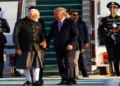
Prime Minister Narendra Modi’s visit to Israel in 2017, the first by an Indian prime minister, was a historic moment that signaled a new era in bilateral ties. Modi’s leadership has been instrumental in forging strong personal and diplomatic ties with Israeli Prime Minister Benjamin Netanyahu, reinforcing the strategic importance of this relationship.
While Iran has been a significant player in Bharat’s foreign policy, especially in terms of energy and regional politics, the relationship has evolved. Due to international sanctions and Bharat’s diversification of energy sources, Bharat’s oil imports from Iran have been reduced to just 2%. This means that, from a purely economic standpoint, Bharat’s dependency on Iran is minimal.
However, Iran remains a critical player in the regional security architecture, particularly concerning Pakistan and Afghanistan. Bharat’s engagement with Iran has focused on infrastructure projects like the Chabahar Port, which is a vital link for Bharatiya trade routes to Central Asia, bypassing Pakistan. Yet, Bharat’s primary focus must remain on safeguarding its territorial integrity and maintaining peace, regardless of regional shifts.
Pakistan, sharing a long border with Iran, would likely find itself in a complicated situation if full scale war breaks out between Iran and Israel. Historically, Pakistan has maintained close ties with Iran, yet its strong relationship with Saudi Arabia, a key adversary of Iran, complicates its position. Any instability in Iran could exacerbate tensions between Bharat and Pakistan, making it imperative for Bharat to tread cautiously while keeping a close eye on developments along its western front.
In the context of a potential Iran-Israel war, Bharat would need to prioritize securing its borders and maintaining regional stability. Given Pakistan’s proximity to Iran and its complex alliances in the region, Bharat would need to be vigilant to ensure no spillover of conflict affects its security, particularly in Kashmir and along the Line of Control.
In any international conflict, particularly a potential war between Iran and Israel, Bharat must remain steadfast in its commitment to “Rashtra Pratham” or “Nation First.” This principle ensures that Bharat’s foreign policy decisions are driven by its national interests, prioritizing the well-being, security, and sovereignty of the nation over any ideological, religious, or external influence. In a diverse country like Bharat, where the concept of Ummah—the global community of Muslims—is significant to certain sections of society, it is essential to reinforce that nationalism must always prevail over religious affiliations when it comes to foreign policy and the country’s broader strategic goals.
The notion of the Ummah, while deeply rooted in Islamic belief, should not and cannot override the broader principles of nationalism, especially in a country as pluralistic and democratic as Bharat. The global Muslim community may have strong emotional ties to issues involving Muslim-majority nations, but Bharat’s 1.4 billion people are bound together by their allegiance to the nation, not by religious identity alone. This means that while a segment of Bharat’s population may feel a cultural or religious affinity with Iran, for example, Bharat’s foreign policy cannot—and should not—be dictated by such sentiments. Instead, the collective interests of the entire nation must guide diplomatic and geopolitical decisions.
The Shia community in Bharat, for instance, may feel religious solidarity with Iran, but the government of Bharat’s stance must prioritize national unity, security, and Bharat’s long-term strategic interests. For the overwhelming majority of Bharatiya, their identity as citizens of Bharat should take precedence over religious or ideological affiliations. This has been the cornerstone of Bharat’s democratic and secular framework, which is designed to ensure that national interests are never subordinated to global religious movements.
Lessons from History: Nationalism Over Religious Solidarity
Throughout history, Bharat’s foreign policy has been shaped by pragmatic considerations, even when religious or cultural factors were at play. For instance, during the 1971 Bangladesh Liberation War, while Pakistan invoked the notion of religious solidarity, Bharat stood by its own strategic interests and moral imperatives, supporting the Bengali liberation movement despite Pakistan being a Muslim-majority nation. Bharat’s decision to support East Pakistan’s independence was driven by its commitment to regional stability, human rights, and the desire to weaken a hostile neighbor, not by religious considerations. This is a perfect illustration of how nationalism and humanitarianism prevailed over religious affiliations.
Similarly, Bharat’s decision to stay neutral during the Iran-Iraq War (1980-1988) despite the involvement of two Muslim-majority nations, was guided by its policy of non-alignment and its desire to maintain good relations with both countries. This pragmatic approach, prioritizing Bharat’s long-term geopolitical interests over sectarian or religious alignments, ensured that Bharat maintained stability and diplomatic leverage in the region.
Public Sentiments and Bharat’s Strategic Interests
Bharat’s close relationship with Israel is another example of how national interests have shaped foreign policy despite religious or ideological pressures. Israel has been one of Bharat’s most reliable partners in defense, counterterrorism, and technology, contributing significantly to Bharat’s security and development. While segments of Bharat’s population may protest Israel’s policies due to religious solidarity with the Palestinians or with nations like Iran, the MEA and GOI has remained committed to its partnership with Israel based on mutual strategic interests.
Public demonstrations in support of Iran in certain parts of Bharat, like Uttar Pradesh and Kashmir, highlight how global religious solidarity can sometimes clash with national interest. However, Bharat’s stance in the face of such demonstrations must remain unequivocal—Rashtra Pratham. Public sentiment cannot dictate foreign policy, especially when such sentiments are aligned with foreign religious or ideological causes rather than Bharat’s own national goals. The government must ensure that nationalism prevails over religious affiliation, reinforcing the message that Bharat’s sovereignty, security, and international standing come first.
The Importance of National Unity in Foreign Policy
In the event of an Iran-Israel conflict, GOI’s first responsibility is to protect its national unity. While there may be pockets of domestic support for Iran based on religious identity, the government must project a unified front and a clear policy of neutrality, driven by Bharat’s strategic goals. Any form of internal division or protests supporting Iran against Israel should be addressed firmly, with a reminder that Bharat is a secular state whose policies are dictated by national interests, not religious affiliations.
Prime Minister Narendra Modi’s leadership has often embodied this principle of nationalism and has effectively balanced Bharat’s relationship with diverse global powers, from Israel to Iran, without compromising on national interests. His “nation-first” policy has allowed Bharat to rise as a global player while maintaining a delicate balance in its foreign relations, demonstrating how pragmatism and nationalism are key to Bharat’s global diplomacy.
As the possibility of conflict looms between Iran and Israel, Bharat must approach the situation with a focus on “Rashtra Pratham”, ensuring that national interests, security, and regional stability remain the top priorities. Religious or ideological considerations—whether driven by the concept of the Ummah or regional sympathies—should never overshadow the broader imperative of safeguarding Bharat’s strategic position. Bharat’s public must also be reminded that patriotism transcends religious affiliations, and that the government’s primary duty is to ensure the safety, stability, and prosperity of its citizens, regardless of global religious or political dynamics.
In this complex global scenario, Bharat must walk a fine line, balancing its alliances, securing its borders, and projecting its national interests above all else. By adhering to the principle of Rashtra Pratham, Bharat can navigate these challenges while reinforcing its stature as a responsible global power.