Twenty Years vs One Year: The US and Israel’s war on terror
June 6, 2026
  • Read Ecopy
  • Circulation
  • Advertise
  • Careers
  • About Us
  • Contact Us
Android AppiPhone AppArattai
Organiser
  • ‌
  • Bharat
    • Assam
    • Bihar
    • Chhattisgarh
    • Jharkhand
    • Maharashtra
    • View All States
  • World
    • Asia
    • Europe
    • North America
    • South America
    • Africa
    • Australia
  • Editorial
  • International
  • Opinion
  • RSS @ 100
  • More
    • Op Sindoor
    • Analysis
    • Sports
    • Defence
    • Politics
    • Business
    • Economy
    • Culture
    • Special Report
    • Sci & Tech
    • Entertainment
    • G20
    • Azadi Ka Amrit Mahotsav
    • Vocal4Local
    • Web Stories
    • Education
    • Employment
    • Books
    • Interviews
    • Travel
    • Law
    • Health
    • Obituary
  • Subscribe
    • Subscribe Print Edition
    • Subscribe Ecopy
    • Read Ecopy
  • ‌
  • Bharat
    • Assam
    • Bihar
    • Chhattisgarh
    • Jharkhand
    • Maharashtra
    • View All States
  • World
    • Asia
    • Europe
    • North America
    • South America
    • Africa
    • Australia
  • Editorial
  • International
  • Opinion
  • RSS @ 100
  • More
    • Op Sindoor
    • Analysis
    • Sports
    • Defence
    • Politics
    • Business
    • Economy
    • Culture
    • Special Report
    • Sci & Tech
    • Entertainment
    • G20
    • Azadi Ka Amrit Mahotsav
    • Vocal4Local
    • Web Stories
    • Education
    • Employment
    • Books
    • Interviews
    • Travel
    • Law
    • Health
    • Obituary
  • Subscribe
    • Subscribe Print Edition
    • Subscribe Ecopy
    • Read Ecopy
Organiser
  • Home
  • Bharat
  • World
  • Operation Sindoor
  • Editorial
  • Analysis
  • Opinion
  • Culture
  • Defence
  • International Edition
  • RSS @ 100
  • Magazine
  • Read Ecopy
Home International Edition America USA

Twenty Years vs One Year: The US and Israel’s war on terror

A comparison between America's prolonged military engagement in Afghanistan and Israel's rapid, focused retaliation to the Hamas and Hezbollah attacks on October 7, 2023, highlights critical differences in strategy and effectiveness. This contrast underscores the complexity of long-term military interventions versus decisive, focused responses aimed at neutralising immediate threats

Kunti SurenderKunti Surender
Sep 30, 2024, 10:00 pm IST
in USA, World, West Asia, Opinion, International Edition
Follow on Google News
Representative Image

Representative Image

FacebookTwitterWhatsAppTelegramEmail

The global “War on Terror” launched after the September 11 attacks on the United States reshaped international geopolitics, but the results were far from what Washington had initially envisioned. Comparing America’s two-decade-long engagement in Afghanistan with Israel’s decisive and brutal response to the Hamas and Hezbollah attacks of October 7, 2023, reveals striking contrasts in strategy, focus, and outcome. These differences raise critical questions about the effectiveness of long-term military engagement versus rapid, target-driven military responses.

America’s Extended War on Terror: Missteps and Miscalculations

The 9/11 attacks prompted the U.S. to embark on a massive, global “War on Terror” with Afghanistan as its primary battleground. At first, the goal seemed clear: dismantle Al-Qaeda and remove the Taliban from power. However, as time progressed, the mission became convoluted, evolving into a nation-building exercise with no clear exit strategy. Trillions of dollars were spent, and tens of thousands of lives were lost, including both U.S. personnel and Afghan civilians. The U.S. presence in Afghanistan lingered for two decades, with the constant strain of managing local tribal dynamics, corruption, and resistance from the Taliban.

While the U.S. could claim some initial successes, like killing Osama bin Laden in 2011, the broader mission faltered. Despite overwhelming military superiority, the Taliban’s resilience proved that America’s strategy lacked the focused clarity necessary to truly end the conflict. The final blow to the U.S.’s efforts came in 2021 when, after years of fighting, it hastily withdrew from Afghanistan, only to see the Taliban reclaim the country, effectively handing Afghanistan back to the very group it sought to eliminate. The entire episode now stands as a stark reminder of the ill effects of extending military occupations, where bureaucratic inertia, diplomatic concerns, and humanitarian objectives dilute the effectiveness of warfare.

Israel’s Decisive Response: Precision Over Protraction

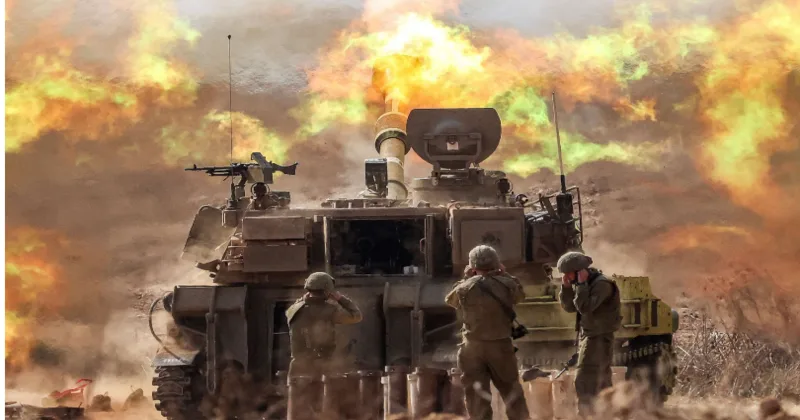
In stark contrast, Israel’s handling of the Hamas and Hezbollah attacks on October 7, 2023, showcases a sharply different approach. While America waged its War on Terror for 20 years, Israel acted within a year, systematically hunting down and killing the attackers. Unlike the U.S., Israel did not engage in the luxury of prolonged diplomacy or the pursuit of abstract nation-building. Israel’s goal was singular and unequivocal: neutralize the threat and dismantle the network. With an almost laser-sharp focus, Israel responded swiftly and brutally, prioritising its security above all else.

Israel has historically been well aware of the necessity to act swiftly against terror. Its adversaries—whether Hamas, Hezbollah, or other regional factions—have consistently sought its destruction. In such a volatile region, the luxury of time does not exist. Prolonged warfare could easily embolden other adversaries or create space for global powers to meddle. Therefore, instead of spreading its efforts across decades and vast sums of money, Israel struck hard and fast, eliminating its targets while minimizing prolonged exposure to external pressures.

Israel’s decisiveness can be traced to its consistent approach to terrorism, rooted in survival. Unlike the U.S., which viewed the War on Terror as a global campaign with multifaceted objectives, Israel’s strategy is clear and immediate: survival through deterrence and elimination. By eradicating the leadership and operational capabilities of Hamas and Hezbollah, Israel sent an unmistakable message that attacks on its soil will not result in a two-decade occupation, but rather immediate retaliation and obliteration.

Cost-Benefit Comparison: Dollars, Lives, and Legacy

The American War on Terror cost the U.S. over $2 trillion and resulted in nearly 2,500 military deaths in Afghanistan alone. Furthermore, the extended engagement drained U.S. resources, affected its standing in the global community, and led to questions about its strategic judgment. After two decades of war, Afghanistan is back under Taliban control, and terrorism remains an ongoing threat.

On the other hand, Israel’s war on terror, as seen in its response to the 2023 Hamas-Hezbollah attacks, was far less costly in both financial and human terms. The reason is simple: Israel avoids getting bogged down in drawn-out military engagements. By acting swiftly and decisively, Israel prevents prolonged occupations, saves resources, and ensures that its enemies are left weakened and fragmented.

Israel successfully dismantled the Hamas network, eliminating its leader Ismail Haniyeh, and also took down nearly all the top leadership of Hezbollah, including its chief, Hassan Nasrallah.

Moreover, while America’s extended War on Terror became a fertile ground for the military-industrial complex, humanitarian aid agendas, and political posturing, Israel’s war efforts are tightly focused. The U.S. approach often conflated military objectives with nation-building, diplomacy, and international development. Israel, on the other hand, keeps its objectives unambiguous: survival and security.

In comparing the two wars on terror, it becomes evident that Israel’s focused, clear-headed approach delivered more tangible results in a fraction of the time. The U.S., by contrast, became mired in complexities, resulting in vast financial and human costs with little to show for it. The lesson is clear: when waging war, clarity of purpose and decisiveness in action are paramount. Dragging conflicts out under the guise of diplomacy, humanitarianism, or geopolitics only weakens the original objective, leaving behind a quagmire of missed opportunities and unfulfilled goals. Israel, with its unyielding focus on eliminating the enemy, proves that in warfare, less is often more.


Topics: Osama bin Laden in 20119/11 attackIsrael
Share1TweetSendShareSend
✮ Subscribe Organiser YouTube Channel. ✮
✮ Join Organiser's WhatsApp channel for Nationalist views beyond the news. ✮
Previous News

J&K Elections 2024: Congress party’s policies hurt its allies more than its opponents

Next News

Bihar: Security forces avert major tragedy, recover 50 presuure and cane IEDs in Madanpur of Aurangabad

Related News

Israel Prime Minister Benjamin Netanyahu and Prime Minister Narendra Modi(File Photo)

PM Netanyahu & Israel’s Bonhomie with India: The discomfort of Congress as Bharat-Israel bond deepens

Clash of Narratives: Cultural dimensions of the Israel–Iran rivalry

Missile streaks over Gulf skies as Israel’s Iron Dome shields UAE, signalling a sharp realignment in West Asia’s power balance

Israel Shields UAE with Iron Dome: A strategic pivot amid Iran war as the Saudi-Pakistan axis splits the Arab world

India’s Heart Beats for Israel: The UN’s ‘Torture and Genocide’ report is baseless

The chronicle of a failure foretold: Why Iran-US peace talks were unlikely to succeed even before they began

India welcomes Israel-Lebanon ceaefire

India welcomes every step towards peace and regional stability: MEA on Israel-Lebanon ceasefire

Load More

Latest News

Union Home Minister Amit Shah addressing BSF personnel at the Lankamura Border Outpost along the India-Bangladesh border in West Tripura district on June 5, 2026

Amit Shah at Bangladesh Border: “India will have an impregnable security grid soon”

India slams Pakistan’s bid to hold elections in Gilgit-Baltistan, demands end to illegal occupation

Maharashtra government approves central wage structure for Pune Metro Contract Workers; Major victory for BMS

India seals robust 7.7% GDP Growth in FY26: Reflects economic resilience amid West Asia crisis & other global headwinds

A representative image

After TCS, Corporate Jihad allegations reach SBI: Married Hindu employee conversion claims trigger FIR in Mumbai

MEA spokesperson Randhir Jaiswal highlights India's resolve to deport illegal Bangladeshi migrants via bilateral mechanisms

India reiterates strong resolve to deport illegal Bangladeshis; Flags delay of bilateral procedures from Dhaka

Kerala HC rejects CMRL appeal, clears way for ED probe against Pinarayi Vijayan’s daughter in money laundering case

Uttar Pradesh leads in Bharat's green transformation

World Environment Day 2026: On his birthday, Yogi Adityanath’s green vision powers Uttar Pradesh’s transformation

As Khalistani networks seek new platforms beyond the West, Azerbaijan has emerged as a key venue for conferences, campaigns and narratives aligned with the Pakistan-Turkey axis against India.

Khalistan’s New Grazing Ground: Azerbaijan emerges as new hub for Turkey-Pakistan backed anti-India networks

Kochi IPL Mystery: Why Did Sunanda Pushkar Surrender Stake Amid Benami Claims Tied to Shashi Tharoor, Sonia Gandhi?

Kochi IPL Mystery: Why Did Sunanda Pushkar Surrender Stake Amid Benami Claims Tied to Shashi Tharoor, Sonia Gandhi?

Load More
  • Privacy
  • Terms
  • Cookie Policy
  • Refund and Cancellation
  • Delivery and Shipping

© Bharat Prakashan (Delhi) Limited.
Tech-enabled by Ananthapuri Technologies

  • Home
  • Search Organiser
  • Bharat
    • Assam
    • Bihar
    • Chhattisgarh
    • Jharkhand
    • Maharashtra
    • View All States
  • World
    • Asia
    • Africa
    • North America
    • South America
    • Europe
    • Australia
  • Editorial
  • Operation Sindoor
  • Opinion
  • Analysis
  • Defence
  • Culture
  • Sports
  • Business
  • RSS @ 100
  • Entertainment
  • More ..
    • Sci & Tech
    • Vocal4Local
    • Special Report
    • Education
    • Employment
    • Books
    • Interviews
    • Travel
    • Health
    • Politics
    • Law
    • Economy
    • Obituary
  • Subscribe Magazine
  • Read Ecopy
  • Advertise
  • Circulation
  • Careers
  • About Us
  • Contact Us
  • Policies & Terms
    • Privacy Policy
    • Cookie Policy
    • Refund and Cancellation
    • Terms of Use

© Bharat Prakashan (Delhi) Limited.
Tech-enabled by Ananthapuri Technologies