As a one-time native of India’s remote North East, a few impressions that are still very fresh in my mental database, even after two decades of living in metropolitan India, like for instance – those endless stretches of tea gardens in Assam, the world famous Kaziranga National Park, exotic tribals dressed in all their finery, ancient Buddhist Monasteries/Gompas perched on hilltops, high mountain passes and what have you…..triggers in me a ripple effect in terms of immersive tourism. And why not?
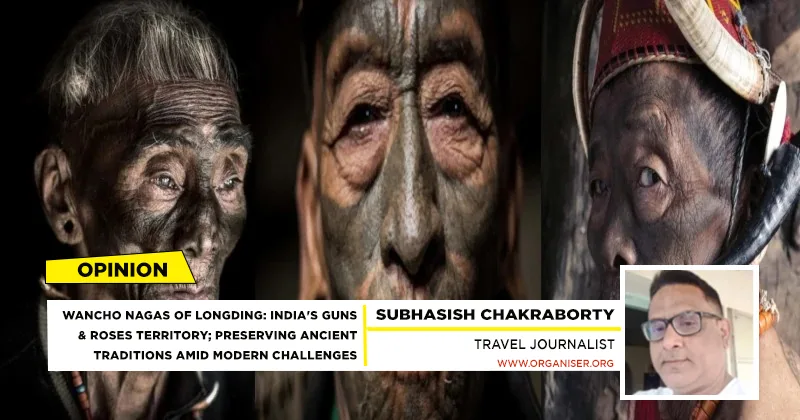
How about going on a rendezvous with the last gun makers of India – The fearsome Wanchos? Live amid tribals practising “Animism”, who are experts in hunting, flaunt earrings made out of Deer antler, use “Mithun/Bos frontalis” skin as bulletproof guard, embed goat hairs on hats, where facial Tattooing is a norm and worship of Mother Nature is de rigueur! Sounds incredible, ain’t it?
With the spectre of COVID-19 still looming large, the propensity to indulge in vacations to Eco-friendly destinations, Carbon Neutral and offer an experience that is every bit transformational in terms of culture is what drives a huge percentage of today’s contemporary travelers. There has never been a better time to cosset with “Indigenous Tourism” and India’s North East being the world’s Anthropology Capital – 150+ tribes that accounts for 12 per cent of the nation’s total tribal population, is the “New Kid In Town”.
Ever heard of Longding? Probably not. It is remote and tucked away nicely in one corner of India’s North East, literally at the edge of Myanmar to the East. No five-star hotels/resorts, roads are bumpy, wayside amenities are at best sketchy; population is sparse, with just about 56,000 people residing in an area of approximately 1192 sq.Kms.
A lot has happened since my Dad was once posted as an Agronomist by the Govt. of Assam in India’s tea town of Dibrugarh, just a 3.5-hour drive to Longding. And Oh God! Those childhood jaunts to Longding in the company of my parents – staying in double-storied British-era Dak Bungalows, going on soft treks, catching those elusive butterflies and Yeah! Those desperate dashes to be in my mother’s protective lap at first sight of the fearsome and scantily clad Wancho men are straight out of a fairytale fable.
Fairytale stuff indeed, but Longding is for real. This place exudes raw energy – the bastion of the fearsome Wancho Nagas. In the days of yore, this warrior tribe fought pitched battles with the marauding British soldiers and is believed to have slaughtered close to 500 British soldiers at one go. Legend has it that to tame these ferocious Wancho fighters; the British introduced Opium to calm down their nerves, a practice still followed by the tribal Wanchos.
Longding is India’s very own “Guns & Roses” country, and both gun making and the use of Opium are perfectly legal. Film Director Avlok Langer was so moved by the distinctive lifestyle of the Wanchos that he decided to make a film – “The Last Gun Maker of Longding”, which rather authoritatively depicts the fascinating lifestyle of the Wancho Nagas, their beliefs in animism and their century’s old gun making tradition.
Although, of late, the Govt. of India has been encouraging civilians and tourists to visit border regions and thereby demystify certain political myths, it isn’t all that easy to visit Longding. Foreigners and Indian visitors must obtain an Inner Line Permit (ILP) from the Govt. of Arunachal Pradesh.
From my own experience of growing up in India’s North East, I believe that the reason behind obtaining such Permits is that they are more precautionary than anything else. It is aimed at eradicating the menace of terrorists seeking shelter in safe havens like Longding.
With the gradual influx of modern civilization, the Wanchos, too, have changed and culturally adapted to be more acceptable. There was a time when the Wancho society was engrossed in abnormal superstitious beliefs and rituals like head hunting brought more curse than anything else. However, the good thing about contemporary Wanchos is their abiding faith in the tested tradition of Chieftainship, wherein the “Wangam” or King works in close cooperation with several Village Elders referred to as “Wangsu” and “Wangsa” to deliver a peaceful village life.
The stellar role that ancient Dormitory systems, which in the local parlance is referred to as “Murung”, where young boys are educated and trained to be future citizens by upholding the community values as well as belief systems that are taught them in these Dormitories, has been an enigma for visitors!
Apart from gun making, another characteristic feature of the Wancho tribe is their unique blend of Tattooing, passed on from generation to generation. A trademark feature of an adult Wancho man is their tattoos on limbs. They also indulge in facial tattoos, leaving only the lips tattoo-free! Wancho women, on the other hand, are more at ease with their unique brand of jewellery designs, and the necklaces, in particular, are divine.
However, it is not all “Boom Boom” in Longding as the Wanchos have a softer side too! By far, the best time to visit Longding would be in the March-April period, coinciding with the festival of Oriah. Check up with the Dept. of Tourism – www.arunachaltourism.com for exact festival dates.
This one-week festival brings out the very best of the Wancho Naga spirit– Pork skin offerings to the village chieftain, ceremonial sowing of paddy, Buffalo offerings to appease the gods (Jowan), feasting in the “Mornings” accompanied by celestial tribal dancing. Visitors from outside are treated royally, and offering Rice Beer (Ju) in specially crafted Bamboo glasses is always inviting.
In local parlance, the village council – Ngo-Wang, makes the first official announcement of the festival date and, after that, the division of labour, with men folks taking charge of marketing. At the same time, the women do all the decoration work at the main festival venue.
The quintessential facet of this one-of-a-kind tribal festival is assembling the holiest podium –”Zangvaan”- crafted meticulously with bamboos with seven distinctive branches. This holy zone where the “Zangvaan” is erected is ceremonially sanctified by a saintly man of the community and the Wanchos have this traditional belief that all prayers for peace, prosperity and a good harvest reach out to the ultimate God or “Juwan” through the “Zangvaan”.
As a mark of respect, the wizened elderly Wanchos aren’t given menial tasks. They find fulfilment in supervising the festival from their raised wood & bamboo makeshift pavilion. It indeed is such an empowering sight to see them engrossed in deep contemplation of the divine (Juwan) with the primary motive of securing the village’s wellbeing and a bumper harvest.
Wancho Nagas are endangered, and their unique tribal folklore is on the verge of extinction. Only a few years back, the Wanchos got their official script, and a native author named Losu published the first book in Wancho language.
On my last trip to Longding a year back, with the pandemic playing havoc, I witnessed a silent revolution, away from the humdrum of contemporary life. On one of my late afternoon soft treks around the town, my eyes fell on a small hut, and further inquiries, I found that it was some kind of institution.
Well then, once inside the hut, I engaged myself in an elaborate conversation with an elderly Wancho who looks after this one-of-a-kind Folk Art Institute run and administered by a UK-based Folklore researcher – Tara Douglas, who, through her path-breaking project – ‘Stories of Our Ancestors’ is attempting to document and conserve the rich folklore, tradition and art forms of the Wancho tribe through animation to showcase the rich tribal heritage of the Wanchos to the world.
Tara’s efforts to revive, preserve and promote the fast-vanishing indigenous tribal heritage of India’s North East is beginning to pay rich dividends, and her ambitious project is funded by North Eastern Hill University in Shillong – the capital of Meghalaya.
Tara herself best sums up the vicissitudes of North East tribal people – “There are so many different tribal communities in the Northeast India and they all have fascinating stories that have been passed down from generation to generation. Some of these are creation myths; others are vivid historical accounts of conflict over land and habitat. People from outside don’t know about them, and even the younger generations in the villages are losing touch with their oral heritage. We are planning to work together to interpret this material into a contemporary presentation so that audiences worldwide will see the wisdom that they have in these village communities”.
It is absurd to think that the Government alone can fulfil the task of tribal heritage preservation. The need of the hour is to have many more Tara Douglas if we are to come anywhere near to preserving the fast-disappearing tribal folklore and art from India’s North East.
Tribal chieftains of India’s North East still have enormous clout and their decisions for the overall collective wellbeing of the tribe they represent does receive acknowledgement from the masses. It is time for Anthropologists to shed some light on the “Cultural Balance” – how much of the Western lifestyle is adequate for tribals to assimilate, so that they do not lose their own ancient culture and heritage.