Researchers discover new metric for diagnosing autism
June 4, 2026
  • Read Ecopy
  • Circulation
  • Advertise
  • Careers
  • About Us
  • Contact Us
Android AppiPhone AppArattai
Organiser
  • ‌
  • Bharat
    • Assam
    • Bihar
    • Chhattisgarh
    • Jharkhand
    • Maharashtra
    • View All States
  • World
    • Asia
    • Europe
    • North America
    • South America
    • Africa
    • Australia
  • Editorial
  • International
  • Opinion
  • RSS @ 100
  • More
    • Op Sindoor
    • Analysis
    • Sports
    • Defence
    • Politics
    • Business
    • Economy
    • Culture
    • Special Report
    • Sci & Tech
    • Entertainment
    • G20
    • Azadi Ka Amrit Mahotsav
    • Vocal4Local
    • Web Stories
    • Education
    • Employment
    • Books
    • Interviews
    • Travel
    • Law
    • Health
    • Obituary
  • Subscribe
    • Subscribe Print Edition
    • Subscribe Ecopy
    • Read Ecopy
  • ‌
  • Bharat
    • Assam
    • Bihar
    • Chhattisgarh
    • Jharkhand
    • Maharashtra
    • View All States
  • World
    • Asia
    • Europe
    • North America
    • South America
    • Africa
    • Australia
  • Editorial
  • International
  • Opinion
  • RSS @ 100
  • More
    • Op Sindoor
    • Analysis
    • Sports
    • Defence
    • Politics
    • Business
    • Economy
    • Culture
    • Special Report
    • Sci & Tech
    • Entertainment
    • G20
    • Azadi Ka Amrit Mahotsav
    • Vocal4Local
    • Web Stories
    • Education
    • Employment
    • Books
    • Interviews
    • Travel
    • Law
    • Health
    • Obituary
  • Subscribe
    • Subscribe Print Edition
    • Subscribe Ecopy
    • Read Ecopy
Organiser
  • Home
  • Bharat
  • World
  • Operation Sindoor
  • Editorial
  • Analysis
  • Opinion
  • Culture
  • Defence
  • International Edition
  • RSS @ 100
  • Magazine
  • Read Ecopy
Home World

Researchers discover new metric for diagnosing autism

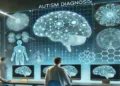
In a significant breakthrough, researchers have unveiled a novel metric for diagnosing autism, offering potential advancements in understanding and identifying the disorder. This discovery marks a promising step forward in autism research, potentially leading to more accurate diagnoses and tailored interventions for individuals on the autism spectrum

WEBDESKWEBDESK
Apr 20, 2024, 11:00 pm IST
in World, Health
Follow on Google News
Representative image

Representative image

FacebookTwitterWhatsAppTelegramEmail

Autism spectrum disease has yet to be attributed to a single cause due to its vast range of symptoms and severity. However, a study conducted by University of Virginia researchers reveals a promising new strategy for obtaining answers, which could lead to breakthroughs in the study of other neurological diseases and disorders.

Current autism research focuses on observing and understanding the disorder through the study of its behavioural consequences, using techniques such as functional magnetic resonance imaging to map the brain’s responses to input and activity, but little research has been done to determine what causes those responses.

However, researchers with UVA’s College and Graduate School of Arts & Sciences have been able to better understand the physiological differences between the brain structures of autistic and non-autistic individuals through the use of Diffusion MRI, a technique that measures molecular diffusion in biological tissue, to observe how water moves throughout the brain and interacts with cellular membranes. The approach has helped the UVA team develop mathematical models of brain microstructures that have helped identify structural differences in the brains of those with autism and those without.

“It hasn’t been well understood what those differences might be,” said Benjamin Newman, a postdoctoral researcher with UVA’s Department of Psychology, a recent graduate of UVA School of Medicine’s neuroscience graduate program and lead author of a paper published this month in PLOS: One. “This new approach looks at the neuronal differences contributing to the etiology of autism spectrum disorder.”

Building on the work of Alan Hodgkin and Andrew Huxley, who won the 1963 Nobel Prize in Medicine for describing the electrochemical conductivity characteristics of neurons, Newman and his co-authors applied those concepts to understand how that conductivity differs in those with autism and those without, using the latest neuroimaging data and computational methodologies. The result is a first-of-its-kind approach to calculating the conductivity of neural axons and their capacity to carry information through the brain. The study also offers evidence that those microstructural differences are directly related to participants’ scores on the Social Communication Questionnaire, a common clinical tool for diagnosing autism.

“What we’re seeing is that there’s a difference in the diameter of the microstructural components in the brains of autistic people that can cause them to conduct electricity slower,” Newman said. “It’s the structure that constrains how the function of the brain works.”

One of Newman’s co-authors, John Darrell Van Horn, a professor of psychology and data science at UVA, said, that so often we try to understand autism through a collection of behavioral patterns which might be unusual or seem different.

“But understanding those behaviors can be a bit subjective, depending on who’s doing the observing,” Van Horn said. “We need greater fidelity in terms of the physiological metrics that we have so that we can better understand where those behaviors coming from. This is the first time this kind of metric has been applied in a clinical population, and it sheds some interesting light on the origins of ASD.”

Van Horn said there’s been a lot of work done with functional magnetic resonance imaging, looking at blood oxygen related signal changes in autistic individuals, but this research, he said “Goes a little bit deeper.”

“It’s asking not if there’s a particular cognitive functional activation difference; it’s asking how the brain actually conducts information around itself through these dynamic networks,” Van Horn said. “And I think that we’ve been successful showing that there’s something that’s uniquely different about autistic-spectrum-disorder-diagnosed individuals relative to otherwise typically developing control subjects.”

Newman and Van Horn, along with co-authors Jason Druzgal and Kevin Pelphrey from the UVA School of Medicine, are affiliated with the National Institute of Health’s Autism Center of Excellence (ACE), an initiative that supports large-scale multidisciplinary and multi-institutional studies on ASD with the aim of determining the disorder’s causes and potential treatments.

According to Pelphrey, a neuroscientist and expert on brain development and the study’s principal investigator, the overarching aim of the ACE project is to lead the way in developing a precision medicine approach to autism.

“This study provides the foundation for a biological target to measure treatment response and allows us to identify avenues for future treatments to be developed,” he said.

Van Horn added that the study may also have implications for the examination, diagnosis, and treatment of other neurological disorders like Parkinson’s and Alzheimer’s.

“This is a new tool for measuring the properties of neurons which we are particularly excited about. We are still exploring what we might be able to detect with it,” Van Horn said.

(with inputs from ANI)


Topics: Autism researchAutismNeurological disordersAutism spectrum disorders
ShareTweetSendShareSend
✮ Subscribe Organiser YouTube Channel. ✮
✮ Join Organiser's WhatsApp channel for Nationalist views beyond the news. ✮
Previous News

Lok Sabha Elections 2024: In Tamil Nadu’s electoral landscape, independents fail to make their mark again

Next News

Kerala: Controversy mars Thrissur Pooram festival; police wear boots and enter temple premises, violating traditions

Related News

Representative image

Repetitive behaviours, special interests are indicative of autism diagnosis rather than social skills: Study

Representative image

Researchers discover new type of Brain cells that allow you to remember objects

Representative image

IIT Madras Launches DHARINI: The world’s most detailed 3D map of fetal brain development

Representative image

Study finds early sensorimotor markers for autism spectrum disorder

Representative Image

Diagnosis of parents with mental issues prevents genetic morphing of psychiatric disorders to children: Study

Fibromyalgia related to increased chances of death: Study

Load More

Latest News

Operation Delta Hunt: Gujarat Police arrests 362 illegal Bangladeshis, investigates wider network

Operation Delta Hunt: Gujarat Police arrest 362 illegal Bangladeshi nationals during thes crackdown 72-hour

Bangladesh’s reported JF-17 push has triggered fresh scrutiny after India’s Ops Sindoor exposed the vulnerabilities of Pakistani-Chinese defence systems and precision strike capabilities

Shadows of Operation Sindoor: Questions loom over Bangladesh’s JF-17 ambitions amid Sino-Pakistani tech vulnerabilities

B. Nagendra, Congress MLA and former minister in Karnataka

Karnataka: CBI files chargesheets against Nagendra, Congress leader, ex-minister, 29 others in Valmiki Corporation scam

Representative Image (This is an AI generated image)

From Class 10 to Ayurvedic Doctor: Central Sanskrit University unveils new pathway to BAMS

Heera Group founder Nowhera Shaik (File Photo)

Telangana: ED arrests Nowhera Shaik’s aide in Heera Group Sharia-compliant Rs 3000 Cr investment scam

Governor of Karnataka Thaawarchand Gehlot administered the Oath of Office and Secrecy to Chief Minister D.K. Shivakumar on June 3, 2026

DK Shivakumar takes oath as Karnataka CM, invokes Ajjayya in ceremony

TMC Leader Abhishek Banerjee attacked in Sonarpur

The Judgement Beyond the Ballot: Bengal’s Sonarpur, political memory, and accountability

Change of Guard in Punjab BJP: Challenges, opportunities and the road ahead

Sacrilege, state interference and the Sikh question in Punjab

After Schools, Vande Mataram Must For West Bengal Madarsas

West Bengal Madrasas Sing Vande Mataram: 1,600 madrasas comply with state govt order despite opposition criticism

Load More
  • Privacy
  • Terms
  • Cookie Policy
  • Refund and Cancellation
  • Delivery and Shipping

© Bharat Prakashan (Delhi) Limited.
Tech-enabled by Ananthapuri Technologies

  • Home
  • Search Organiser
  • Bharat
    • Assam
    • Bihar
    • Chhattisgarh
    • Jharkhand
    • Maharashtra
    • View All States
  • World
    • Asia
    • Africa
    • North America
    • South America
    • Europe
    • Australia
  • Editorial
  • Operation Sindoor
  • Opinion
  • Analysis
  • Defence
  • Culture
  • Sports
  • Business
  • RSS @ 100
  • Entertainment
  • More ..
    • Sci & Tech
    • Vocal4Local
    • Special Report
    • Education
    • Employment
    • Books
    • Interviews
    • Travel
    • Health
    • Politics
    • Law
    • Economy
    • Obituary
  • Subscribe Magazine
  • Read Ecopy
  • Advertise
  • Circulation
  • Careers
  • About Us
  • Contact Us
  • Policies & Terms
    • Privacy Policy
    • Cookie Policy
    • Refund and Cancellation
    • Terms of Use

© Bharat Prakashan (Delhi) Limited.
Tech-enabled by Ananthapuri Technologies