WHO urges member states to continue with 'strong surveillance' amid rising respiratory diseases, JN.1 subvariant
June 8, 2026
  • Read Ecopy
  • Circulation
  • Advertise
  • Careers
  • About Us
  • Contact Us
Android AppiPhone AppArattai
Organiser
  • ‌
  • Bharat
    • Assam
    • Bihar
    • Chhattisgarh
    • Jharkhand
    • Maharashtra
    • View All States
  • World
    • Asia
    • Europe
    • North America
    • South America
    • Africa
    • Australia
  • Editorial
  • International
  • Opinion
  • RSS @ 100
  • More
    • Op Sindoor
    • Analysis
    • Sports
    • Defence
    • Politics
    • Business
    • Economy
    • Culture
    • Special Report
    • Sci & Tech
    • Entertainment
    • G20
    • Azadi Ka Amrit Mahotsav
    • Vocal4Local
    • Web Stories
    • Education
    • Employment
    • Books
    • Interviews
    • Travel
    • Law
    • Health
    • Obituary
  • Subscribe
    • Subscribe Print Edition
    • Subscribe Ecopy
    • Read Ecopy
  • ‌
  • Bharat
    • Assam
    • Bihar
    • Chhattisgarh
    • Jharkhand
    • Maharashtra
    • View All States
  • World
    • Asia
    • Europe
    • North America
    • South America
    • Africa
    • Australia
  • Editorial
  • International
  • Opinion
  • RSS @ 100
  • More
    • Op Sindoor
    • Analysis
    • Sports
    • Defence
    • Politics
    • Business
    • Economy
    • Culture
    • Special Report
    • Sci & Tech
    • Entertainment
    • G20
    • Azadi Ka Amrit Mahotsav
    • Vocal4Local
    • Web Stories
    • Education
    • Employment
    • Books
    • Interviews
    • Travel
    • Law
    • Health
    • Obituary
  • Subscribe
    • Subscribe Print Edition
    • Subscribe Ecopy
    • Read Ecopy
Organiser
  • Home
  • Bharat
  • World
  • Operation Sindoor
  • Editorial
  • Analysis
  • Opinion
  • Culture
  • Defence
  • International Edition
  • RSS @ 100
  • Magazine
  • Read Ecopy
Home World

WHO urges member states to continue with ‘strong surveillance’ amid rising respiratory diseases, JN.1 subvariant

As respiratory diseases surge and the emergence of the new JN.1 COVID subvariant unfolds, the World Health Organisation (WHO) emphasised the evolving nature of the virus

WEBDESKWEBDESK
Dec 18, 2023, 11:00 pm IST
in World, Health
Follow on Google News
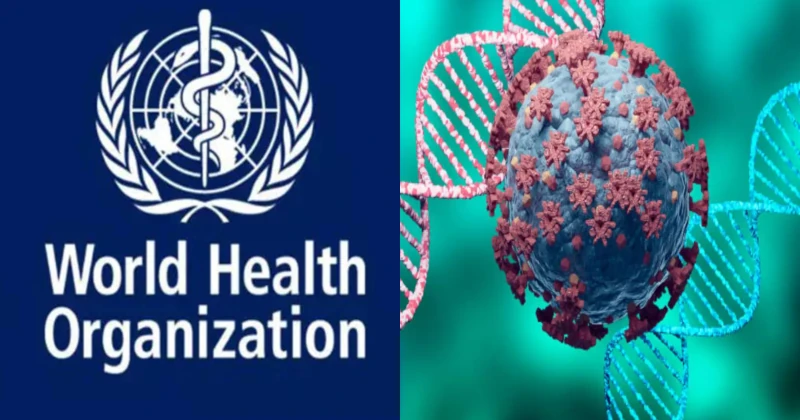
Representative Image

Representative Image

FacebookTwitterWhatsAppTelegramEmail

In the wake of the surge in respiratory diseases and new JN.1 COVID sub-variant, the World Health Organisation (WHO) said that the virus is evolving and changing and urged the member states to continue with strong surveillance and sequence sharing.

The global body also shared a video of its COVID-19 technical lead, Maria Van Kerkhove, who explained the reason for the recent surges and what precautions can be taken. “Dr @mvankerkhove talks about the current surge in respiratory diseases #COVID19 and JN.1 subvariant. WHO continues to assess the situation. Follow WHO’s public health advice to keep your families and friends safe during this holiday season,” WHO posted on X (formerly Twitter).

Dr @mvankerkhove talks about the current surge in respiratory diseases #COVID19 and JN.1 subvariant.

WHO continues to assess the situation. Follow WHO's public health advice to keep your families and friends safe during this holiday season. pic.twitter.com/HvAZVMMN49

— World Health Organization (WHO) (@WHO) December 17, 2023

Maria Van Kerkhove also took to the social media platform and said that a number of pathogens have led to the rise in respiratory diseases across the world.

“Respiratory diseases are increasing around the world due to a number of pathogens incl #COVID19, #flu, rhinovirus, mycoplasma pneumonia & others SARS-CoV-2 continues to evolve. JN.1 (subvariant of BA.2.86) is already a VOI and continues to increase in circulation,” she stated.

In the video message, Kerkhove said that the recent surge in respiratory infections is due to multiple reasons, including increased gatherings during the holiday season and other infections.

“It’s not just COVID-19 that’s circulating; we have influenza, other viruses, and bacteria. In other parts of the world, we are entering the winter months, and people are starting to gather for the holiday season. And as people gather, they spend more time indoors, especially if there is poor ventilation. These pathogens that spread efficiently between people and through the air will take advantage,” she said.

She further explained that the rise in COVID cases is because the virus is evolving, adding that 68 per cent of the current cases are cases of XBB sublineages and other groupings like JN.1.

“Covid-19 is one of the diseases that is currently on the rise, and this is again due to a number of factors; the virus SARS-Cov-2 is evolving, changing, and circulating in all countries,” Kerkhove said.

She added, “In some countries, we have these XBB sublineages, and they represent around 68 per cent or so of the sequences that are shared globally. The other grouping is BA.2.86, most notably JN.1 which causes the full spectrum, everything from asymptomatic infection. All the way to severe disease and death, similar to what we have seen with other Omicron sublineages.”

The WHO expert urged the member states to continue with strong surveillance and sequence sharing so that proper steps can be taken to “potentially modify” the advice for the world.

She also advised people to get vaccinations and, in cases of infection, take clinical care.

“Protect yourself from infection using a number of tools. But also make sure that if you get infected, you get clinical care and get vaccinated when it’s your turn to prevent severe disease and death. All COVID-19 vaccines continue to provide against severe disease and death, and this includes all the circulating variants, including JN.1,” Kerkhove said.

Meanwhile, the Union Ministry of Health has initiated preparedness measures after a case of the JN.1 subvariant of COVID was found in Kerala as part of the ongoing routine surveillance conducted by the Indian SARS-CoV-2 Genomics Consortium (INSACOG).

A mock drill is underway in health facilities across States, evaluating public health and hospital readiness. This exercise, overseen by district collectors, commenced on December 13 and is scheduled for completion by December 18, 2023.

While the majority of cases in Kerala are reported to be clinically mild, the health authorities emphasise the importance of ongoing vigilance and preparedness to effectively manage the evolving situation related to COVID-19 variants.

The India SARS-CoV-2 Genomics Consortium (INSACOG), a network of Genomic Laboratories, has been actively monitoring the genomic aspects of COVID-19 in India. The reported symptoms include fever, runny nose, sore throat, headache, and, in some cases, mild gastrointestinal symptoms. The health authorities highlight that most patients experience these mild upper respiratory symptoms, which typically improve within four to five days.

(with inputs from ANI)
Topics: WHORespiratory InfectionsCOVID subvariant
Share1TweetSendShareSend
✮ Subscribe Organiser YouTube Channel. ✮
✮ Join Organiser's WhatsApp channel for Nationalist views beyond the news. ✮
Previous News

Assam: CBI Chief Praveen Sood takes comprehensive review of Manipur violence cases

Next News

Tamil Nadu: Islamists attack Coimbatore Police Station in bid to free relative, raises concerns over law enforcement

Related News

Kochi International Airport

Keralam: Kochi strengthens Ebola surveillance after WHO global emergency alert

A boy inflicted by polio

Pakistan’s polio nightmare continues after fresh cases reappear despite massive vaccination campaign

NLEP making India Free from Leprosy by 2030

India National Strategic Plan 2023–2027, India leads global fight against leprosy with 98 per cent decline since 1981

WHO issued global alert against cough syrups made by Tamil Nadu based Sresan Pharma and two other Gujarati companies named Rednex Pharma and Shape Pharma

WHO issues alert against cough syrups made by Sresan, Rednex & Shape pharmaceutical companies after 25 infant deaths

Population-dependent alteration in urban airborne pathogenic bacterial community over Delhi: A comparative investigation between airborne bacterial communities over a high-populated region and a low-populated region within Delhi city, as shown in the above figure

Airborne Pathogens in Delhi: How political neglect turned pollution into a future national health emergency

Representative image

India cuts zero-dose children by 43 per cent as South Asia hits record-high children immunisation in 2024

Load More

Latest News

Pakistan Prime Minister Shehbaz Sharif face the brunt as Punjab draws excess water from Indus basin and Sindh suffers from scarcity

Pakistan: Indus water drifts to Punjab & erupts political rift; Acute crisis in Dadu canal & drought in Sindh

Cobra Commandos land in Manipur to curb insurgency and restore peace

CoBRA Commandos Deployed in Manipur: CRPF draws red line for insurgents, Promises decisive action

North 24 Parganas: A large crowd of Bangladeshis residing in West Bengal gathers at the Hakimpur border crossing in the Basirhat subdivision of North 24 Parganas district to cross over to Bangladesh

Unnatural Demographic Change: Hint that would create a heat

Odisha: RSS Sangh Shiksha Varg concludes in Sambalpur; Dr. Mahapatra cites century-long effort to unite hindu society

‘TMC Will Not Survive’: Sukhendu Sekhar Ray Warns of Bigger Revolt as Bengal Rebellion Threatens to Reach Parliament

‘TMC will not survive’: MP Sukhendu Sekhar Ray warns MLA revolt could soon engulf parliament

Former Chief Minister Siddaramaiah and his wife Parvathi is accused in MUDA site allotment case

Karnataka: Congress govt under fire over Yathindra’s appointment amid pending MUDA-linked controversy

High Level Committee on Demographic Change: Fructification of sustained efforts

Gaurdian Journalist Hannah Ellis-Petersen covering the protest of the Cockroach Janata Party(CJP)

Guardian Journalist Ellis-Petersen amplifies Cockroach Party protest: Exposing anti-India propaganda of western media

A large crowd of Bangladeshis residing in West Bengal gathers at the Hakimpur border crossing in the Basirhat subdivision of North 24 Parganas district to cross over to Bangladesh

Unnatural Demographic Change: Securing Bharat against the silent invasion

Prime Minister Narendra Modi

BJP’s Victory with Vision: An idea of India that is Indian

Load More
  • Privacy
  • Terms
  • Cookie Policy
  • Refund and Cancellation
  • Delivery and Shipping

© Bharat Prakashan (Delhi) Limited.
Tech-enabled by Ananthapuri Technologies

  • Home
  • Search Organiser
  • Bharat
    • Assam
    • Bihar
    • Chhattisgarh
    • Jharkhand
    • Maharashtra
    • View All States
  • World
    • Asia
    • Africa
    • North America
    • South America
    • Europe
    • Australia
  • Editorial
  • Operation Sindoor
  • Opinion
  • Analysis
  • Defence
  • Culture
  • Sports
  • Business
  • RSS @ 100
  • Entertainment
  • More ..
    • Sci & Tech
    • Vocal4Local
    • Special Report
    • Education
    • Employment
    • Books
    • Interviews
    • Travel
    • Health
    • Politics
    • Law
    • Economy
    • Obituary
  • Subscribe Magazine
  • Read Ecopy
  • Advertise
  • Circulation
  • Careers
  • About Us
  • Contact Us
  • Policies & Terms
    • Privacy Policy
    • Cookie Policy
    • Refund and Cancellation
    • Terms of Use

© Bharat Prakashan (Delhi) Limited.
Tech-enabled by Ananthapuri Technologies