Enhanced bacteria identification techniques unveiled by researchers
August 25, 2026
  • Read Ecopy
  • Circulation
  • Advertise
  • Careers
  • About Us
  • Contact Us
Android AppiPhone AppArattai
Organiser
  • ‌
  • Bharat
    • Assam
    • Bihar
    • Chhattisgarh
    • Jharkhand
    • Maharashtra
    • View All States
  • World
    • Asia
    • Europe
    • North America
    • South America
    • Africa
    • Australia
  • Editorial
  • International
  • Opinion
  • RSS @ 100
  • More
    • Op Sindoor
    • Analysis
    • Sports
    • Defence
    • Politics
    • Business
    • Economy
    • Culture
    • Special Report
    • Sci & Tech
    • Entertainment
    • G20
    • Azadi Ka Amrit Mahotsav
    • Vocal4Local
    • Web Stories
    • Education
    • Employment
    • Books
    • Interviews
    • Travel
    • Law
    • Health
    • Obituary
  • Subscribe
    • Subscribe Print Edition
    • Subscribe Ecopy
    • Read Ecopy
  • ‌
  • Bharat
    • Assam
    • Bihar
    • Chhattisgarh
    • Jharkhand
    • Maharashtra
    • View All States
  • World
    • Asia
    • Europe
    • North America
    • South America
    • Africa
    • Australia
  • Editorial
  • International
  • Opinion
  • RSS @ 100
  • More
    • Op Sindoor
    • Analysis
    • Sports
    • Defence
    • Politics
    • Business
    • Economy
    • Culture
    • Special Report
    • Sci & Tech
    • Entertainment
    • G20
    • Azadi Ka Amrit Mahotsav
    • Vocal4Local
    • Web Stories
    • Education
    • Employment
    • Books
    • Interviews
    • Travel
    • Law
    • Health
    • Obituary
  • Subscribe
    • Subscribe Print Edition
    • Subscribe Ecopy
    • Read Ecopy
Organiser
  • Home
  • Bharat
  • World
  • Operation Sindoor
  • Editorial
  • Analysis
  • Opinion
  • Culture
  • Defence
  • International Edition
  • RSS @ 100
  • Magazine
  • Read Ecopy
Home World

Enhanced bacteria identification techniques unveiled by researchers

Researchers have unveiled novel techniques for enhanced bacteria identification, aiming to address the global concern of antibiotic resistance. The excessive use of antibiotics has led to heightened bacterial resistance, posing challenges in treating bacterial infections

WEBDESKWEBDESK
Dec 5, 2023, 11:00 pm IST
inWorld, Health
Follow on Google News
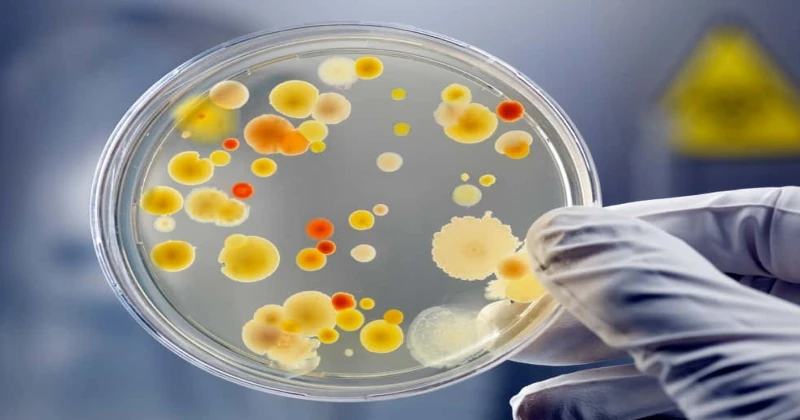
Representative Image

Representative Image

Facebook
Twitter
WhatsAppTelegramEmail

Antibiotics are used far too regularly around the world. Bacteria are becoming more resistant as a result. Curing bacterial illnesses is getting increasingly difficult because antibiotics are one of our most powerful weapons in the fight against them.

The good news is that finding better ways for identifying infections is a crucial step towards requiring fewer antibiotics.

“We have developed a simple tool that can identify all of the genetic material in bacteria. This allows us to find out more quickly what kind of bacteria a sick person or animal is affected by, or what kind of bacteria are found in food or the environment. We can then also decide whether it is necessary to use antibiotics against the bacterium, and if so what kind, so we don’t have to use as much medication,” says Professor Erika Eiser at Norwegian University of Science and Technology’s (NTNU)Department of Physics.

An international research group is behind the latest findings. The results have been presented in the prestigious Proceedings of the National Academy of Sciences (PNAS) journal. Playing a key role in the work was Dr Peicheng Xu from the Institute of Physics Chinese Academy of Sciences in Beijing, for whom Eiser was previously an academic supervisor.

One reason why the new method is faster is that users do not have to go through a step called ‘gene amplification’. This involves making several copies of the genetic material so it is easier to analyse, but this step can now be skipped.

“We can analyse all of the bacterium’s DNA without gene amplification by using a method previously used in simulations,” says Professor Eiser.

Eiser was part of a research group led by Tine Curk from Johns Hopkins University that developed the theory behind the method, which also works in reality. “We get excellent results when we apply the theoretical method to real samples,” said Professor Eiser.

This paragraph might be a bit difficult to understand, but basically, DNA is made up of rows of so-called nucleotides. The new method enables researchers to find short sequences of the bacteria’s DNA. They do this by seeing how these sequences bind to different variants of DNA that are grafted onto colloids, which are particles dissolved in a liquid.

If you are interested in finding out more, you can read about the process in more detail here. What it means, however, is that researchers can quickly identify the bacteria, because they bind themselves to these colloids in various ways and cause them to clump together.

The bottom line is: you don’t have to analyse so much material. You can skip the step of having to copy them, and this saves time and money. “Using this method, we saw how as few as five E. coli bacteria caused the colloids to create clusters,” said Professor Eiser.

All of this is currently in its early stages. Eiser has published a proof-of-principle experiment. This means that there is still a lot of work to be done before it becomes a widely used method.

“The findings can provide us with a reliable method for identifying pathogens in disciplines such as food safety, disease control and environmental monitoring,” said Professor Eiser.

(with inputs from ANI)

Topics: ResearchHealthBacteriaBacteria identificationAntibiotic resistance
Share
Tweet
SendShareSend
✮ Subscribe Organiser YouTube Channel. ✮
✮ Join Organiser's WhatsApp channel for Nationalist views beyond the news. ✮
Previous News

Adani Group stocks skyrocketed upto 17 per cent amid reports of US agency dismissing Hindenburg’s allegations

Next News

Ayodhya: “Truth I knew, truth I said,” says K K Mohammad in an exclusive interview

Related News

PM POSHAN Model: Serving nutrition, strengthening the nation and the roadmap for inclusive governance

Dr Suresh Hanagavadi conferred with Padmashri

Dr Suresh Hanagavadi: The remarkable journey of a doctor who revolutionised haemophilia care & patient advocacy

Representative Image

Loneliness: A social problem or a cultural challenge?

Prime Minister Narendra Modi at the Yoga Day celebrations in Kolkata

International Yoga Day: PM Modi hails Bengal’s spiritual heritage; Advocates yoga for healthy ageing & mental wellness

The wisdom of sattvik food: Nourishing inner balance

Dr. Fauci and US DNI Tulsi Gabbard

Tulsi Gabbard releases declassified records on Dr. Fauci funded Wuhan labs; Sparks speculations over origin of covid-19

Load More

Latest News

Russian President Vladimir Putin and External Affairs Minister Dr. S. Jaishankar

EAM Jaishankar meets Russian President Putin & briefs bilateral developments; Extends PM Modi’s invite to BRICS Summit

Tamil Nadu Assembly

Tamil Nadu: TVK govt drops Parandur airport project, announces free bus travel and LPG cylinders

From students voice to political instrument?

PM addressing the Nation on the occasion of 80th Independence Day celebrations at Red Fort, in Delhi on August 15, 2026.

80th Independence Day Address of PM Modi: Walking the difficult path confidently

Representative Image

Beyond ‘Gen Z’: Why Bharat must reclaim its younger generation through ‘Samvad’ and ‘Kutumb Prabodhan’

JeM headquarters rebuilt in Bahawalpur, Pakistan

Pakistan: Destroyed in Operation Sindoor, JeM base rebuilt in 15 months; Exposes Islamabad’s eternal terror nexus

Dimagi Naxals: Decoding the cognitive virus

“A result of a gang war”: Former Envoy to Canada Sanjay Verma on Goldy Brar’s purported claim of hand in Nijjar killing

Tamil Nadu: Tirunelveli POCSO court awards death sentence to church pastor Abraham, for sexually assaulting minor girls

AI Generated Image

West Asia: 20,000+ Pakistanis deported; Gulf countries flag illegal entry, drug trafficking & national security threat

Load More
  • Privacy
  • Terms
  • Cookie Policy
  • Refund and Cancellation
  • Delivery and Shipping

© Bharat Prakashan (Delhi) Limited.
Tech-enabled by Ananthapuri Technologies

  • Home
  • Search Organiser
  • Bharat
    • Assam
    • Bihar
    • Chhattisgarh
    • Jharkhand
    • Maharashtra
    • View All States
  • World
    • Asia
    • Africa
    • North America
    • South America
    • Europe
    • Australia
  • Editorial
  • Operation Sindoor
  • Opinion
  • Analysis
  • Defence
  • Culture
  • Sports
  • Business
  • RSS @ 100
  • Entertainment
  • More ..
    • Sci & Tech
    • Vocal4Local
    • Special Report
    • Education
    • Employment
    • Books
    • Interviews
    • Travel
    • Health
    • Politics
    • Law
    • Economy
    • Obituary
  • Subscribe Magazine
  • Read Ecopy
  • Advertise
  • Circulation
  • Careers
  • About Us
  • Contact Us
  • Policies & Terms
    • Privacy Policy
    • Cookie Policy
    • Refund and Cancellation
    • Terms of Use

© Bharat Prakashan (Delhi) Limited.
Tech-enabled by Ananthapuri Technologies