Why Chandrayaan-3 waited for 23 August while Russia's Luna 25 crashed in darkness?
June 6, 2026
  • Read Ecopy
  • Circulation
  • Advertise
  • Careers
  • About Us
  • Contact Us
Android AppiPhone AppArattai
Organiser
  • ‌
  • Bharat
    • Assam
    • Bihar
    • Chhattisgarh
    • Jharkhand
    • Maharashtra
    • View All States
  • World
    • Asia
    • Europe
    • North America
    • South America
    • Africa
    • Australia
  • Editorial
  • International
  • Opinion
  • RSS @ 100
  • More
    • Op Sindoor
    • Analysis
    • Sports
    • Defence
    • Politics
    • Business
    • Economy
    • Culture
    • Special Report
    • Sci & Tech
    • Entertainment
    • G20
    • Azadi Ka Amrit Mahotsav
    • Vocal4Local
    • Web Stories
    • Education
    • Employment
    • Books
    • Interviews
    • Travel
    • Law
    • Health
    • Obituary
  • Subscribe
    • Subscribe Print Edition
    • Subscribe Ecopy
    • Read Ecopy
  • ‌
  • Bharat
    • Assam
    • Bihar
    • Chhattisgarh
    • Jharkhand
    • Maharashtra
    • View All States
  • World
    • Asia
    • Europe
    • North America
    • South America
    • Africa
    • Australia
  • Editorial
  • International
  • Opinion
  • RSS @ 100
  • More
    • Op Sindoor
    • Analysis
    • Sports
    • Defence
    • Politics
    • Business
    • Economy
    • Culture
    • Special Report
    • Sci & Tech
    • Entertainment
    • G20
    • Azadi Ka Amrit Mahotsav
    • Vocal4Local
    • Web Stories
    • Education
    • Employment
    • Books
    • Interviews
    • Travel
    • Law
    • Health
    • Obituary
  • Subscribe
    • Subscribe Print Edition
    • Subscribe Ecopy
    • Read Ecopy
Organiser
  • Home
  • Bharat
  • World
  • Operation Sindoor
  • Editorial
  • Analysis
  • Opinion
  • Culture
  • Defence
  • International Edition
  • RSS @ 100
  • Magazine
  • Read Ecopy
Home Bharat

Why Chandrayaan-3 waited for 23 August while Russia’s Luna 25 crashed in darkness?

As India waits with bated breath to watch the success of ISRO's Chandrayaan-3 mission unfold, you may have wondered why the soft-landing could not be done earlier when the spacecraft is already in a low orbit around the moon. Here's why.

Kirti PandeyKirti Pandey
Aug 21, 2023, 10:30 pm IST
in Bharat, Sci & Tech
Follow on Google News
Chnadryaan - 3 landing image

Chnadryaan - 3 landing image

FacebookTwitterWhatsAppTelegramEmail

Russia’s attempt at landing its spacecraft on the far side of the moon failed and all eyes are now on India’s Chandrayaan 3 which is set to create history by accomplishing the feat. On Sunday,  ISRO announced that the lander module of Chandrayaan-3, the third lunar mission of India, is expected to touch down on the surface of the Moon around 6.04 pm on Tuesday, August 23.

Chandrayaan-3 Mission:

🇮🇳Chandrayaan-3 is set to land on the moon 🌖on August 23, 2023, around 18:04 Hrs. IST.

Thanks for the wishes and positivity!

Let’s continue experiencing the journey together
as the action unfolds LIVE at:
ISRO Website https://t.co/osrHMk7MZL
YouTube… pic.twitter.com/zyu1sdVpoE

— ISRO (@isro) August 20, 2023

Not just Indians, but all those across the world who are passionate about human odysseys into space will be glued to their television sets or digitals screens to watch the live telecast of the landing event that will begin at 5.20 pm (Indian Standard Time) on Wednesday (August 23).

Chandrayaan-3 Mission🚀

Witness the cosmic climax as #Chandrayaan3 is set to land on the moon on 23 August 2023, around 18:04 IST.@isro pic.twitter.com/ho0wHQj3kw

— PIB India (@PIB_India) August 21, 2023

Now you may wonder why is the Chandrayaan 3 waiting for 23rd August when it has completed all the steps of lowering its orbit around the moon for a safe and successful landing.

Remember, the Russian spacecraft crash-landed on Saturday, 19th August while attempting to land on the moon’s surface. Powered by powerful rockets, it had arrived in the Lunar orbit in a matter of 5 days since its launch from the Earth and was all set to land on the 10th day. Meanwhile, ISRO’s Chandrayaan had taken 21 days to enter the Lunar orbit.

Why did the Chandrayaan not attempt landing even though it has arrived earlier?

Simple. It is the lunar night phase on the moon until a sunrise greets it on 23rd August. The Luna 25 had electronic equipment that runs on solar power. It also had an onboard generator. The Luna 25 battery that could last a year could keep the Luna 25’s essential electronics from freezing in the frigid moon temperatures of near minus 100 on a moon night and still keep them working without a worry about how little sunlight was available on the moon.

In stark contrast, Chandrayaan 3, built and launched on a far lower budget but with a huge amount of research and passion, has battery enough only for a day – that will be used on the day of landing say reports (https://www.tv9marathi.com/national/why-chandrayaan-3-have-to-wait-till-23-august-for-soft-landing-on-moon-and-how-russias-luna-25-can-land-in-night-time-1004886.html).

Therefore, ISRO had to be very careful about choosing the day for the soft landing plan. 23rd August will be the day of sunrise on the moon and the lunar day will last 14 Earth days. The lander and rover are designed to operate for one lunar daylight period (about 14 Earth days).

According to Earth Sky (https://earthsky.org/space/how-often-can-you-see-sunrises-and-sunsets-from-the-moon/), the sunrise on the moon comes suddenly. On Earth, we are used to the eastern horizon developing a warm glow before the sunrise and the twilight turning the western horizon red as the sun sets in the evening. Due to the scattering effect of light due to our planet’s atmosphere – when we watch a sunrise or sunset, we can see colored light in the sky.

The moon, meanwhile doesn’t have an atmosphere, so there are neither morning glows nor any twilight colours. The sky in the distance is dark and black, not blue; and if you were watching a sunrise on the moon, you would see stars rise in the sun’s vicinity and cross the sky with the sun throughout the lunar day.

That makes the sunrise and sunset appear and happen suddenly, abruptly. The moment the sun sets, the sky goes pitch dark as midnight, and there is no residual lingering light or colour.

While Earth’s spin on its axis gives us a day of 24 hours, there are about 29 earthly days from one lunar noon to the next.

The Hindu calendar that calculates its month on a lunar calendar, therefore, has a fortnight of roughly 14+ days as there would be about two weeks between each lunar sunrise and sunset, from any given spot on the moon’s globe.

The moon too spins on its axis but slow enough to keep its one face aimed in our direction. ha is why we see only a single spot on the moon.
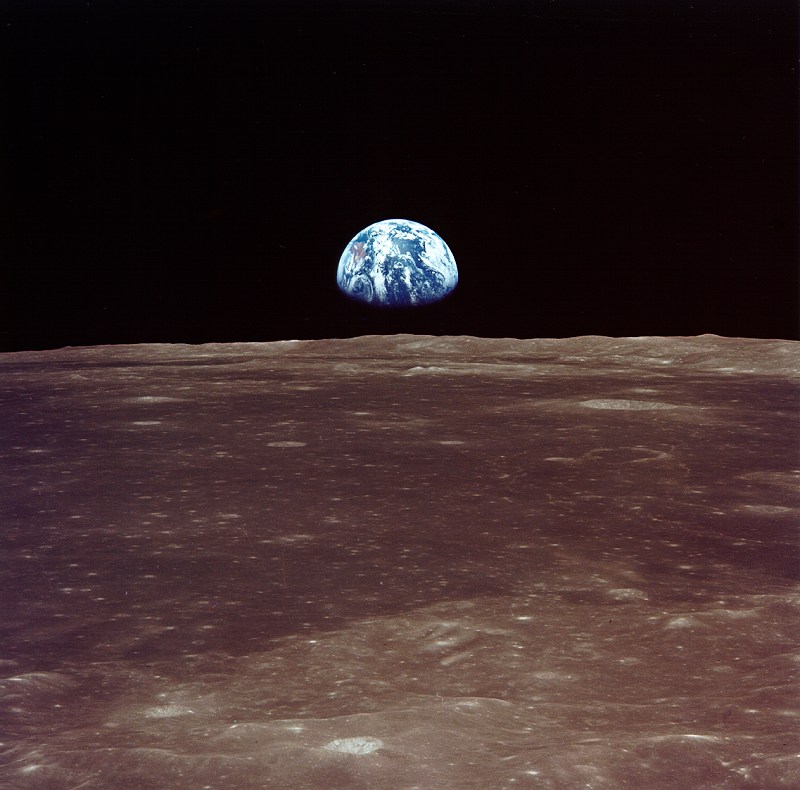
Earth as seen from the moon. Pic credit: Apollo 11 mission

Here’s a video below from Kurdistan Planetarium in the UK that shows the sun rising as seen from the moon’s surface and setting two weeks later.

This video by the Kurdistan Planetarium shows sunrise & sunset on the Moon from 22/5/2010 to 6/6/2010 pic.twitter.com/NMblO1TXvR

— Spaceguy²⁴ (@spaceguy_24) April 27, 2023

If Chandrayaan, by any chance, misses the landing opportunity now and the next few days, it may have to wait till September for the next window to open up.

Now you know why Chandrayaan-2 chose 23rd August to attempt the soft landing step.
Topics: ISROChnadryaan-3
ShareTweetSendShareSend
✮ Subscribe Organiser YouTube Channel. ✮
✮ Join Organiser's WhatsApp channel for Nationalist views beyond the news. ✮
Previous News

Kerala: Malayalam filmmaker Jasik Ali arrested on charges of sexual assault on a minor girl

Next News

Study finds how COVID-19 vaccines effective against severe cases in children

Related News

India’s Chandrayaan-2 Helps Reveal Water Ice in the Moon’s Shadowed South Pole

How ISRO’s Chandrayaan-2 gifted the world moon water; The orbiter that changed lunar science forever

A representative image

National Jute Board expands ISRO-backed digital crop monitoring system to strengthen jute sector planning

Representative Image (This is an AI generated image)

National Technology Day 2026: Mapping India’s rise from nuclear power to digital leader

GalaxEye’s mission Drishti launch marks a defining leap for India’s private space sector with world’s first OptoSAR satellite

Mission Drishti: GalaxEye deploys India’s largest private satellite with breakthrough all-weather imaging capability

Representative Image

Indian broadcasters delink from Chinese satellites; Aims to consolidate strategic security in space technology

Representative Image of ISRO satellite helping in Agriculture

How ISRO is transforming farming with satellites, AI and Data

Load More

Latest News

Sanatan Dharma teaches that spiritual growth is built through simple daily actions performed with sincerity, discipline, and devotion

Living Sanatan Dharma Every Day: 24 traditional habits that inspire a meaningful and virtuous life    

Indian Army to train 5 lakh personnel in drone operations; Scripting strategic edge in next gen battlefield tactics

CJP Under the Lens: From Delhi Riots defenders to foreign media endorsements

Cockroach Janata Party Under Scrutiny: From Naxal sympathizers to foreign media endorsements- Know real face of CJP

A representative image

The Middle Class Story: How governance reforms are powering India’s next growth engine

From Armenia and Greece to Cyprus, India's defence diplomacy is creating new pressure points for Turkey

How India’s Mediterranean Push and Indo-Pacific rise unsettle Turkey’s strategic calculus

Gadag seer enters 33-day Shiva Yoga Samadhi for world peace and welfare

Karnataka: Sri Rachoteshwara Shivacharya Mahaswamiji begins rare 33-day sealed Shiva Yoga Samadhi in Gadag

Indian surgeon conducts world’s longest cardiac telesurgery; Made-in-India robot echoes indigenous medical prowess

Pro-Khalistan slogans raised, Bhindranwale posters displayed at Sri Akal Takht Sahib

Operation Blue Star Anniversary: Pro-Khalistan slogans raised, Bhindranwale posters displayed at Sri Akal Takht Sahib

Inspired by Bhagwan Shiva's teachings, this ancient breathing practice helps calm the mind and reduce stress

Ancient Yogic Breathing for Modern Stress: How the Shiva method cultivates peace & self-awareness

The Vedic age saw remarkable women sages, known as Rishikas, who composed hymns and shaped India's spiritual and philosophical heritage

Rishikas of Vedic Age: How Gargi, Maitreyi & other women shaped ancient India’s spiritual and philosophical tradition

Load More
  • Privacy
  • Terms
  • Cookie Policy
  • Refund and Cancellation
  • Delivery and Shipping

© Bharat Prakashan (Delhi) Limited.
Tech-enabled by Ananthapuri Technologies

  • Home
  • Search Organiser
  • Bharat
    • Assam
    • Bihar
    • Chhattisgarh
    • Jharkhand
    • Maharashtra
    • View All States
  • World
    • Asia
    • Africa
    • North America
    • South America
    • Europe
    • Australia
  • Editorial
  • Operation Sindoor
  • Opinion
  • Analysis
  • Defence
  • Culture
  • Sports
  • Business
  • RSS @ 100
  • Entertainment
  • More ..
    • Sci & Tech
    • Vocal4Local
    • Special Report
    • Education
    • Employment
    • Books
    • Interviews
    • Travel
    • Health
    • Politics
    • Law
    • Economy
    • Obituary
  • Subscribe Magazine
  • Read Ecopy
  • Advertise
  • Circulation
  • Careers
  • About Us
  • Contact Us
  • Policies & Terms
    • Privacy Policy
    • Cookie Policy
    • Refund and Cancellation
    • Terms of Use

© Bharat Prakashan (Delhi) Limited.
Tech-enabled by Ananthapuri Technologies