People who live alone are at danger of cognitive decline: Study
June 7, 2026
  • Read Ecopy
  • Circulation
  • Advertise
  • Careers
  • About Us
  • Contact Us
Android AppiPhone AppArattai
Organiser
  • ‌
  • Bharat
    • Assam
    • Bihar
    • Chhattisgarh
    • Jharkhand
    • Maharashtra
    • View All States
  • World
    • Asia
    • Europe
    • North America
    • South America
    • Africa
    • Australia
  • Editorial
  • International
  • Opinion
  • RSS @ 100
  • More
    • Op Sindoor
    • Analysis
    • Sports
    • Defence
    • Politics
    • Business
    • Economy
    • Culture
    • Special Report
    • Sci & Tech
    • Entertainment
    • G20
    • Azadi Ka Amrit Mahotsav
    • Vocal4Local
    • Web Stories
    • Education
    • Employment
    • Books
    • Interviews
    • Travel
    • Law
    • Health
    • Obituary
  • Subscribe
    • Subscribe Print Edition
    • Subscribe Ecopy
    • Read Ecopy
  • ‌
  • Bharat
    • Assam
    • Bihar
    • Chhattisgarh
    • Jharkhand
    • Maharashtra
    • View All States
  • World
    • Asia
    • Europe
    • North America
    • South America
    • Africa
    • Australia
  • Editorial
  • International
  • Opinion
  • RSS @ 100
  • More
    • Op Sindoor
    • Analysis
    • Sports
    • Defence
    • Politics
    • Business
    • Economy
    • Culture
    • Special Report
    • Sci & Tech
    • Entertainment
    • G20
    • Azadi Ka Amrit Mahotsav
    • Vocal4Local
    • Web Stories
    • Education
    • Employment
    • Books
    • Interviews
    • Travel
    • Law
    • Health
    • Obituary
  • Subscribe
    • Subscribe Print Edition
    • Subscribe Ecopy
    • Read Ecopy
Organiser
  • Home
  • Bharat
  • World
  • Operation Sindoor
  • Editorial
  • Analysis
  • Opinion
  • Culture
  • Defence
  • International Edition
  • RSS @ 100
  • Magazine
  • Read Ecopy
Home World

People who live alone are at danger of cognitive decline: Study

In the United States, an estimated 79 per cent of people with cognitive decline have an income that is not low enough to make them eligible for Medicaid subsidised home care aides in long-term care

WEBDESKWEBDESK
Aug 20, 2023, 11:00 pm IST
in World
Follow on Google News
FacebookTwitterWhatsAppTelegramEmail

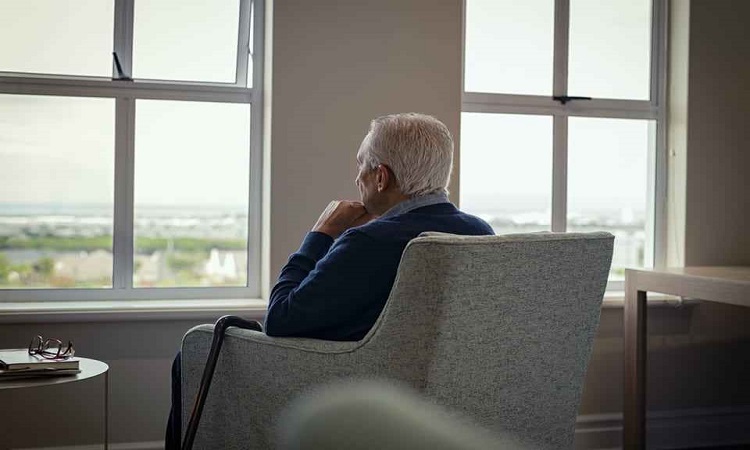
Washington DC: One in every four older Americans with dementia or mild cognitive impairment lives alone, placing them at risk of dangerous driving, wandering outside the home, mixing up medications, and missing medical appointments.

Researchers led by UC San Francisco determined in a study published in JAMA Network Open that the United States health system is ill-equipped to support patients living alone with cognitive decline, a group whose numbers are expected to grow as the population age.

According to lead author Elena Portacolone, PhD, MBA, MPH, of the UCSF Institute for Health and Ageing and the Philip R. Lee Institute for Health Policy Studies, living alone is a social determinant of health with an influence as severe as poverty, racism, and low education.

Researchers interviewed 76 healthcare practitioners, including physicians, nurses, social workers, case workers, home care aides, and others, for this qualitative study. In California, Michigan, and Texas, participants worked in memory clinics, home care services, and social services, among other areas.

The providers raised concerns about patients missing medical appointments, failing to respond to follow-up phone calls from the doctor’s office and forgetting why appointments were made, leaving them vulnerable to falling off the radar. “We don’t necessarily have the staff to really try to reach out to them,” said a physician in one interview.

Discharging a patient is like ‘sending a kid out to play on freeway’: Some patients could not assist their doctor with missing information on their chart, leaving the providers uncertain about the pace of their patient’s decline. Many had no names listed as emergency contacts, “not a family member, not even a friend to rely on in case of a crisis,” according to a case manager.

These patients were at risk for untreated medical conditions, self-neglect, malnutrition and falls, according to the providers. A house service coordinator also noted that calls to Adult Protective Services were sometimes dismissed until a patient’s situation became very serious. One consequence of the shaky infrastructure supporting these patients was that they were not identified until they were sent to a hospital following a crisis, like a fall or reaction to medication mismanagement. Some were discharged without a support system in place. In one case, a patient was sent home with a taxi voucher, a situation that a psychiatrist likened to “sending a kid out to play on the freeway.”

These findings are an indictment of our health care system, which fails to provide subsidized home care aides for all but the lowest-income patients, said Portacolone.

“In the United States, an estimated 79 per cent of people with cognitive decline have an income that is not low enough to make them eligible for Medicaid subsidised home care aides in long-term care,” she said, adding that the threshold for a person living alone in California is $20,121 per year.

While Medicare is available to adults over 65, subsidised aides are generally only provided after acute episodes, like hospitalizations, for fixed hours and for limited durations, she said.

“Most patients need to pay out-of-pocket and since cognitive impairment can last for decades, it is unsustainable for most people. Aides that are available via Medicaid are very poorly paid and usually receive limited training in caring for older adults with cognitive impairment,” she added.

Subsidised home care aides plentiful in Europe, Japan, Canada In contrast, subsidised home care aides are generally available to a significantly larger percentage of their counterparts living in parts of Europe, Japan and Canada, said Portacolone, citing a 2021 review of 13 countries, of which she was the senior author.
The study’s findings illustrate substantial deficiencies in how our health system provides for people with dementia, said senior author Kenneth E. Covinsky, MD, MPH, of the UCSF Division of Geriatrics. “In an era when Medicare is going to spend millions of dollars for newly approved drugs with very marginal benefits, we need to remember that Medicare and other payers refuse to pay far less money to provide necessary supports for vulnerable people with dementia.”

The researchers advocate for a system in which robust supports are made available by expanded Medicare and Medicaid funding. This will become increasingly critical, said Portacolone, “because effective treatments to reverse the course of cognitive impairment are unavailable, childlessness and divorce are common, and older adults are projected to live longer and often alone.” (With Inputs ANI)


Topics: UC San Franciscopublished in JAMA Network OpenUnited States health systemlives alone
ShareTweetSendShareSend
✮ Subscribe Organiser YouTube Channel. ✮
✮ Join Organiser's WhatsApp channel for Nationalist views beyond the news. ✮
Previous News

Revival of National Manuscript Mission gives new lease of life to lost knowledge heritage of civilisational bharat

Next News

India, China continue discussions to resolve issues in Eastern Ladakh

Related News

No Content Available
Load More

Latest News

(Left) Victorious Indian Men-s hockey team who who won Gold in U-18 Asia Cup (Right) U-18 Women's hockey team who won bronze medal in the Asia Cup

U18 Asia Cup 2026: Indian Men’s hockey wins gold, women secure bronze medal; PM Modi & Amit Shah hail the teams

India’s semiconductor roadmap shifts from import dependence to silicon sovereignty, aiming for a self-reliant ecosystem by Viksit Bharat 2047

From Import Dependence to Silicon Sovereignty: India’s bold semiconductor roadmap for Viksit Bharat 2047

Keralam Chief Minister V.D. Satheeshan

Jamaat-e-Islami Hind Team Meets CM Satheeshan, Senior Ministers, fuel debate over influence in UDF government

Singapore acts against China-linked posts targeting Indian community, cites threat to social harmony

Singapore Invokes OCHA: Facebook, YouTube and X ordered to block anti-Indian content originating from China

Editors of the HAF Wikipedia page run propaganda and disinformation campaign against the organisation, India and Hindu cultural ethos

Wikipedia fuels propaganda against Hindu American Foundation: How anonymous writers demonise Hindu rights group?

Israel to Install Statue of Chhatrapati Shivaji Maharaj; Israel’s Consul General in Mumbai, Yaniv Revach, met Maharashtra Chief Minister Devendra Fadnavis and sough his support in this regard

Chhatrapati Shivaji Maharaj’s legacy to reach Israel; Statue to be installed as symbol of India-Israel friendship

IIGH Public Policy Seminar: Women’s dignity, safety & equal opportunity discussed

Representative Image

Decoding Hezbollah: How the terror group built a massive arsenal against Israel

Representative Image

Plastic, Traffic and Landslides: How rising tourist footfall is posing threat to the mountainous region

The Green Realignment: Why the US-India trade pact is a battle for climate and supply chain security

Load More
  • Privacy
  • Terms
  • Cookie Policy
  • Refund and Cancellation
  • Delivery and Shipping

© Bharat Prakashan (Delhi) Limited.
Tech-enabled by Ananthapuri Technologies

  • Home
  • Search Organiser
  • Bharat
    • Assam
    • Bihar
    • Chhattisgarh
    • Jharkhand
    • Maharashtra
    • View All States
  • World
    • Asia
    • Africa
    • North America
    • South America
    • Europe
    • Australia
  • Editorial
  • Operation Sindoor
  • Opinion
  • Analysis
  • Defence
  • Culture
  • Sports
  • Business
  • RSS @ 100
  • Entertainment
  • More ..
    • Sci & Tech
    • Vocal4Local
    • Special Report
    • Education
    • Employment
    • Books
    • Interviews
    • Travel
    • Health
    • Politics
    • Law
    • Economy
    • Obituary
  • Subscribe Magazine
  • Read Ecopy
  • Advertise
  • Circulation
  • Careers
  • About Us
  • Contact Us
  • Policies & Terms
    • Privacy Policy
    • Cookie Policy
    • Refund and Cancellation
    • Terms of Use

© Bharat Prakashan (Delhi) Limited.
Tech-enabled by Ananthapuri Technologies