Cancer cells can adapt to novel drugs: Study
June 7, 2026
  • Read Ecopy
  • Circulation
  • Advertise
  • Careers
  • About Us
  • Contact Us
Android AppiPhone AppArattai
Organiser
  • ‌
  • Bharat
    • Assam
    • Bihar
    • Chhattisgarh
    • Jharkhand
    • Maharashtra
    • View All States
  • World
    • Asia
    • Europe
    • North America
    • South America
    • Africa
    • Australia
  • Editorial
  • International
  • Opinion
  • RSS @ 100
  • More
    • Op Sindoor
    • Analysis
    • Sports
    • Defence
    • Politics
    • Business
    • Economy
    • Culture
    • Special Report
    • Sci & Tech
    • Entertainment
    • G20
    • Azadi Ka Amrit Mahotsav
    • Vocal4Local
    • Web Stories
    • Education
    • Employment
    • Books
    • Interviews
    • Travel
    • Law
    • Health
    • Obituary
  • Subscribe
    • Subscribe Print Edition
    • Subscribe Ecopy
    • Read Ecopy
  • ‌
  • Bharat
    • Assam
    • Bihar
    • Chhattisgarh
    • Jharkhand
    • Maharashtra
    • View All States
  • World
    • Asia
    • Europe
    • North America
    • South America
    • Africa
    • Australia
  • Editorial
  • International
  • Opinion
  • RSS @ 100
  • More
    • Op Sindoor
    • Analysis
    • Sports
    • Defence
    • Politics
    • Business
    • Economy
    • Culture
    • Special Report
    • Sci & Tech
    • Entertainment
    • G20
    • Azadi Ka Amrit Mahotsav
    • Vocal4Local
    • Web Stories
    • Education
    • Employment
    • Books
    • Interviews
    • Travel
    • Law
    • Health
    • Obituary
  • Subscribe
    • Subscribe Print Edition
    • Subscribe Ecopy
    • Read Ecopy
Organiser
  • Home
  • Bharat
  • World
  • Operation Sindoor
  • Editorial
  • Analysis
  • Opinion
  • Culture
  • Defence
  • International Edition
  • RSS @ 100
  • Magazine
  • Read Ecopy
Home World

Cancer cells can adapt to novel drugs: Study

"Our research suggests that you can potentially have a more effective treatment by combining these new CDK2 inhibitors in clinical development with a drug that already exists," said senior author Sabrina Spencer, associate professor of biochemistry at CU Boulder

WEBDESKWEBDESK
Jun 18, 2023, 10:00 pm IST
in World
Follow on Google News
FacebookTwitterWhatsAppTelegramEmail

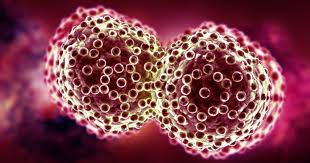
Washington: Researchers found cancer cells can adapt to new drugs called CDK2 inhibitors in 1-2 hours, adding that a second drug squelches the workaround. The study was published in Journal, ‘Cell.’ According to new CU Boulder research, cancer cells are smarter than scientists previously thought. When these cells are confronted with powerful new drugs known as CDK2 inhibitors, which are designed to prevent cancer from spreading, they can activate a workaround that allows them to survive the attack in as little as one to two hours.

It reveals how cancer cells complete this adaptation and demonstrates that administering a second, already widely available drug at the same time may stymie cancer cells and shrink resistant tumours. The findings support the theory, which is currently being tested in at least three clinical trials, that two drugs may be better than one when it comes to treating resistant breast cancer.

“Our research suggests that you can potentially have a more effective treatment by combining these new CDK2 inhibitors in clinical development with a drug that already exists,” said senior author Sabrina Spencer, associate professor of biochemistry at CU Boulder. “It also uncovers a very basic, fundamental understanding about how the cell cycle is wired for robustness and why so many tumours manage to proliferate in the face of drugs meant to block proliferation.”

 New frontier in cancer treatment

The study, a collaboration with pharmaceutical company Pfizer Inc., centres around a class of new drugs called CDK inhibitors. Cyclin-dependent kinases (CDKs), including CDK 4, 6, 2 and 1, are enzymes that usher all cells, such as skin or breast tissue cells, through the cycle of growth, division and replication. Each of the enzymes has its own function and place in the process, and scientists believe that 4 and 6 kick-starts the cycle.

When CDKs become overexpressed or dysregulated, they can drive tumour formation. Since 2015, the U.S. Food and Drug Administration has approved three drugs to inhibit CDK4 and 6 (Palbociclib, Ribociclib and Abemaciclib), including for the most common subtype of breast cancer, known as HR+ HER2- (hormone receptor-positive, ERBB2-negative metastatic cancer).

The drugs have proven less toxic and more effective than previous treatments, propelling them to blockbuster status with billions of dollars in annual global sales.

But some patients don’t respond to them and many develop resistance, a fact that has prompted researchers to go after a different member of the enzyme family–CDK2. In 2016, Pfizer began collaborating with Spencer, a global leader in time-lapse cell imaging, to study how cancer cells respond to their new CDK2 inhibitor. Spencer’s lab took pictures of living ovarian and breast cancer cells every 15 minutes over the course of two days.
Early on, a surprising discovery emerged.

While CDK2 activity plummeted in the cells upon initial exposure to the drug, within one to two hours, that activity began rebounding. “This was the fastest adaptation we had ever seen,” said Spencer. “It was bizarre.”

While those findings were, initially, disappointing, the researchers continued their research for multiple years to determine what was causing this swift “drop-rebound” effect. It works a bit like a runner who re-enters a relay race to grab the baton from an injured teammate. When the drug disabled CDK2, CDK4 and CDK6 stepped back in to continue prodding the cells to proliferate.

Previous research has shown that when inhibitors take out CDK4 and CDK6, CDK2 comes to the rescue. The new study shows that the reverse is also true. The power of co-drugging In follow-up experiments, the team tried drugging cancer cells in petri cells and in tumors in mice with both CDK2 and CDK4/6 inhibitors.
In both cases, the tumours stopped growing.

The team is still exploring why that happens, but Spencer suspects that CDK4 and CDK6 may stand in the shadows throughout the cell cycle, ready to jump in and assist when CDK2 is impaired. She said CDK2 inhibitors in combination with CDK4/6 inhibitors could, ultimately, be used to help breast cancer patients that haven’t responded well to existing drugs, as well as those who responded well but then relapsed. The findings also shed light on how other drugs could be combined for better results.

“The mammalian cell cycle is commonly conceived as a well-understood, hardwired, invariant pathway, but our work indicates that the cell cycle is much more plastic than generally believed, with multiple adaptive routes under different conditions,” said Spencer. “That’s useful information for any company trying to drug the cell cycle to treat disease.” (With Inputs ANI)

Topics: cancer cells can adapt to new drugs called CDK2 inhibitorsnew CU Boulder researchcancer cells are smarter than scientists previouslySabrina Spencerassociate professor of biochemistry at CU Boulderpharmaceutical company Pfizer IncWashington
ShareTweetSendShareSend
✮ Subscribe Organiser YouTube Channel. ✮
✮ Join Organiser's WhatsApp channel for Nationalist views beyond the news. ✮
Previous News

Employees who are obese might have a greater loss of productivity at work: Study

Next News

“India-US fight together to counter terrorism, big enemy China”: US Congressman Mike Collins ahead of PM Modi’s visit

Related News

External Affairs Minister S. Jaishankar during the Critical Minerals Ministerial in Washington DC, where he called for global cooperation to de-risk supply chains and strengthen resilience in critical minerals

EAM Jaishankar calls for global action to de-risk critical mineral supply chains at Washington ministerial meet

US and China seeks to control and command Bangladesh to fulfill respective hegemonic ambitions

Bangladesh: A brewing battle field to fortify the hegemonic ambitions of USA & China across the Indo-Pacific

Trump declares battle against the deep state with ten-point plan to reshape Washington’s power structure

North Korea warns it may shoot down US spy planes violating its airspace

PM Modi in USA: A Path-breaking Visit

United States: PM Narendra Modi meets academics, healthcare & think tank experts during his state visit

Load More

Latest News

Union Home Minister Amit Shah and Delhi Police derail sinister plan of Cockroach Janata Party and its founder (This image is generated by AI)

CJP Protest Derailed: How Amit Shah, Delhi Police, Intelligence foiled sinister plan of Cockroach Janata Party

(Left) Victorious Indian Men-s hockey team who who won Gold in U-18 Asia Cup (Right) U-18 Women's hockey team who won bronze medal in the Asia Cup

U18 Asia Cup 2026: Indian Men’s hockey wins gold, women secure bronze medal; PM Modi & Amit Shah hail the teams

India’s semiconductor roadmap shifts from import dependence to silicon sovereignty, aiming for a self-reliant ecosystem by Viksit Bharat 2047

From Import Dependence to Silicon Sovereignty: India’s bold semiconductor roadmap for Viksit Bharat 2047

Keralam Chief Minister V.D. Satheeshan

Jamaat-e-Islami Hind Team Meets CM Satheeshan, Senior Ministers, fuel debate over influence in UDF government

Singapore acts against China-linked posts targeting Indian community, cites threat to social harmony

Singapore Invokes OCHA: Facebook, YouTube and X ordered to block anti-Indian content originating from China

Editors of the HAF Wikipedia page run propaganda and disinformation campaign against the organisation, India and Hindu cultural ethos

Wikipedia fuels propaganda against Hindu American Foundation: How anonymous writers demonise Hindu rights group?

Israel to Install Statue of Chhatrapati Shivaji Maharaj; Israel’s Consul General in Mumbai, Yaniv Revach, met Maharashtra Chief Minister Devendra Fadnavis and sough his support in this regard

Chhatrapati Shivaji Maharaj’s legacy to reach Israel; Statue to be installed as symbol of India-Israel friendship

IIGH Public Policy Seminar: Women’s dignity, safety & equal opportunity discussed

Representative Image

Decoding Hezbollah: How the terror group built a massive arsenal against Israel

Representative Image

Plastic, Traffic and Landslides: How rising tourist footfall is posing threat to the mountainous region

Load More
  • Privacy
  • Terms
  • Cookie Policy
  • Refund and Cancellation
  • Delivery and Shipping

© Bharat Prakashan (Delhi) Limited.
Tech-enabled by Ananthapuri Technologies

  • Home
  • Search Organiser
  • Bharat
    • Assam
    • Bihar
    • Chhattisgarh
    • Jharkhand
    • Maharashtra
    • View All States
  • World
    • Asia
    • Africa
    • North America
    • South America
    • Europe
    • Australia
  • Editorial
  • Operation Sindoor
  • Opinion
  • Analysis
  • Defence
  • Culture
  • Sports
  • Business
  • RSS @ 100
  • Entertainment
  • More ..
    • Sci & Tech
    • Vocal4Local
    • Special Report
    • Education
    • Employment
    • Books
    • Interviews
    • Travel
    • Health
    • Politics
    • Law
    • Economy
    • Obituary
  • Subscribe Magazine
  • Read Ecopy
  • Advertise
  • Circulation
  • Careers
  • About Us
  • Contact Us
  • Policies & Terms
    • Privacy Policy
    • Cookie Policy
    • Refund and Cancellation
    • Terms of Use

© Bharat Prakashan (Delhi) Limited.
Tech-enabled by Ananthapuri Technologies