Book Review: Plagued by Contradictions
August 31, 2026
  • Read Ecopy
  • Circulation
  • Advertise
  • Careers
  • About Us
  • Contact Us
Android AppiPhone AppArattai
Organiser
  • ‌
  • Bharat
    • Assam
    • Bihar
    • Chhattisgarh
    • Jharkhand
    • Maharashtra
    • View All States
  • World
    • Asia
    • Europe
    • North America
    • South America
    • Africa
    • Australia
  • Editorial
  • International
  • Opinion
  • RSS @ 100
  • More
    • Op Sindoor
    • Analysis
    • Sports
    • Defence
    • Politics
    • Business
    • Economy
    • Culture
    • Special Report
    • Sci & Tech
    • Entertainment
    • G20
    • Azadi Ka Amrit Mahotsav
    • Vocal4Local
    • Web Stories
    • Education
    • Employment
    • Books
    • Interviews
    • Travel
    • Law
    • Health
    • Obituary
  • Subscribe
    • Subscribe Print Edition
    • Subscribe Ecopy
    • Read Ecopy
  • ‌
  • Bharat
    • Assam
    • Bihar
    • Chhattisgarh
    • Jharkhand
    • Maharashtra
    • View All States
  • World
    • Asia
    • Europe
    • North America
    • South America
    • Africa
    • Australia
  • Editorial
  • International
  • Opinion
  • RSS @ 100
  • More
    • Op Sindoor
    • Analysis
    • Sports
    • Defence
    • Politics
    • Business
    • Economy
    • Culture
    • Special Report
    • Sci & Tech
    • Entertainment
    • G20
    • Azadi Ka Amrit Mahotsav
    • Vocal4Local
    • Web Stories
    • Education
    • Employment
    • Books
    • Interviews
    • Travel
    • Law
    • Health
    • Obituary
  • Subscribe
    • Subscribe Print Edition
    • Subscribe Ecopy
    • Read Ecopy
Organiser
  • Home
  • Bharat
  • World
  • Operation Sindoor
  • Editorial
  • Analysis
  • Opinion
  • Culture
  • Defence
  • International Edition
  • RSS @ 100
  • Magazine
  • Read Ecopy
Home Books

Book Review: Plagued by Contradictions

In Taliban-controlled Afghanistan, the Pashtuns undoubtedly hold power but their internal contradictions continue to plague them

Ameya KulkarniAmeya Kulkarni
May 1, 2023, 10:00 pm IST
inBooks
Follow on Google News
Facebook
Twitter
WhatsAppTelegramEmail
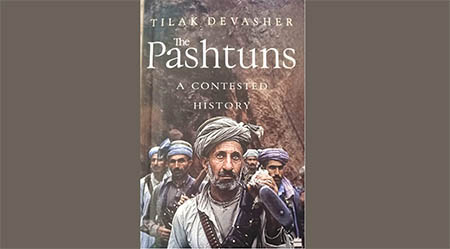
Title: The Pashtuns: A Contested History’ Author: Tilak Devasher, Publisher: Harper Collins India, Pp 304,
Rs  799.00

Tilak Devasher is one of India’s foremost authorities on Pakistan. His three previous works that I have read and used have proven to be very important reference material on Jinnah and Pakistan. These show immense problems but equally immense promise. Only an enlightened leadership could lead it away from its India obsession. His fourth work, The Pashtuns: A Contested History, is also a fine contribution which puts the spotlight on people who have historically made a major impact on South Asia and, in more recent times, have influenced the course of global events.

Devasher has divided his work into seven sections, the first of which deals with the ‘broad characteristics’ of the Pashtuns. He has delved deeply into their origins,  tribal organisations, languages, religious beliefs and ways of life, which are based on the mores of the celebrated Pashtunwali — the way of the Pashtuns. Devasher’s account relies on how the Pashtuns view themselves and were perceived by the British, who had to deal with them in the 19th and the first half of the 20th century. What is missing, though, is how other Afghan ethnicities and people have evaluated the Pashtuns throughout history and do so currently.

Undoubtedly, the Pashtuns have always shown a rare commitment to adhering to Pashtunwali, but like all peoples, they are also conditioned by geography, time and circumstance. When these change, so do people. The British interaction with the Pashtuns, which is covered in Section II, led to the creation of many myths about them. The two British forays into Afghanistan in the 19th century were disasters. The Pashtuns were difficult to subdue only partly because of their culture. The main cause was Afghan geography.

But some of the myths generated about the Pashtuns have endured.

In the past five decades, the Pashtun people have undergone enormous changes. Devasher chronicles some of these well, especially those relating to the growing influence of Salafist Islam in the Pashtun heartland in southern and eastern Afghanistan. The Soviet invasion greatly accelerated this process, as did the extraordinarily harsh way the Afghan communists sought to ‘modernise’ the country. The spread of non-traditional Islamic doctrines and the churning and dislocation of the Pashtun heartland because of the Soviet invasion led to changed equations within the Pashtun society. The author has touched upon these aspects well, but the fact remains that enough scholarly work has not been possible till now to understand the changed conditions fully. Nor is there a full understanding of the evolution of the Pashtun communities in exile in the West, in some Arab countries, in Iran and even in Karachi.

The contradictions between the Punjabis and the Pashtuns continue in Pakistan even though a sufficiently large number of the latter have been co-opted in a Punjabi-dominated polity


Devasher’s account of the Khudai Khidmatgars – led by Badshah Khan, who rightly felt that the Congress deserted him – is moving. However, the idea that India could have sustained the Pashtun lands incorporated by the British through the creation of the Durand Line in 1893, is a chimera. The Durand Line, which no  Afghan Government has acknowledged as an international border and nor will anyone in authority in Kabul in the future do so either, also cannot be done away with.

He describes very well the creation of the Afghan nation in 1747 by Ahmed Shah Abdali and that of the state by Amir Abdur Rehman Khan, who ruled from 1880 to 1901. This state, which stretched (till the Durand Line was demarcated in 1893) between the Indus and the Amu Darya, was dominated by the Pashtuns, though it is unlikely that they were ever in a majority. Till today, the Pashtuns think that it is their right to have primacy in the country, but that is deeply resented by the other ethnic groups — the Tajiks, the Uzbeks and the Hazaras. The Taliban, both in their earlier incarnation and the present one, believe this view too, despite their commitment to Salafi mazhabs. The Pashtun story cannot be complete without an examination of this phenomena and

Devasher could do so in a subsequent edition.

His account of the US involvement in Afghanistan in the war on terror and the failure of the world’s pre-eminent power is insightful. The Taliban, at its core a Pashtun force, with Pakistan’s help, inflicted a strategic defeat on the US. But Pakistan has been unable to savour the fruits of its assistance to the Afghan Taliban, for, this group is now playing the Tehreek-e-Taliban-e-Pakistan card and causing immense misery to Pakistan itself.

The contradictions between the Punjabis and the Pashtuns continue in Pakistan even though a sufficiently large number of the latter have been co-opted in a Punjabi-dominated polity.

In a Taliban-controlled Afghanistan, the Pashtun will hold real power but their internal contradictions will continue to plague them.

The real question is how the Pashtun, like all peoples, will navigate the contemporary and future digital world. That is a point which the author can look at in a future edition.

Topics: Taliban-controlled Afghanistanthe PashtunAfghanistan in the war on terrorPunjabis and the PashtunsA Contested HistoryTehreek-e-Taliban-e-PakistanPakistan
Share1
Tweet
SendShareSend
✮ Subscribe Organiser YouTube Channel. ✮
✮ Join Organiser's WhatsApp channel for Nationalist views beyond the news. ✮
Previous News

How a love affair with a Pakistani girl landed Pune boy in ISI spy plot and conversion to Islam

Next News

US President Joe Biden’s foreign policies facilitate Chinese President Xi Jinping’s ambition

Related News

The demolition of Shri Guru Singh Sabha Gurdwara has intensified fears over the disappearance of Pakistan’s Sikh religious heritage

Pakistan demolishes 200-year-old Sikh Gurdwara in Quetta; Historic minority heritage land sold for commercial project!

Leftists Vs Rabindranath & Rakshabandhan: Red sickle strike of fraternity

US religious freedom panel, headed by a Pakistani, peddles lies about RSS ahead of Sarsanghachalak’s US visit

Maulana Abul Ala Maudidi (1903-1979)

85 Years of Jamaat-e-Islami in the Subcontinent: Maududi and His Organization

JeM headquarters rebuilt in Bahawalpur, Pakistan

Pakistan: Destroyed in Operation Sindoor, JeM base rebuilt in 15 months; Exposes Islamabad’s eternal terror nexus

Representative Image

India’s Emerging Military Challenge: Air campaign alone cannot replace boots on the ground

Load More

Latest News

Vande Mataram: Pandit Paluskar ji, still alive

Rahul Gandhi’s ‘Patriarchy’ Politics Faces a Test in Kerala Over Muslim Women’s Public Participation

Rahul Gandhi sees patriarchy in Hindutva, but remains silent on Islam: What does the Keralam directive on women reveal?

RSS Sarsanghchalak Dr Mohan Bhagwat

From Bharat to Madison Square Garden: A civilisational idea crosses the ocean 

Union government mandates IST as the standard clock for banks, railways and telecoms

One Nation, One Time: Centre notifies new rules to synchronise banks, railways, telecom & power grids with IST

Uttarakhand STF arrested Mohammad Salahuddin for spreading extremist propaganda through Telegram

Unchecked Encryption, Compromised Sovereignty: How Telegram became the digital haven for transnational terror

Tamil Nadu: TVK govt faces criticism over ‘dual stand’ on land for development projects

Maoist weapons recovered from Maoist dump in Chhattisgarh’s Bijapur

Chhattisgarh: Security forces recover Maoist dumps containing explosives, weapons in Sukma, Bijapur and Narayanpur

AI Generated Representative Image

UPI in Uzbekistan as India leads global digital revolution; Tashkent to deepen defence industrial ties with New Delhi

Sah Sarkaryawah Dr Krishna Gopal lighting the ceremonial lamp

“Dharma is the element that binds diversity together”: Dr Krishna Gopal, RSS Sah Sarkaryawah

PM Modi recieved a warm welcome by the Indian diaspora in Kyrgyzstan

SCO Summit: PM Modi gets warm diaspora welcome; Manas, Mahabharata, yoga echoes India-Kyrgyztan civilisational connect

Load More
  • Privacy
  • Terms
  • Cookie Policy
  • Refund and Cancellation
  • Delivery and Shipping

© Bharat Prakashan (Delhi) Limited.
Tech-enabled by Ananthapuri Technologies

  • Home
  • Search Organiser
  • Bharat
    • Assam
    • Bihar
    • Chhattisgarh
    • Jharkhand
    • Maharashtra
    • View All States
  • World
    • Asia
    • Africa
    • North America
    • South America
    • Europe
    • Australia
  • Editorial
  • Operation Sindoor
  • Opinion
  • Analysis
  • Defence
  • Culture
  • Sports
  • Business
  • RSS @ 100
  • Entertainment
  • More ..
    • Sci & Tech
    • Vocal4Local
    • Special Report
    • Education
    • Employment
    • Books
    • Interviews
    • Travel
    • Health
    • Politics
    • Law
    • Economy
    • Obituary
  • Subscribe Magazine
  • Read Ecopy
  • Advertise
  • Circulation
  • Careers
  • About Us
  • Contact Us
  • Policies & Terms
    • Privacy Policy
    • Cookie Policy
    • Refund and Cancellation
    • Terms of Use

© Bharat Prakashan (Delhi) Limited.
Tech-enabled by Ananthapuri Technologies