Joshimath sinking: A bigger calamity in the offing?
June 24, 2026
  • Read Ecopy
  • Circulation
  • Advertise
  • Careers
  • About Us
  • Contact Us
Android AppiPhone AppArattai
Organiser
  • ‌
  • Bharat
    • Assam
    • Bihar
    • Chhattisgarh
    • Jharkhand
    • Maharashtra
    • View All States
  • World
    • Asia
    • Europe
    • North America
    • South America
    • Africa
    • Australia
  • Editorial
  • International
  • Opinion
  • RSS @ 100
  • More
    • Op Sindoor
    • Analysis
    • Sports
    • Defence
    • Politics
    • Business
    • Economy
    • Culture
    • Special Report
    • Sci & Tech
    • Entertainment
    • G20
    • Azadi Ka Amrit Mahotsav
    • Vocal4Local
    • Web Stories
    • Education
    • Employment
    • Books
    • Interviews
    • Travel
    • Law
    • Health
    • Obituary
  • Subscribe
    • Subscribe Print Edition
    • Subscribe Ecopy
    • Read Ecopy
  • ‌
  • Bharat
    • Assam
    • Bihar
    • Chhattisgarh
    • Jharkhand
    • Maharashtra
    • View All States
  • World
    • Asia
    • Europe
    • North America
    • South America
    • Africa
    • Australia
  • Editorial
  • International
  • Opinion
  • RSS @ 100
  • More
    • Op Sindoor
    • Analysis
    • Sports
    • Defence
    • Politics
    • Business
    • Economy
    • Culture
    • Special Report
    • Sci & Tech
    • Entertainment
    • G20
    • Azadi Ka Amrit Mahotsav
    • Vocal4Local
    • Web Stories
    • Education
    • Employment
    • Books
    • Interviews
    • Travel
    • Law
    • Health
    • Obituary
  • Subscribe
    • Subscribe Print Edition
    • Subscribe Ecopy
    • Read Ecopy
Organiser
  • Home
  • Bharat
  • World
  • Operation Sindoor
  • Editorial
  • Analysis
  • Opinion
  • Culture
  • Defence
  • International Edition
  • RSS @ 100
  • Magazine
  • Read Ecopy
Home Bharat

Joshimath sinking: A bigger calamity in the offing?

Disasters will recur with alarming regularity and, quite possibly, with greater intensity. Problems need to be understood at the roots and solutions devised accordingly. Quick fix remedies and temporary solutions will not serve the purpose of a secure future

Atul SehgalAtul Sehgal
Jan 13, 2023, 08:00 pm IST
in Bharat, Analysis, Uttarakhand
Follow on Google News
FacebookTwitterWhatsAppTelegramEmail

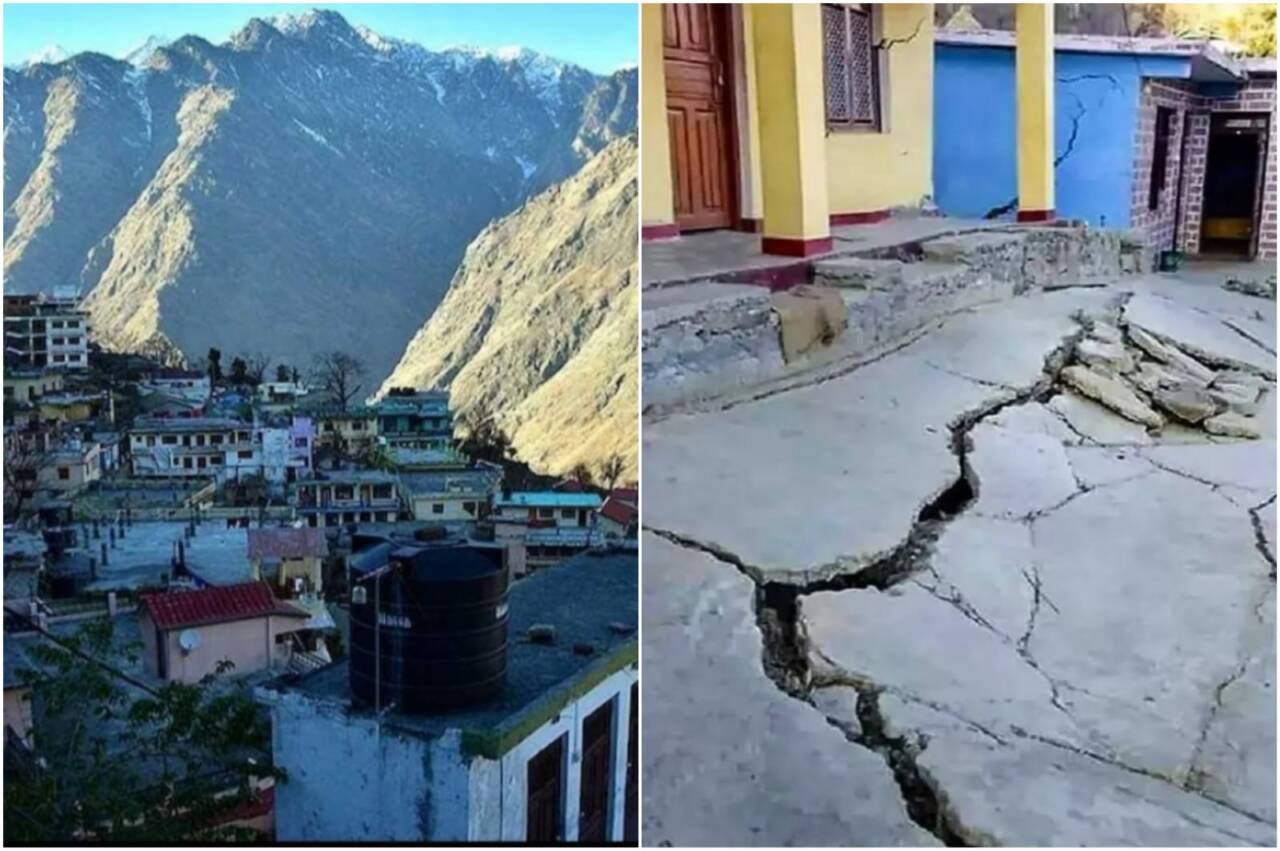
The Joshimath land subsidence episode in recent days in which cracks and ruptures appeared in numerous buildings and even roads and passageways of Chamoli area in Uttarakhand state, rendering buildings uninhabitable is a stark reminder of the grim realities of our urban systems. The fact that as many as 678 of residential and commercial buildings had to be marked dangerous and are being evacuated speaks volumes about many holes in our administrative systems, which also points at taints in our culture and character. It also casts shadows on the viability and sustainability of the so called modern building construction practices as also bigger infrastructures like power plants.

If we closely and minutely analyse the possible reasons for the above happening, we shall inexorably arrive at some startling inferences. Broad observations in this regard are given below.

Tapovan Vishnugad hydropower project, a large 520 MW hydroelectric project is being constructed by NTPC in Chamoli district where land subsidence has occurred and this project has seen many unfortunate events and episodes since its inception in 2006 because of which the project has got stuck in serious controversies.
The propriety of the statutory clearance by MOEF is called into question due to the aquifer burst at the project site in 2009 which led to a huge subsurface water deluge and after this incident; the project was temporarily put on hold.

The project has witnessed problems in 2009, 2012, 2014 and 2021 which caused setbacks in construction progress. This is the fifth time that the controversial project has hogged adverse limelight. It is noteworthy that the project is still not completed after 16 years of start even though the average gestation period of a hydroelectric project is 6-8 years. In 2009, a tunnel boring machine (TBM) at the project got stuck while excavating the hilly terrain at a depth of 900 m, leading to enormous flow of subsurface water. It was a strong deluge in which the outflow rate was around 700 litres per second. At that juncture, the work on the project was suspended for almost 10 months.

The Chamoli District is known for its heavy rainfall pattern and high seismic level which places it in seismic zones IV and V. The area is, therefore, highly earthquake prone. The TBM trapping incident recurred in 2012 after which the project alongwith other hydroelectric projects in Uttarakhand were placed under Supreme Court review. It is significant that while a SC led probe into the role of hydroelectric projects in 2013 Kedarnath floods was on, 135 people were killed at the project’s Raini site. Reportedly, dead bodies are being recovered from the site even at the present time.

The soil in the Chamoli area is more sandy than rocky and hence unsuitable for multiple construction or buildings with heavy foundations.

It is also very important to take note of the fact that the possibility of such an incident in the region was first brought to light about 50 years ago when the MC Mishra committee report was published. It had warned against unplanned development in this area, and brought out the natural weaknesses of the terrain.
According to some experts, Joshimath city has been built on an ancient landslide material — a natural mixture of sand and stone, not rock, which doesn’t possess high load-bearing capacity and this renders it entirely unsuitable for heavy or multiple construction units.

Absence of an adequate drainage system in the wake of indiscriminate, unplanned and illegal construction is also a factor in the incidents of land subsidence.

The above set of facts raises multiple intriguing questions. Why was the MOEF clearance accorded to the project? Why did the state and local government allow illegal, indiscriminate construction at the location? Who are responsible? Can we pin responsibility and accountability in the present system? If there was gross negligence or corruption involved in MOEF clearance and failure on the part of our state administrative apparatus, why and how did our system allow them?

It naturally and logically follows from the above observations that unless we drastically change the extant bureaucratic and legal systems of the country, we shall never be able to fix responsibility and punish the culpable in quick time. Disasters will recur with alarming regularity and, quite possibly, with greater intensity. Problems need to be understood at the roots and solutions devised accordingly. Quick fix remedies and temporary solutions will not serve the purpose of a secure future.

The legendary political strategist Chanakya had said that crime and corruption thrive in a state where the instrument of punishment is weak and ineffective. Is it not high time we changed our working systems? We should also have a deeper look and research upon the wonderful, enduring and sustainable technologies of ancient India in the fields of building construction, water drainage and conservation and dams instead of just glossing over some of the digital slides on those items and forwarding them over WhatsApp? Also , is it not time we developed our own superior , indigenous technologies for water handling and energy generation drawing upon the rich scientific and technological threads of ancient India rather than blindly adopting the technologies of the west, which are decidedly crude, cruel and inferior?


Topics: Tunnel Boring MachineChamoli areaUttarakhandSupreme CourtJoshimath sinkingTapovan Vishnugad hydropower project
Share18TweetSendShareSend
✮ Subscribe Organiser YouTube Channel. ✮
✮ Join Organiser's WhatsApp channel for Nationalist views beyond the news. ✮
Previous News

“Lord Ram is a fictional character,” CPM leader in Tamil Nadu Assembly; BJP and AIADMK condemn the remark

Next News

Rajouri terror attacks probe given to NIA: Union Home Minister Amit Shah

Related News

Supreme Court of India

‘RTI activism has become business’: SC denies anticipatory bail, questions activist’s authority to monitor road project

The AMU Judgment: Why the Supreme Court must revisit Article 30

Tamil Nadu Assembly (File Photo)

Tamil Nadu speaker drops action against 21 rebel AIADMK MLAs after EPS withdrawal, targets 4 who joined TVK

Supreme Court remarks have revived the UAPA bail debate, with supporters citing national security concerns

UAPA Bail Debate: Striking a delicate balance between individual liberty and national security

Supreme Court invokes Article 142, issues strict timelines to curb delay in High Court judgments

Supreme Court invokes Article 142, orders strict timelines for High Court judgments to end delays in justice delivery

SIR and Article 324: Supreme Court strengthens the constitutional spine of Indian Democracy; Reaffirms ECI’s authority

Load More

Latest News

On the occasion of Dr Syama Prasad Mookerjee’s State-Level Balidan Diwas , Chief Minister Shri Mohan Charan Majhi and others at an event organized at Jayadev Bhawan on June 23, 2026

“Article 370 abrogation fulfilled Dr Syama Prasad Mookerjee’s dream,” says Odisha CM Majhi at Balidan Divas programme

Prakash Raj in Fresh Controversy as Court Issues NBW in Voter Registration Case (This image is generated by AI)

Karnataka: Prakash Raj faces legal scrutiny over alleged multiple voter IDs; Bengaluru Court issues NBW

The fall of Keir Starmer highlights a broader crisis in British governance, where leadership changes have failed to reverse long-term national decline

From Brexit to Starmer: Why Britain’s crisis lies beyond changing leaders in Westminster

Tribute to Rani Durgawati on her Martyrdom Day

Rani Durgavati Martyrdom Day: Immortal Warrior rani, defender of Tribal Pride, national honour & Sanatan values

President Droupadi Murmu confers the Padma Shri on former civil servant R.V.S. Mani on June 23, 2026.

Former MHA official RVS Mani honoured with Padma Shri for contributions to internal security

Tamil Nadu: Temple funds only for temple property; TVK govt concedes before Madras High Court

Keralam’s former Industries Secretary, Mohammed Haneesh IAS (Right Side)

Keralam Cashew Scam: Former Industries Secretary Md Haneesh apologises before High Court after contempt proceedings

Tamil Nadu: Assembly Speaker directs all bureaucrats to strictly follow warrant of precedence after Mayor-MLA row

Kamakhya Mandir

Kamakhya Mandir’s Ambubachi Mela: The ancient tradition that honours the menstruation of mother Earth

Amazon in dock for mocking Hindu Gods

Amazon File: From Ganesha to Aryabhatta – Has Amazon India become a platform for Anti-Hindu narratives?

Load More
  • Privacy
  • Terms
  • Cookie Policy
  • Refund and Cancellation
  • Delivery and Shipping

© Bharat Prakashan (Delhi) Limited.
Tech-enabled by Ananthapuri Technologies

  • Home
  • Search Organiser
  • Bharat
    • Assam
    • Bihar
    • Chhattisgarh
    • Jharkhand
    • Maharashtra
    • View All States
  • World
    • Asia
    • Africa
    • North America
    • South America
    • Europe
    • Australia
  • Editorial
  • Operation Sindoor
  • Opinion
  • Analysis
  • Defence
  • Culture
  • Sports
  • Business
  • RSS @ 100
  • Entertainment
  • More ..
    • Sci & Tech
    • Vocal4Local
    • Special Report
    • Education
    • Employment
    • Books
    • Interviews
    • Travel
    • Health
    • Politics
    • Law
    • Economy
    • Obituary
  • Subscribe Magazine
  • Read Ecopy
  • Advertise
  • Circulation
  • Careers
  • About Us
  • Contact Us
  • Policies & Terms
    • Privacy Policy
    • Cookie Policy
    • Refund and Cancellation
    • Terms of Use

© Bharat Prakashan (Delhi) Limited.
Tech-enabled by Ananthapuri Technologies