Monkeypox, the New Scare
September 14, 2026
  • Read Ecopy
  • Circulation
  • Advertise
  • Careers
  • About Us
  • Contact Us
Android AppiPhone AppArattai
Organiser
  • ‌
  • Bharat
    • Assam
    • Bihar
    • Chhattisgarh
    • Jharkhand
    • Maharashtra
    • View All States
  • World
    • Asia
    • Europe
    • North America
    • South America
    • Africa
    • Australia
  • Editorial
  • International
  • Opinion
  • RSS @ 100
  • More
    • World Hindu Congress 2026
    • Op Sindoor
    • Analysis
    • Sports
    • Defence
    • Politics
    • Business
    • Economy
    • Culture
    • Special Report
    • Sci & Tech
    • Entertainment
    • G20
    • Azadi Ka Amrit Mahotsav
    • Vocal4Local
    • Web Stories
    • Education
    • Employment
    • Books
    • Interviews
    • Travel
    • Law
    • Health
    • Obituary
  • Subscribe
    • Subscribe Print Edition
    • Subscribe Ecopy
    • Read Ecopy
  • ‌
  • Bharat
    • Assam
    • Bihar
    • Chhattisgarh
    • Jharkhand
    • Maharashtra
    • View All States
  • World
    • Asia
    • Europe
    • North America
    • South America
    • Africa
    • Australia
  • Editorial
  • International
  • Opinion
  • RSS @ 100
  • More
    • World Hindu Congress 2026
    • Op Sindoor
    • Analysis
    • Sports
    • Defence
    • Politics
    • Business
    • Economy
    • Culture
    • Special Report
    • Sci & Tech
    • Entertainment
    • G20
    • Azadi Ka Amrit Mahotsav
    • Vocal4Local
    • Web Stories
    • Education
    • Employment
    • Books
    • Interviews
    • Travel
    • Law
    • Health
    • Obituary
  • Subscribe
    • Subscribe Print Edition
    • Subscribe Ecopy
    • Read Ecopy
Organiser
  • Home
  • Bharat
  • World
  • Operation Sindoor
  • Editorial
  • Analysis
  • Opinion
  • Culture
  • Defence
  • International Edition
  • RSS @ 100
  • Magazine
  • Read Ecopy
Home Health

Monkeypox, the New Scare

As the number of monkeypox cases is rising in the country, the Union health ministry has released a list of dos and don’ts to prevent the spread

Avinash KumarAvinash Kumar
Aug 25, 2022, 01:13 pm IST
inHealth
Follow on Google News
Facebook
Twitter
WhatsAppTelegramEmail

The monekypox is a highly transmittable disease and anyone can catch the virus if one had prolonged or repeated contact with an infected person. The first and foremost protocol the Ministry has advised is isolation of the infected person from others so that the disease does not spread. The Ministry has also advised use of hand sanitisers, or washing hands with soap and water, covering mouth with masks and hands with disposable gloves when close to a patient, and using disinfectants to sanitise the environment around.

To prevent the spread, the Ministry has advised people to avoid sharing linen, beddings, clothes, towels, among others, with people who have tested positive for the infection. The Ministry advised not to wash soiled linen or laundry of patients and those of non-infected persons together, and avoid public events even if you only exhibit symptoms of the disease.

“Do not stigmatise people who have contracted the virus, and suspected patients as well. Also, do not believe any rumour or misinformation,” the Ministry advisory said.

The ‘Guidelines on Management of Monkeypox Disease’ issued by the Centre stated that any person of any age having a history of travel to affected countries within the last 21 days presenting with an unexplained acute rash and symptoms like swollen lymph nodes, fever, headaches, body aches and profound weakness is to be considered a ‘suspected case’.

A ‘probable case’ has to be a person meeting the case definition for a suspected case, clinically compatible illness and has an epidemiological link like face-to-face exposure, including healthcare workers without appropriate PPE, direct physical contact with skin or skin lesions, including sexual contact, or contact with contaminated materials such as clothing, bedding or utensils, is suggestive of a strong epidemiological link.

A case is considered laboratory confirmed for monkeypox virus (by detection of unique sequences of viral DNA either by polymerase chain reaction or PCR and/or sequencing).

Defining contacts, the guidelines stated that a contact is defined as a person who, in the period beginning with the onset of the source case’s first symptoms, and ending when all scabs have fallen off, has had one or more of the exposures — face-to-face exposure, direct physical contact, including sexual contact, contact with contaminated materials such as clothing or bedding — with a probable or confirmed case of monkey pox.

Cases can be prompted to identify contacts across household, workplace, school/nursery, sexual contacts, healthcare, houses of worship, transportation, sports, social gatherings, and any other recalled interactions.

Contacts should be monitored at least daily for the onset of signs/symptoms for a period of 21 days (as per case definition above) from the last contact with a patient or their contaminated materials during the infectious period. In case of occurrence of fever clinical/lab evaluation is warranted.

Asymptomatic contacts should not donate blood, cells, tissue, organs or semen while they are under surveillance. Pre-school children may be excluded from day care, nursery, or other group settings.

Meanwhile, a task force on monkeypox has been constituted to closely monitor the emerging situation in the country and decide on response initiatives to tackle the spread of the disease.

It will also provide guidance to the government on expansion of diagnostic facilities in the country and explore emerging trends related to vaccination for the disease.

The health ministry guidelines stated that human-to-human transmission occurs primarily through large respiratory droplets generally requiring prolonged close contact. It can also be transmitted through direct contact with body fluids or lesions, and indirect contact with lesion material such as through contaminated clothing or linen of an infected person. Animal-to-human transmission may occur by bite or scratch of infected animals or through bushmeat preparation.

The incubation period is usually from six to 13 days and the case fatality rate of monkeypox has historically ranged up to 11 per cent in the general population and higher among children. In recent times, the case fatality rate has been around 3 to 6 per cent.

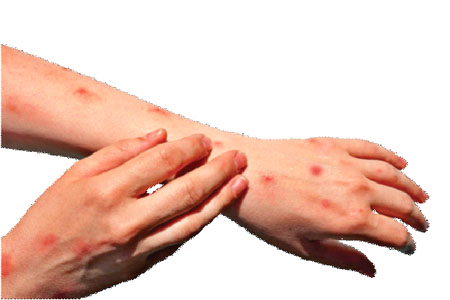
The symptoms include lesions which usually begin within one to three days from the onset of fever, lasting for around two to four weeks and are often described as painful until the healing phase when they become itchy.

A notable predilection for palm and soles is characteristic of monkeypox, the guidelines stated. The World Health Organisation (WHO) had recently declared monkeypox a global public health emergency of international concern.

According to WHO, monkeypox is a viral zoonosis — a virus transmitted to humans from animals — with symptoms similar to smallpox although clinically less severe.

Monkeypox typically manifests itself with fever, rash and swollen lymph nodes and may lead to a range of medical complications. It is usually a self-limited disease with symptoms lasting for two to four weeks.

Topics: HealthWorld Health OrganisationMonkeypoxtransmittable disease
Share4
Tweet
SendShareSend
✮ Subscribe Organiser YouTube Channel. ✮
✮ Join Organiser's WhatsApp channel for Nationalist views beyond the news. ✮
Previous News

Kerala: FIR Registered against CM Pinarayi’s close aide KT Jaleel for his “Indian Occupied Kashmir” FB post

Next News

Introspection and course correction time for intellectuals

Related News

PM POSHAN Model: Serving nutrition, strengthening the nation and the roadmap for inclusive governance

A viral social media post claiming a WHO warning about milk adulteration causing cancer in 87 per cent of Indians by 2035 has been debunked as fake by PIB.

Fact Check: PIB debunks fake post claiming WHO warned 87 per cent of Indians will get Cancer from milk adulteration

Dr Suresh Hanagavadi conferred with Padmashri

Dr Suresh Hanagavadi: The remarkable journey of a doctor who revolutionised haemophilia care & patient advocacy

Representative Image

Loneliness: A social problem or a cultural challenge?

Prime Minister Narendra Modi at the Yoga Day celebrations in Kolkata

International Yoga Day: PM Modi hails Bengal’s spiritual heritage; Advocates yoga for healthy ageing & mental wellness

The wisdom of sattvik food: Nourishing inner balance

Load More

Latest News

RSS Akhil Bharatiya Sah-Bauddhik Shikshan Pramukh Deepak Vispute addressing the gathering

‘Nation First’ should be the guiding principle for every individual, regardless of their Field: Deepak Vispute

‘India was not poor; it was made poor’: The truth re-emerges through Jema Ferrer’s perspective

Six years after talent manager Disha Salian was found dead, her father Satish Salian on September 11 recorded a detailed statement with the Central Bureau of Investigation (CBI), naming Shiv Sena (UBT) leader Aaditya Thackeray, actors Dino Morea and Sooraj Pancholi, and others.

Disha Salian Murder Case: Father names Aaditya Thackeray in CBI statement; Lawyer claims gang rape, murder cover-up

Release of a book at Vishwa Bandhutva Diwas programme that was organised in Ujjain

Bharat’s youth rooted in sacrifice, service & discipline can give new direction to World: Parag Abhyankar

AI Generated Representative Image

“Let Go” — But only when it suits you? Exposing the double standards of Kashmir’s political leadership

Bharatiya Kisan Sangh distributed free school uniforms, notebooks, pen bundles, bags to 7,000 students in flood-affected areas of Assam

Assam: Bharatiya Kisan Sangh distributes free school uniforms, notebooks & bags to 7,000 flood-affected students

Chinmoy Prabhu

When a Bengali Hindu suffers in Bangladesh, where does ‘Bangali-Prem’ go?

AI Generated Representative Image

BRICS Summit: Not de-dollarisation, but derisking from dollar; India scripts pragmatic shield against external shocks

RSS Sarsanghchalak Dr Mohan Bhagwat, attended the 37th annual prize distribution ceremony ‘Swaraj’ at L.K. Singhania Education Centre

Education must go beyond livelihood and focus on holistic human development: Dr Mohan Bhagwat

(Left) Prime Minister Narendra Modi and Russian President Vladimir Putin (Right) Prime Minister Narendra Modi and Chinese President Xi Jinping in the backdrop of the Rameshwaram temple corridor in the backdrop of the BRICS 2026 summit

Bharat’s civilisational pride at BRICS 2026: Rameswaram temple corridor frames world leaders

Load More
  • Privacy
  • Terms
  • Cookie Policy
  • Refund and Cancellation
  • Delivery and Shipping

© Bharat Prakashan (Delhi) Limited.
Tech-enabled by Ananthapuri Technologies

  • Home
  • Search Organiser
  • Bharat
    • Assam
    • Bihar
    • Chhattisgarh
    • Jharkhand
    • Maharashtra
    • View All States
  • World
    • Asia
    • Africa
    • North America
    • South America
    • Europe
    • Australia
  • Editorial
  • Operation Sindoor
  • Opinion
  • Analysis
  • Defence
  • Culture
  • Sports
  • Business
  • RSS @ 100
  • Entertainment
  • More ..
    • Sci & Tech
    • Vocal4Local
    • Special Report
    • Education
    • Employment
    • Books
    • Interviews
    • Travel
    • Health
    • Politics
    • Law
    • Economy
    • Obituary
  • Subscribe Magazine
  • Read Ecopy
  • Advertise
  • Circulation
  • Careers
  • About Us
  • Contact Us
  • Policies & Terms
    • Privacy Policy
    • Cookie Policy
    • Refund and Cancellation
    • Terms of Use

© Bharat Prakashan (Delhi) Limited.
Tech-enabled by Ananthapuri Technologies