India remains stable, a key global player, Bangladesh has outpaced Pakistan in economy
September 14, 2026
  • Read Ecopy
  • Circulation
  • Advertise
  • Careers
  • About Us
  • Contact Us
Android AppiPhone AppArattai
Organiser
  • ‌
  • Bharat
    • Assam
    • Bihar
    • Chhattisgarh
    • Jharkhand
    • Maharashtra
    • View All States
  • World
    • Asia
    • Europe
    • North America
    • South America
    • Africa
    • Australia
  • Editorial
  • International
  • Opinion
  • RSS @ 100
  • More
    • World Hindu Congress 2026
    • Op Sindoor
    • Analysis
    • Sports
    • Defence
    • Politics
    • Business
    • Economy
    • Culture
    • Special Report
    • Sci & Tech
    • Entertainment
    • G20
    • Azadi Ka Amrit Mahotsav
    • Vocal4Local
    • Web Stories
    • Education
    • Employment
    • Books
    • Interviews
    • Travel
    • Law
    • Health
    • Obituary
  • Subscribe
    • Subscribe Print Edition
    • Subscribe Ecopy
    • Read Ecopy
  • ‌
  • Bharat
    • Assam
    • Bihar
    • Chhattisgarh
    • Jharkhand
    • Maharashtra
    • View All States
  • World
    • Asia
    • Europe
    • North America
    • South America
    • Africa
    • Australia
  • Editorial
  • International
  • Opinion
  • RSS @ 100
  • More
    • World Hindu Congress 2026
    • Op Sindoor
    • Analysis
    • Sports
    • Defence
    • Politics
    • Business
    • Economy
    • Culture
    • Special Report
    • Sci & Tech
    • Entertainment
    • G20
    • Azadi Ka Amrit Mahotsav
    • Vocal4Local
    • Web Stories
    • Education
    • Employment
    • Books
    • Interviews
    • Travel
    • Law
    • Health
    • Obituary
  • Subscribe
    • Subscribe Print Edition
    • Subscribe Ecopy
    • Read Ecopy
Organiser
  • Home
  • Bharat
  • World
  • Operation Sindoor
  • Editorial
  • Analysis
  • Opinion
  • Culture
  • Defence
  • International Edition
  • RSS @ 100
  • Magazine
  • Read Ecopy
Home World Asia South Asia

India remains stable, a key global player, Bangladesh has outpaced Pakistan in economy

Seventy five years has changed things a lot in India, Pakistan and Bangladesh. At 25 in 1971, Pakistan was amputated giving birth to Bangladesh. Last few decades show how Pakistan remained locked with its Islamic policies but how India's eastern neighbour has done well in textiles, exports and empowering women.

Nirendra DevNirendra Dev
Aug 23, 2022, 01:38 pm IST
inSouth Asia, Asia
Follow on Google News
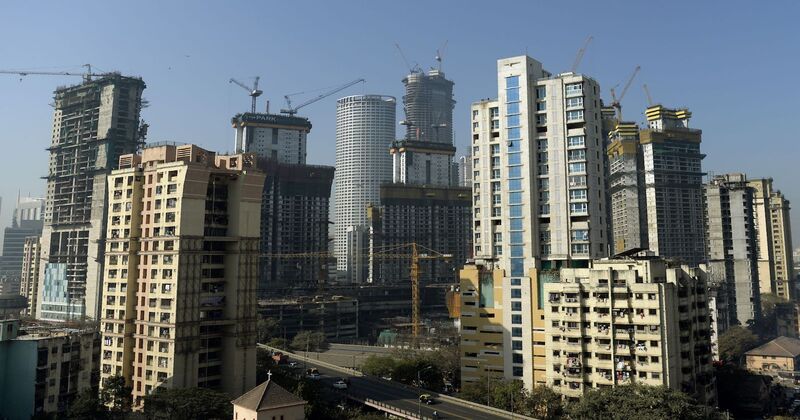
Under construction residential buildings rise into the skyline of Mumbai on January 27, 2017. / AFP / PUNIT PARANJPE (Photo credit should read PUNIT PARANJPE/AFP/Getty Images)

Under construction residential buildings rise into the skyline of Mumbai on January 27, 2017. / AFP / PUNIT PARANJPE (Photo credit should read PUNIT PARANJPE/AFP/Getty Images)

Facebook
Twitter
WhatsAppTelegramEmail

India, Bangladesh and Pakistan are part of the large sub-continent that was partitioned in 1947 owing to British divide and rule policy and personal ego and ambition combined with mishandling of the situation politically.

History is full of books and scholarly works on partition of India and creation of Pakistan (that had Bangladesh for the first 25 years as East Pakistan). But in 1971 – 25th year since its birth Pakistan was ‘amputated’ and Bangladesh was born.

Now the paradox – while India has emerged as a critical global power upholding undisturbed and long 75 years of democracy; both Pakistan and Bangladesh have lived with military coups.

In economic terms, Pakistan is faced with multiple crises but the Bangladesh storyline has been different and uniquely creditable.

Here are a few instances that will require closer scrutiny.

The IMF in its report said recently that Bangladesh needs to reduce financial sector vulnerabilities and develop capital markets. While India is way ahead of Bangladesh in capital markets and even money markets, experts say investments Bangladesh have not stopped due to profit potentials.

Notably, for Bangladesh — a country born with Indian assistance and all logistic support including housing millions of refugees; its Textile export story is a mega success.

Bangladesh has a sound 12 per cent exports-to-GDP ratio; and annual export base is also near $50 billion.

“Amputated at 25, Pakistan is tottering at 75. Every institution is wobbling and governance has descended into a farce,” wrote Anjum Alraf in Pakistan’s leading English daily ‘Dawn’.

International journals say besides export, the fiscal prudence and policies such as the empowerment of  women and girls have allowed Bangladesh to leapfrog.

In Pakistan, the story is different.

“There are some painful statistics to examine on poverty, mortality, malnutrition, discrimination, pollution, and  corruption. But these have long been available and our governments have found ways to ignore,  challenge, deny and dispute them with the tools at their disposal,” says the ‘Dawn’ article.

(link: https://www.dawn.com/news/1706004/75-and-tottering)

In all these, India of course has a resilient power and the Reserve Bank of India has used cyclical and  countercyclical measures along with suitably tailored government policies to manage external shocks.

India has 40 per cent share in American textile imports. But Bangladesh is far better off in the European Union (EU). India only has a 10 per cent market share and ranked a relatively distant fourth to sixth, with Bangladesh, Pakistan, and Turkey doing better than India.

However, Bangladesh has also faced problems in the past and in the beginning of 2020, Bangladesh had to turn towards the IMF for financial stability and survival. India has never had such challenges and rather, it has played its global and regional role significantly in the last seven-eight years helping neighbouring countries in crises or even a number of African and Latin American countries.

In 2015-16 itself, hardly a year after the Modi government came to power, India’s preferential treatment to the Least Developed Countries in Trade in Services involves a cost of Rs. 6.5 crore annually on account of waiver of visa fees and Rs 2.5 crore to Rs 3 crore a year to provide training in management and technical consultancy courses to LDC applicants.

Bangladesh never had to shoulder such responsibilities.

In other words, India’s growth story and robust development in infrastructure have been commendable.

It is not without good reason that on the Red Letter Day, August 15, Prime Minister Narendra Modi pledged to help the suffering Indians out of poverty and turn the country into a developed country in the next quarter-century.

It is also a fact that India’s per capita income is $1,947 and this was primarily due to a reduction in India’s  economic growth due to Covid-19 pandemic and lockdown.

However, Bangladesh’s case is different from India’s chiefly due to differences in size.  In terms of GDP growth rates and absolute GDP, India’s economy has mostly been over 10 times the size of Bangladesh. Moreover, India’s economy has always grown faster every year.

Importantly, one key reason for Bangladesh’s increasingly faster growth rate is because it dramatically enhanced itself on various social and political metrics including health, sanitation, financial inclusion and women’s political representation.

Union Minister of State (independent charge) for statistics and programme implementation Rao Inderjit Singh summed up the paradox between India and Bangladesh well when he told Lok Sabha that though the gross domestic growth (GDP) growth rates of India’s economy are less than those of Bangladesh during 2017-2020, such comparison of economies of significantly different sizes may not be appropriate.

The GDP growth rates of Bangladesh (at constant price) are 7.1%, 7.3%, 7.9%, 8.2% and 2.4% for the years  2016 to 2020 respectively as per the world bank database. But India’s growth rate has shown more resilience and dynamism.

India’s economy grew 8.3%, 6.8%, 6.5%, 4.0% and -7.3% in FY17, FY18, FY19, FY20 and FY21, respectively. In the ultimate, of course, a comparison between Pakistan and Bangladesh in socio-political realms makes
better sense.

After its disintegration, the religion-based foundation of Pakistan was shaken. But it did not learn key lessons. The Pakistani leadership chose to further Islamise their nation, politics and society. It bolstered the politics of  Islamism, gave unquestionable powers to army and pushed terrorism in J&K as a policy.

Bangladesh of course could not continue for long with ‘democracy’, but in many areas it opened up an opportunity  to establish a secular democratic state. The present dispensation under Sheikh Hasina has been particularly driving a modern state though in some areas, Bangladesh also made Islam the state religion and also opted for authoritarian military rule.

Economic deprivation was a major concern for the Bengalis in united Pakistan; and Bangladesh has that way outpaced Pakistan in the economic sector.
 

Topics: Pakistan EconomyIndian Economybangladesh economyimf reportindia at 75
Share21
Tweet
SendShareSend
✮ Subscribe Organiser YouTube Channel. ✮
✮ Join Organiser's WhatsApp channel for Nationalist views beyond the news. ✮
Previous News

FM Sitharaman urges Nagaland Govt to implement ‘One district-One product’

Next News

Focus on Quality of Education to Make Bharat a Developed Nation

Related News

Prime Minister Narendra Modi

UPI hits 24.51 billion transactions, now operational in 11 countries; PM Modi pushes global expansion

Representative Image

Indian Economy is not “Dead”: The numbers tell a very different story

Representative Image

The 7.8 per cent GDP growth is real; The outrage is manufactured!

PM Modi at SRCC

SRCC @100| Sach ki hoonkar ke aage, jhooth ki goonj tikegi nahi: PM Modi slams opposition as India ends fragile 5 tag

NITI Aayog data puts India’s unemployment debate in context, highlighting rising employment and labour-force participation

How did the opposition turn unemployment into a political weapon? NITI Aayog data puts the debate in the right context

AI Generated Representative Image

Japan Credit Agency Upgrades India to “A” Rating: Strong institutional reforms drive growth despite global headwinds

Load More

Latest News

PM Modi and Russian president Vladimir Putin during BRICS summit 2026 in New Delhi

India-Russia big nuclear push at BRICS 2026: Rosatom offers reactors, SMRs and critical minerals cooperation

Representative Image

Karnataka Govt’s free shoe scheme under fire: Poor-quality footwear triggers Lokayukta probe

Bangladesh's state minister for foreign affairs Humaiun Kobir

India-Bangladesh Relations: Dhaka seeks a new chapter of partnership with New Delhi

Anything illegal will not be tolerated: Dilip Ghosh after West Bengal govt orders closure of 252 unauthorised madrasas

BRICS 2026: Brick by Brick

Bhagwan Ganesh

Ganesh Chaturthi: Awakening the Ganesha within

Tamil Nadu: Hindus protest TVK govt restrictions on Vinayaka Chaturthi celebrations in Muslim-dominated areas

Women’s Asia Cup 2026: India win the title; Mohsin Naqvi takes trophy away again—A breather for Pakistan’s headlines

Karnataka ‘Anti-Hindu’ face of state govt exposed? BJP leaders detained over Ganesh procession

A representative image

How PM SHRI schools are changing the way Bharat thinks about education

Load More
  • Privacy
  • Terms
  • Cookie Policy
  • Refund and Cancellation
  • Delivery and Shipping

© Bharat Prakashan (Delhi) Limited.
Tech-enabled by Ananthapuri Technologies

  • Home
  • Search Organiser
  • Bharat
    • Assam
    • Bihar
    • Chhattisgarh
    • Jharkhand
    • Maharashtra
    • View All States
  • World
    • Asia
    • Africa
    • North America
    • South America
    • Europe
    • Australia
  • Editorial
  • Operation Sindoor
  • Opinion
  • Analysis
  • Defence
  • Culture
  • Sports
  • Business
  • RSS @ 100
  • Entertainment
  • More ..
    • Sci & Tech
    • Vocal4Local
    • Special Report
    • Education
    • Employment
    • Books
    • Interviews
    • Travel
    • Health
    • Politics
    • Law
    • Economy
    • Obituary
  • Subscribe Magazine
  • Read Ecopy
  • Advertise
  • Circulation
  • Careers
  • About Us
  • Contact Us
  • Policies & Terms
    • Privacy Policy
    • Cookie Policy
    • Refund and Cancellation
    • Terms of Use

© Bharat Prakashan (Delhi) Limited.
Tech-enabled by Ananthapuri Technologies