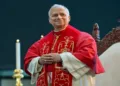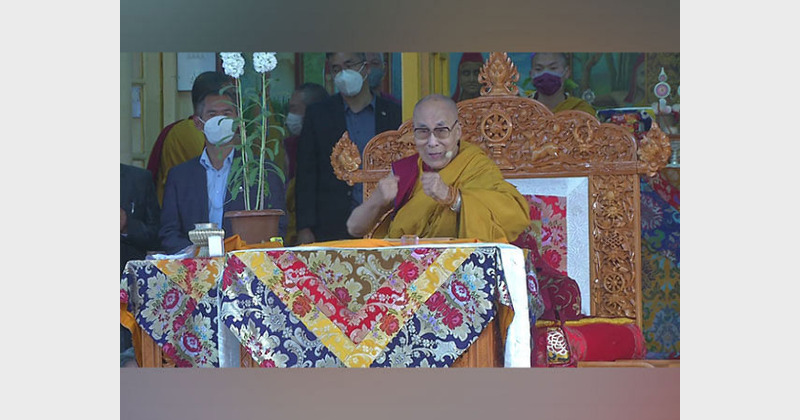
Since the inception of Buddhism, many devotees expressed their loyalty in various ways towards the establishment of the religion in many countries across the world spreading the ethos of spirituality for the welfare of mankind. Out of all these, the 14th Dalai Lama, known as Gyalwa Rimpoche to the Tibetan people and former head of state of Tibet is well acclaimed globally for his peace-spreading gesture. He became the most famous Buddhist teacher in the world and is widely respected for his commitment both in non-violence and to the cause of Tibetan freedom.
Tibet was originally India’s neighboring country where Buddhism spread entire Tibet maintaining their own culture, religion, languages and so forth. Tibetans are very simple in their nature and believer of Buddhism and keeping peace and harmony amongst them. On the other hand, Indian people especially Hindus inherited their philosophy, religion, culture etc. which passed from generation to generation with their preview and as a result it could be existed a congenial relationship of India with Tibet for several thousand years back. But the main tangle started when the communist China forcefully occupied Tibet to extend their territory more than seven decades back. As a result, under the leadership of His Holiness the 14 Dalai Lama with his followers compelled to evacuate the holy place and sheltered in India to save their identity as a whole and accelerated their movement for free Tibet issue globally.
His Holiness the 14 Dalai Lama was born on 6 July, 1935, to a farming family, in a small hamlet located in Taktser, Amdo, northern Tibet. At the age of two, then named Lhamo Dhondup, was recognized as the reincarnation of the previous 13 Dalai Lama, Thubten Gyasto.
His Holiness started his educational pursuit at the age of six only and he had gone through the curriculum same as that was taught in the Nalanda. It is true that the subjects were logic, Sanskrit grammar, fine arts and medicine but more emphasis had been devoted in teaching of Buddhism and its philosophy. This Buddhist philosophy includes another five categories and these are – prajnapaparamita, the perfection of wisdom, Madhya-mika, the philosophy of the middle way, Vinaya, the canon of monastic discipline, Abidharma, metaphysics and Pramana, logic and epistemology. Besides these important five categories another five minor subjects which include drama, poetry, astrology, composition and synonyms.
As soon as the 13 Dalai Lama died in Lasha, the capital of Tibet, on December 17, 1933, a searching process started immediately for the next Dalai Lama. It is to be noted that it has some customary procedure and had been bestowed on executive authority and educate the next Dalai Lama, who would typically assume control at about the age of twenty. The searching of the next Dalai Lama was in progress and one group step forwarded towards Amdo, in the far northeast region of the Tibet, where they met a young boy named Lhamo Thondup, the son of a farmer. After passing a good number of tests (including the selection of personal items that had belonged to the 13 Dalai Lama), he was proclaimed as the next Dalai Lama. Under this circumstance, a ransom had to pay the powerful Chinese warlord and the same was paid by the Tibetan Government. It was the end of life at Amdo, the entire family with the selected child proceeded towards Lasha, where he was enthroned on February 22, 1940. But after a certain period of time when he became young one then moved to the vast potala palace (the residence of the Dalai Lamas and seat of Tibetan government) without his family members. This was followed by his educational journey under the direct supervision of eminent scholars. Besides the normal studies, Dalai Lama tried to learn something of the outside world through some magazines and newsreels.
Later on at the age of twenty three he appeared the final examination in Lasha’s Jokhang temple during annual great prayer festival in 1959. Surprisingly, he passed with honors and was awarded the Geshe Lharampa degree to the highest doctorate in Buddhist philosophy in spite of educated people in and around him.
The incursion of communist China in Tibet, His Holiness was called upon to take the full political charge in 1950. Later on, in 1954 he even went to Beijing to meet Mao Zedong besides other Chinese leaders including Chou Enlai. The suppression of Tibet nationals hit the highest point by the Chinese troops and as result in 1959 His Holiness was compelled to escape into exile and there after he has been living in Dharamsala, northern India. His Holiness repeatedly appealed to the United Nation in 1959, 1961 and 1965 respectively and UN also took three resolutions in these regards. His Holiness tried to constitute administrative process in a phase manner and it was executed for the first time in 1963, where he presented a draft democratic constitution for Tibet. This is followed by advancement in 1992, where the central Tibetan Administrations published guidelines for the constitution of a future, free Tibet. It is praiseworthy that the Tibetan administration in exile was fully democratized.
His Holiness was always tried for peace initiative for free Tibet and it was a continuous effort. To highlight his peace plan he addressed to the members of United States Congress in Washington DC in the year 1987 on 21 September. The five points of peace plan were as follows:
Transformation of the whole of Tibet into a zone of peace.
Advancement of China’s population transfer policy that threatens the very existence of the Tibetans as a people.
Respect for the Tibetan people’s fundamental human rights and democratic freedoms.
Restoration and production of nuclear weapons and developing of nuclear waste.
Commencement of earnest negotiations on the future status of Tibet and of relation between Tibetan and Chinese people.
As time passed on, many groups had been formed for the cause of free Tibet movement across the world and several peace programme was also demonstrated. Recently United States of America showed the attention and very much worried about the exploitation of the land of Tibet in various ways.
It is well established that His Holiness the Dalai Lama is peace lover and he wants to spread peace in terms of humanity for the noble cause of free Tibet since the time of exile in India and also for the people of Tibet who had been struggling in various ways.
His Holiness the Dalai Lama received many prestigious awards, honourary doctorates, prizes etc. Besides these the highest honour i.e. Nobel peace prize in 1989 for his non-violence struggle for the liberation of Tibet.
We wish long live of His Holiness Dalai Lama from the core of the heart that are associated for the cause of free Tibet across globally.
Dr. Jagadindra Raychoudhury. Guwahati-based columnist and Secretary, Vidya Bharati purbottor kshetra.