Tobacco impacts the environment, not just health
September 12, 2026
  • Read Ecopy
  • Circulation
  • Advertise
  • Careers
  • About Us
  • Contact Us
Android AppiPhone AppArattai
Organiser
  • ‌
  • Bharat
    • Assam
    • Bihar
    • Chhattisgarh
    • Jharkhand
    • Maharashtra
    • View All States
  • World
    • Asia
    • Europe
    • North America
    • South America
    • Africa
    • Australia
  • Editorial
  • International
  • Opinion
  • RSS @ 100
  • More
    • World Hindu Congress 2026
    • Op Sindoor
    • Analysis
    • Sports
    • Defence
    • Politics
    • Business
    • Economy
    • Culture
    • Special Report
    • Sci & Tech
    • Entertainment
    • G20
    • Azadi Ka Amrit Mahotsav
    • Vocal4Local
    • Web Stories
    • Education
    • Employment
    • Books
    • Interviews
    • Travel
    • Law
    • Health
    • Obituary
  • Subscribe
    • Subscribe Print Edition
    • Subscribe Ecopy
    • Read Ecopy
  • ‌
  • Bharat
    • Assam
    • Bihar
    • Chhattisgarh
    • Jharkhand
    • Maharashtra
    • View All States
  • World
    • Asia
    • Europe
    • North America
    • South America
    • Africa
    • Australia
  • Editorial
  • International
  • Opinion
  • RSS @ 100
  • More
    • World Hindu Congress 2026
    • Op Sindoor
    • Analysis
    • Sports
    • Defence
    • Politics
    • Business
    • Economy
    • Culture
    • Special Report
    • Sci & Tech
    • Entertainment
    • G20
    • Azadi Ka Amrit Mahotsav
    • Vocal4Local
    • Web Stories
    • Education
    • Employment
    • Books
    • Interviews
    • Travel
    • Law
    • Health
    • Obituary
  • Subscribe
    • Subscribe Print Edition
    • Subscribe Ecopy
    • Read Ecopy
Organiser
  • Home
  • Bharat
  • World
  • Operation Sindoor
  • Editorial
  • Analysis
  • Opinion
  • Culture
  • Defence
  • International Edition
  • RSS @ 100
  • Magazine
  • Read Ecopy
Home Bharat

Tobacco impacts the environment, not just health

The WHO’s this year’s campaign on ‘Tobacco: Threat to our Environment’ urges governments and policymakers to strengthen legislation and implementation of existing schemes that hold tobacco companies accountable for the environmental and economic costs of waste tobacco products.

WEBDESKWEBDESK
May 30, 2022, 06:21 pm IST
inBharat
Follow on Google News
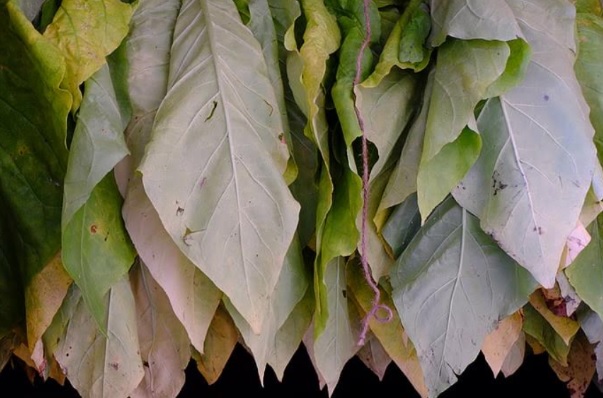
Tobacco Leaves

Tobacco Leaves

Facebook
Twitter
WhatsAppTelegramEmail

New Delhi: World No Tobacco Day is observed on May 31 every year since 1987. This year, the World health organization’s (WHO) theme for the Day is ‘Tobacco: Threat to our environment.’ This drive aims to create awareness among the public on the detrimental impact of tobacco cultivation, production, distribution, and waste on the environment, besides human health.

According to WHO, about 3.5 million hectares of land are cleared for growing Tobacco each year. It causes deforestation mainly in the developing nations. Tobacco cultivation results in soil degradation, making it infertile to support the growth of other crops or vegetation. Tobacco contributes 84 megatons of the greenhouse gas carbon dioxide to the atmosphere every year; around twenty-two billion litres of water is consumed in the production of cigarettes every year.

The situation is no different in India, where Tobacco is one of the important cash crops. Today, India is the second-largest crop producer in the world after China. According to the Central Tobacco Research Centre (CTRI) of the Indian Council of Agricultural Research (ICAR), around 760 million kg of Tobacco is grown in India on about 40 lakh hectares of land. The sector provides jobs to millions of people and contributes as much as Rs.22,737 crore as excise duty and Rs.5,969 crore in foreign exchange to the national treasury.

But a massive cost of tobacco cultivation is paid for by the country’s environment and people’s health. A report by the Ministry of health and family welfare says that “The total economic costs attributable to tobacco use from all diseases in India in the year 2011 for persons aged 35-69 amounted to Rs. 1,04,500 crores”.

It is estimated that about 29% of the adult Indian population consumes Tobacco. Most commonly, it is consumed as Smokeless Tobacco Products (SLT) like khaini, gutkha, and zarda. Smoking forms of tobacco are used as bidi, cigarette, hookah, etc. The smokeless forms pose high risks of oral and oesophageal cancer. Their consumption by pregnant women can also lead to stillbirth and low birth weight in infants. People addicted to smoking are, on the other hand, at very high risk of lung, oral cavity, pharynx, nasal cavity, larynx, esophagus, stomach, pancreas, liver, kidney, ureter, urinary bladder, uterine cervix, and bone marrow cancers.

Tobacco kills more people than tuberculosis, HIV/AIDS, and malaria combined worldwide. It has also been reported that tobacco consumption in both smoking and chewing forms is significantly associated with severe COVID-19 symptoms. Tobacco users pre-existing health conditions, such as respiratory and cardiovascular disease, were observed to exacerbate disease symptoms, making treatment of COVID-19 patients more difficult owing to their fast clinical deterioration.

The environmental impacts of tobacco cultivation also add to India’s enormous economic burden. Tobacco is a very nutrient-hungry crop, and it depletes soil nutrients more rapidly. Tobacco cultivation requires the application of pesticides and fertilizers in large amounts, which degrade overall soil health. Tobacco cultivation results in soil erosion because it is typically grown as a mono-crop (the practice of cultivating a single crop on the same farmland year after year), exposing the topsoil to wind and water.

Besides, health risks are associated even with tobacco cultivation apart from consumption. Tobacco farmers are prone to suffer from a work-related ailment known as ‘Green Tobacco Sickness’ (GTS), which is caused mainly by nicotine absorption via the skin. Nicotine is an addictive chemical found in tobacco. The studies carried out by the National Institute of Occupational Health (NIOH) on CTRI farms in Andhra Pradesh reveal discolouration of workers’ skin coming into contact with tobacco leaves. Headache, nausea/vomiting, dizziness, lack of appetite, exhaustion, and weakness are all signs of GTS, which can be caused even by tobacco storage in houses. Severe nicotine poisoning can adversely affect reproductive health and lead to breathlessness, blood pressure fluctuations, heart attack, and cancer.

To cope with the tobacco epidemic, the Government of India enacted an extensive tobacco control law: The Cigarettes and Other Tobacco Products Act 2003 (COTPA 2003), in 2004. This Act includes the prohibition of smoking in public places, advertisement of cigarettes and other tobacco products, sale of cigarettes or other tobacco products to anyone below the age of 18 years, and prohibition of selling areas like schools, colleges, etc.

To make India addiction-free, the Government has launched programmes like National Tobacco Control Programme (NTCP) and Nasha Mukt Bharat Abhiyaan. Department of Agriculture, Cooperation & Farmers Welfare is also implementing a crop diversification programme. Farmers are encouraged to replace tobacco crops with less water-consuming alternatives to conserve water and soil. Under irrigated conditions, sugarcane, onion, maize, etc., and under rain-fed conditions, groundnut and soybean could be potential alternatives to tobacco farming.

The WHO’s this year’s campaign on ‘Tobacco: Threat to our Environment’ urges governments and policymakers to strengthen legislation and implementation of existing schemes that hold tobacco companies accountable for the environmental and economic costs of waste tobacco products. (India Science Wire)
Topics: CancerWaterEnvironmentdeforestationWorld No Tobacco Daygreenhouse gasforeign exchange
Share
Tweet
SendShareSend
✮ Subscribe Organiser YouTube Channel. ✮
✮ Join Organiser's WhatsApp channel for Nationalist views beyond the news. ✮
Previous News

Trouble might have cropped between JMM and Congress in Jharkhand

Next News

Study identifies neonatal and infant mortality predictors

Related News

Critical Minerals: The new oil of the 21st century

A viral social media post claiming a WHO warning about milk adulteration causing cancer in 87 per cent of Indians by 2035 has been debunked as fake by PIB.

Fact Check: PIB debunks fake post claiming WHO warned 87 per cent of Indians will get Cancer from milk adulteration

India gets 101st Ramsar Site in Arunachal Pradesh's Glaw Lake

India Crosses 100 Ramsar Sites: Arunachal Pradesh’s Glaw Lake becomes country’s 101st wetland of global importance

Bollywood, Are You Listening? The unmade story of Yellapragada Subbarow, the Indian scientist who helped save the world

Hypocrisy of Pakistan Exposed: Politically dominant Punjab gets undue water share while Sindh suffers acute scarcity

Forgotten Victims of Chagai: Cancer Cases Rise in Pakistan’s Nuclear Test Zone

Chagai’s Nuclear Curse: Balochistan still battles cancer 28 years after Pakistan conducted nuclear tests

Load More

Latest News

The Quiet Part of BRICS 2026: “The Plumbing, Not the Currency” — What You Need to Know About the BRICS Currency (AI generated image)

The Quiet Part of BRICS 2026: “The Plumbing, Not the Currency” — What You Need to Know About the BRICS Currency

AI Generated Representative Image

BRICS Summit 2026 | Bajra, Ragi & Rajma: Food served to leaders reflect India’s millets, spices & culinary heritage

Andhra Pradesh: Sadiq Khan admits cyanide killing of Sowjanya’s husband; property motive eclipses Islam conversion

BRICS Summit 2026: New Delhi Declaration to be issued today; India seals diplomatic win amid West Asia crisis

Deoria Horror: Hindu Youth Manish ‘Monu’ Singh allegedly lured to death by Islamist China Ansari

PM Modi holds series of bilateral meetings;(From Left to Right): Malaysia PM Anwar Ibrahim, Ethiopian PM Abiy Ahmed Ali and Iran President Masoud Pezeshkian

BRICS Summit: PM Modi flags maritime security, seafarers safety with Iran President; Holds series of bilateral talks

The shifting economic weight of G7 and BRICS reflects the emergence of a more multipolar global order.

G7 and BRICS: How the global economic balance is shifting from western world to a rising global south

Mukul Kanitkar, senior RSS Functionary at Makhanlal Chaturvedi National University of Journalism and Communication on the occasion of a special lecture to commemorate Swami Vivekananda’s historic Chicago address

Modernity belongs to tools and technology, not culture; culture moves through continuity: Mukul Kanitkar

Ganeshotsav 2026: Majestic Lalbaugcha Raja unveiled, setting Mumbai aflutter with devotion

Speaking at the BRICS Business Forum, Putin took a sharp swipe at G7

BRICS Summit 2026: President Putin takes swipe at G7; BRICS drives 40% of Global GDP while west contributes only 18%

Load More
  • Privacy
  • Terms
  • Cookie Policy
  • Refund and Cancellation
  • Delivery and Shipping

© Bharat Prakashan (Delhi) Limited.
Tech-enabled by Ananthapuri Technologies

  • Home
  • Search Organiser
  • Bharat
    • Assam
    • Bihar
    • Chhattisgarh
    • Jharkhand
    • Maharashtra
    • View All States
  • World
    • Asia
    • Africa
    • North America
    • South America
    • Europe
    • Australia
  • Editorial
  • Operation Sindoor
  • Opinion
  • Analysis
  • Defence
  • Culture
  • Sports
  • Business
  • RSS @ 100
  • Entertainment
  • More ..
    • Sci & Tech
    • Vocal4Local
    • Special Report
    • Education
    • Employment
    • Books
    • Interviews
    • Travel
    • Health
    • Politics
    • Law
    • Economy
    • Obituary
  • Subscribe Magazine
  • Read Ecopy
  • Advertise
  • Circulation
  • Careers
  • About Us
  • Contact Us
  • Policies & Terms
    • Privacy Policy
    • Cookie Policy
    • Refund and Cancellation
    • Terms of Use

© Bharat Prakashan (Delhi) Limited.
Tech-enabled by Ananthapuri Technologies